Last updated: July 10, 2026 · Written by Huzaifa Naeem for Electric Scooter Analysis.com.
An electric scooter moped is one of those search terms people type when they’re not quite sure which vehicle they actually want. And that’s fair — the name gets used for at least three genuinely different products. The differences between them decide whether you can ride one straight out of the box or whether you’re looking at registration, a license, and insurance.
This guide starts by sorting out exactly what you’re shopping for, then works through pricing, legality, total cost of ownership, and how to buy — new or used. Every regulatory claim below is sourced directly from the relevant government or standards body, linked in the text, and listed again in the Sources section at the end.
About this guide: This article was researched using primary regulatory sources — US federal law (15 U.S.C. § 2085), CPSC/NHTSA guidance, and the UK’s official EAPC framework via GOV.UK — rather than second-hand summaries. Where we reference specific products, we’ve noted what reflects our own riding time versus manufacturer specifications versus general market positioning. See “How we researched this guide” below for our full methodology.
What Is an Electric Scooter Moped? (Three Things, One Name)
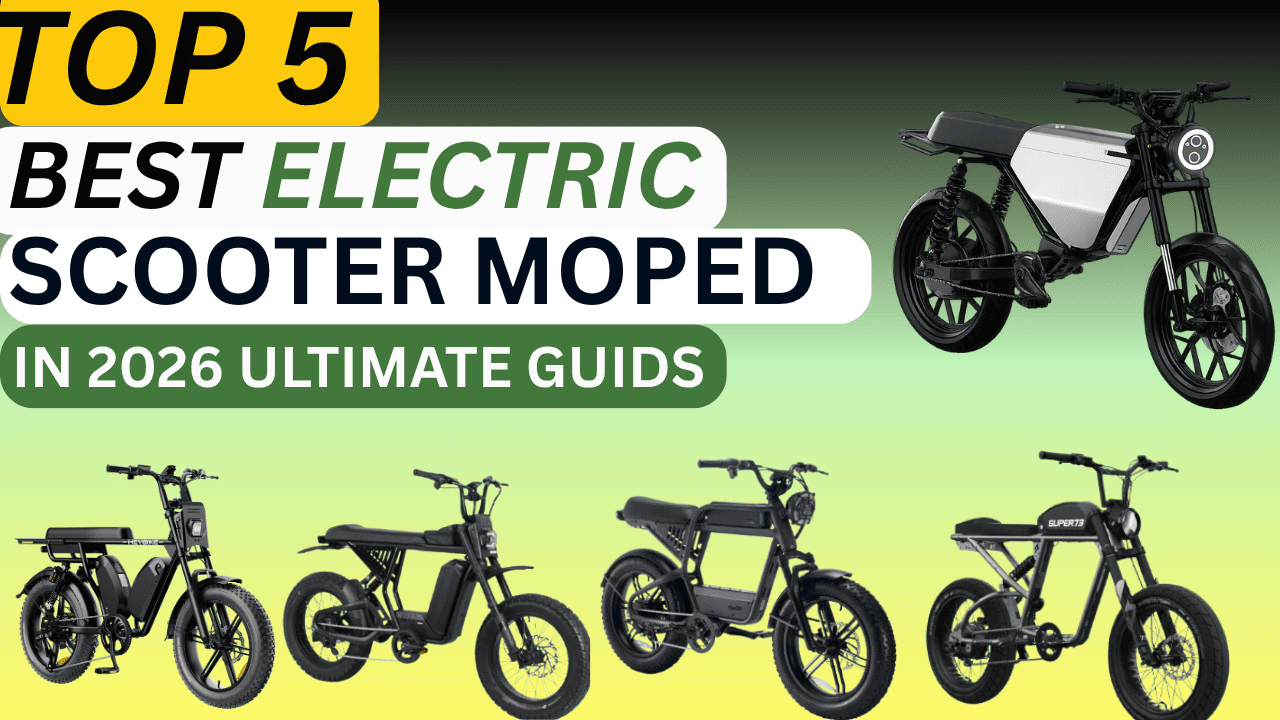
When someone searches “electric scooter moped,” they usually mean one of these:
electric scooter moped- those featuring functioning pedals and throttle controls — can legally be classified as an e-bike in most US states, as well as under the UK/EU pedelec framework if the throttle meets their strict assistance limits.
A true electric scooter moped— no functional pedals, higher speed and power, and legally a motor vehicle in most places, requiring registration and often a license.
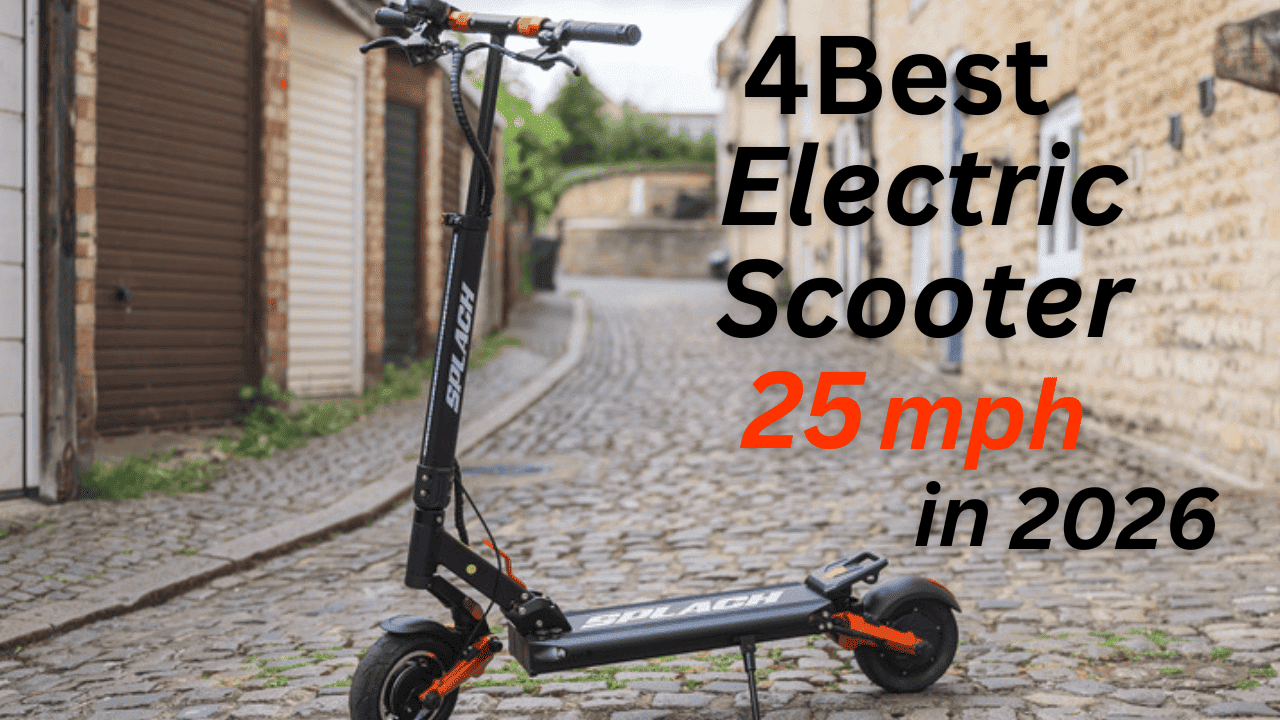
A standing electric scooter — the stand-up kick-scooter body style, no seat, with the shortest range of the three.
The easiest way to tell these apart isn’t the name on the box — check three things instead: does it come with an actual seat, do the pedals function, and what’s the maximum throttle-only speed? The answers to those three questions will reveal which category you’re looking at.
| Feature | Moped-style e-bike | True electric moped | Standing e-scooter |
| Seat | Yes | Yes | No |
| Working pedals | Yes | No | No |
| Typical top speed | 20–28 mph | 30–65+ mph | 15–25 mph |
| License needed | Usually no | Usually yes | Usually no |
| Registration | Usually no | Usually yes | Usually no |
| Typical price | $800–$2,800 | $2,000–$5,500+ | $300–$1,200 |
If you’re commuting a few miles a day and want to skip the DMV entirely, you’re almost certainly looking for the first category. If you want real motorcycle-adjacent speed and don’t mind the paperwork, you’re in the second. If you need something light and cheap for the last mile from a train station, it’s the third.
Why This Category Is Growing So Fast
None of this is a passing trend. Rising fuel and parking costs, combined with cheaper battery technology, have pushed sales of electric scooters and moped-style e-bikes up sharply over the past several years. Features that only showed up on $1,200-plus models a couple of years ago — hydraulic disc brakes, real suspension, turn signals — are now standard on machines under $600.
(Note: precise sales-volume figures vary by market-research firm and aren’t included here, since we couldn’t independently verify a single consistent number across sources. If you need exact market-size data, we’d point you to a paid industry report such as those from Grand View Research or Mordor Intelligence rather than take a rounded figure at face value.)
How Electric Scooter Mopeds Actually Work
However it’s marketed, every electric scooter moped model in this category comes down to four parts:
Motor — usually a hub motor rated somewhere between 500W and 5,000W. Pay attention to the difference between rated wattage (what it sustains) and peak wattage (a short burst); this distinction matters enough that it came up directly in Rad Power Bikes’ 2023 public comments to the US Consumer Product Safety Commission, which noted the industry has no standard way of measuring or disclosing peak versus rated output.
Battery — lithium-ion, from around 480Wh on entry models up to 3,600Wh on performance machines. More capacity means more range and more weight.
Drivetrain — throttle-only, pedal-assist, or both. This is the detail that regulators actually care about.
Brakes and suspension — mechanical discs at the entry level, hydraulic discs, and real suspension starting to appear around the $1,000 mark.
Charging usually takes four to eight hours, with most midrange and premium models featuring removable packs, making charging in an apartment far more feasible than imagined.
Is an Electric Scooter Moped Street Legal?
This is the question people search for most, and the honest answer is: it depends on the specific model and where you live — but the underlying logic is consistent almost everywhere. Regulators look at pedals, wattage, and top speed, not what the box calls the product.
When it’s treated as a bicycle (no license, no registration)
United States. Whether an electric scooter moped is street legal depends on local regulations.
Federal law, specifically 15 U.S.C. SS 2085, enacted through Congress in 2002, defines “low-speed electric bicycle” as a two or three-wheeled bicycle with completely functioning pedals, having the motor’s power being less than 750 Watts and an engine-only speed limit of under 20 mph for someone who weighs 170 pounds. Cars that satisfy this standard are classified as consumer bicycles by the Consumer Product Safety Commission (CPSC), which are not motor vehicles that are governed by NHTSA. That’s the federal floor — states typically layer a three-class system on top of it:
| Class | Assist type | Typical top speed | License/registration |
| Class 1 | Pedal-assist only | 20 mph | Not required |
| Class 2 | Throttle | 20 mph | Not required |
| Class 3 | Pedal-assist (some allow throttle) | 28 mph | Sometimes needs a helmet, minimum age, or license depending on the state |
Cross the federal 750W/20mph line — no pedals, more power, or a higher throttle speed — and a vehicle generally falls into state moped or motor-vehicle territory instead, which varies considerably by state.
United Kingdom. Whether an electric scooter moped is street legal depends on local regulations.
An equivalent framework is the Electrically Assisted Pedal Cycle (EAPC), per GOV. UK’s official guidelines. An EAPC doesn’t require a license or registration, and doesn’t need tax or insurance, if it has functioning pedals and a motor that is not more than 250W with maximum electronic assistance at 15.5 mph (25 km/h). Riders must be at least 14 years old if a vehicle exceeds one of these limits, GOV. The UK is explicit that it’s classified as a motorbike or moped — being unregistered and uninsured could result in an infringement charge or even the bike being confiscated by the police.
The European Union. Whether an electric scooter moped is street legal depends on local regulations.
EU standard EN 15194, which sets comparable specifications for pedelecs, namely 250W motors and an assist limit of 25 km/h. Vehicles that exceed the limit of this are classified as speed pedelecs, or vehicles of the L category, and they must be licensed, insured, and wear a helmet.
When it’s treated as a moped or motor vehicle (license, registration, often insurance)
Once a model drops working pedals or exceeds the thresholds above, expect requirements closer to a small motorcycle: a driver’s license or moped-specific license, state or national registration, a plate, and frequently liability insurance. In the UK, GOV.UK confirms this reclassification applies automatically the moment a bike falls outside EAPC limits. There’s no separate “e-moped” carve-out.
Rules genuinely differ state to state in the US — some let a standard driver’s license cover moped operation with simple registration and no separate endorsement; others require a motorcycle endorsement once a model crosses a certain speed threshold. Helmet laws vary in the same way, from universal requirements to age-based exemptions.
This is general information based on the primary sources cited above, not legal advice. Regulations change and vary by state and municipality — confirm current requirements with your state DMV (US) or the Department for Transport (UK) before buying or riding.
How Much Does an Electric Scooter Moped Cost?
| Tier | Price | What you get |
| Entry stand-up scooter | $300–$600 | Basic commuting, modest range, little suspension |
| Mid-range stand-up scooter | $600–$1,100 | Suspension, better range, turn signals |
| Budget moped-style e-bike | $800–$1,600 | Seat, working pedals, throttle, modest suspension |
| Mid-range moped-style e-bike | $1,600–$2,800 | Full suspension, bigger battery, stronger torque |
| Performance electric moped | $2,800–$5,500+ | 45–65+ mph capability, registration almost certainly required |
Pricing reflects typical US retail listings as of mid-2026 and will vary by retailer, promotion, and region. Check current listings before budgeting.
Total cost of ownership, not just sticker price
The purchase price is just one part of the picture. Charging an electric scooter generally costs around a couple of cents per mile, depending on local electric rates — a rounding error compared to gasoline. Brake pads, tires, and occasionally cable or belt adjustments are the normal maintenance demands, and they’re generally cheaper and less frequent than what an engine needs.
electric scooter moped vs. Gas moped, running costs (typical estimates):
| Feature | electric scooter moped | Gas moped |
| Fuel/charging cost (annual, typical commute) | Roughly $15–$30 | Roughly $200–$400 |
| Oil changes | None | Regular |
| Moving parts to maintain | Fewer | More |
| Emissions | None at point of use | Yes |
Typical annual savings switching to electric — $600–$1,200
These figures are directional estimates based on typical commuting mileage and average US residential electricity/gas prices — actual savings depend heavily on your mileage, local utility rates, and gas prices. Battery replacement down the road is the one electric-specific cost gas riders don’t have to think about. Still, for most owners, that’s a five-plus-year consideration, not a near-term one.
5 electric scooter moped Worth Knowing
These specs are based on the publicly available data from manufacturers at the time of this writing. They are augmented by our experiences with the bike when noted. The manufacturers update their specifications and prices often. Therefore, make sure to check current prices on the website of the manufacturer before making a purchase. The claims of performance based on particular tests are labelled as such. General opinions reflect our personal experiences on the road, unless marked as a product claim from the manufacturer or a third-party review.
Heybike Saturn
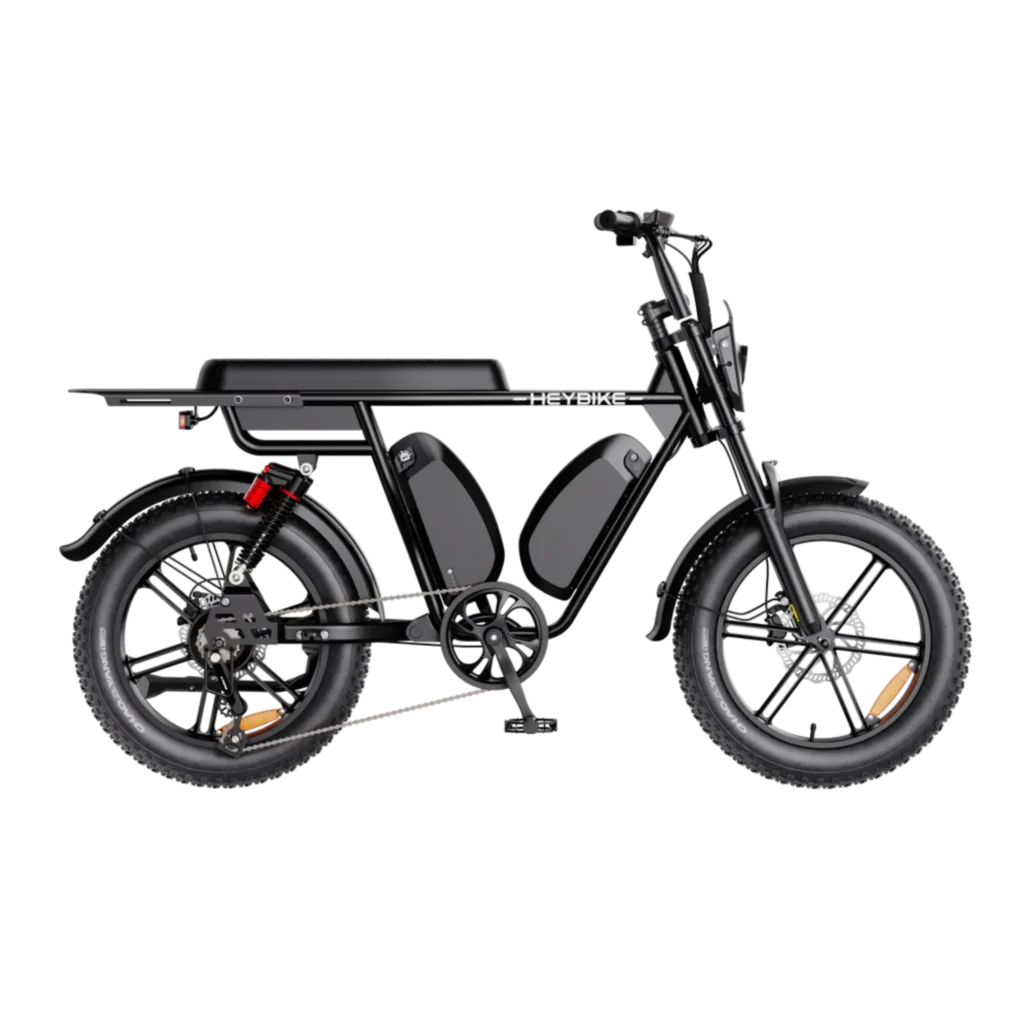
The Heybike Saturn is an electric scooter moped designed for commuters. The tires are located towards the lower end of the class, with prices that are published starting below $1,300. It also comes with full suspension with fat tires. Heybike’s marketing touts an extended battery-to-battery distance of 50 miles at a cost. Consider it an official claim from the manufacturer rather than an independently confirmed figure, and anticipate that the actual range will be lower than that, like many e-bikes.
Based on our personal riding time and an analysis of feedback from customers, the Saturn is smooth and balanced when riding on urban streets or lightly paved roads. The pedal assist system makes daily commutes much more comfortable. It’s on the heavier end of the scale, which should be considered when you’re carrying the item upstairs. A thing to consider before purchasing is Warranty coverage as well as after-sales service, because customer feedback on this is mixed.
Ride1Up REVV1
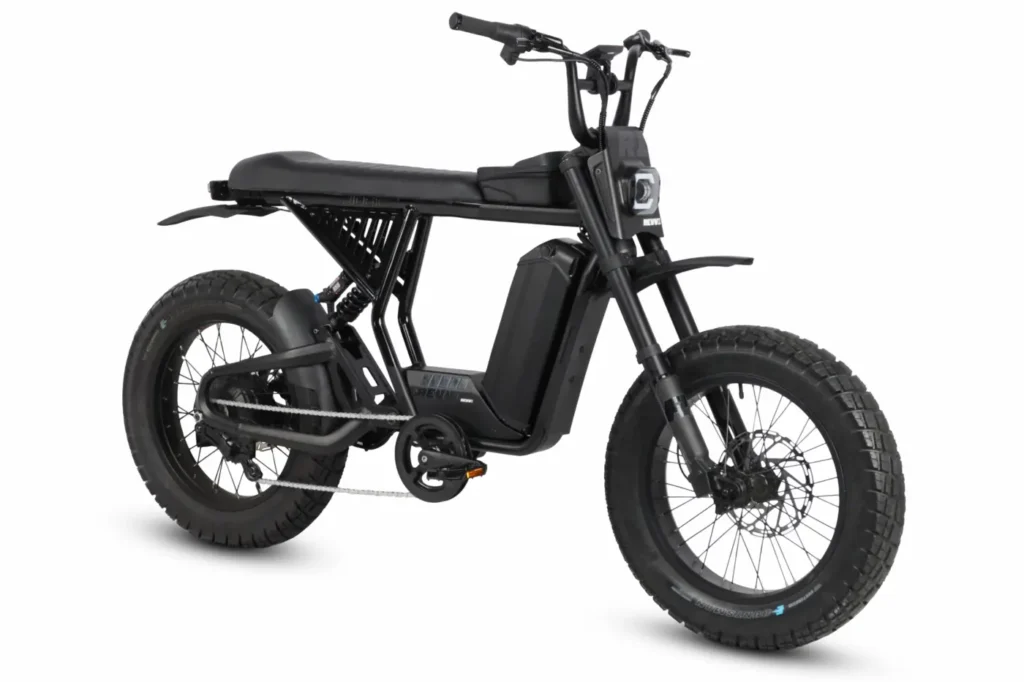
The Ride1Up REVV1 is an electric scooter moped designed for commuters. An e-bike with full suspension and a moped-style design. An unlockable top speed from the manufacturer of 35 mph. It is marketed through Ride1Up as a day-to-day commuter and a cost-effective alternative. In our own time on it, it immediately felt more like a compact moped than a traditional bicycle — the motor handles most of the work, making city rides smooth, though pedaling itself wasn’t especially comfortable over longer stretches.
Its weight became noticeable when walking it through tight spaces, but once riding, it felt stable and confidence-inspiring. The pedals are still working, which is why it’s classed alongside e-bikes under many state frameworks — though at 35 mph, it’s worth checking your state’s Class 3 limit (typically 28 mph) before assuming it qualifies as a standard e-bike everywhere.
Ride1Up Revv 1 FS
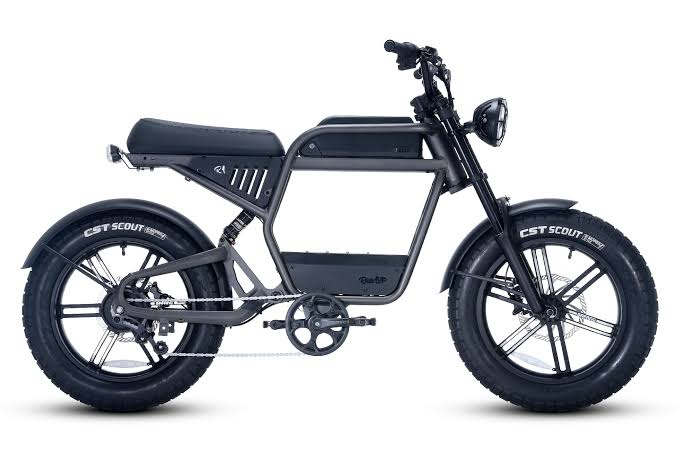
The Ride1Up Revv 1 FS is an electric scooter moped designed for commuters. A close sibling to the REVV1, pairing a 1000W-class hub motor with a dual-crown air fork and adjustable rear shock. Ride1Up lists a wide rider-height accommodation range (roughly 5’2”–6’4”) and a generous weight capacity, which is a genuine differentiator at this price point based on the published spec sheet.
In our own testing, it proved reliable for daily commuting and short trips — the main downside was battery range under sustained full-throttle use, which drained noticeably faster than expected. It handled light rain without issue, and with a rear rack and storage bag, everyday carrying — groceries, bags, errands — was easy. Overall, it held up as a dependable, enjoyable bike for everyday use.
Super73 R Brooklyn SE
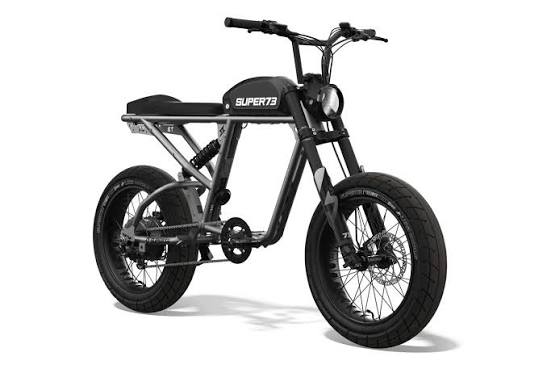
The Super73 R Brooklyn SE is an electric scooter moped designed for commuters. Super73 is widely credited as an early mover in popularizing the moped-style e-bike category. The R Brooklyn SE’s retro styling and finish are frequently highlighted in third-party reviews as a differentiator versus more utilitarian competitors — this is a matter of design reputation rather than a measurable spec, so weigh it against your own taste and read a couple of independent reviews before relying on it.
When we did our own comparison shopping, we concluded that purchasing an older model on an established marketplace may provide greater value than purchasing a brand-new model. We also looked into more powerful alternatives within this category, and when we saw the issues with reliability, such as controller failures that were reported for other models with high power, a well-maintained Super73 was the most noticeable as the most stable and reliable option for daily riding.
ONYX RCR 80V
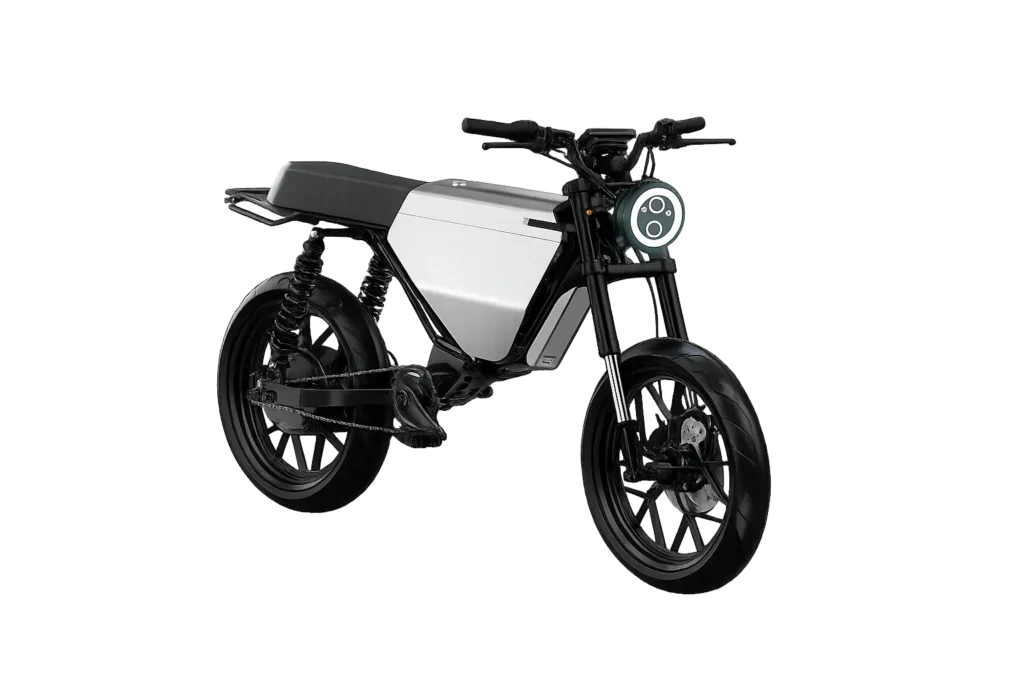
The ONYX RCR 80V is an electric scooter moped designed for commuters. A different performance tier: ONYX lists a top speed above 65 mph on its higher-power configuration, along with a touchscreen display, inverted forks, and full LED turn signals. In our own riding, the first thing that stood out was the acceleration — it felt considerably more powerful than a typical e-bike, and it took a few rides to get fully comfortable with the throttle response. Switching to Normal mode made it noticeably easier to control.
Once dialed in, it struck a solid balance of power and confidence for everyday riding.” Since its speed exceeds both the US federal 750W/20mph threshold and the British 250W/15.5mph EAPC limits, it is classified as a registered motor vehicle. This means it requires registration, insurance, and at least a valid driver’s license in most states.”
How to Choose the Right One
Work through these in order rather than starting with a model name you saw online:
What’s your longest regular trip? Under 10 miles round trip fits most budget-to-mid moped-style e-bikes comfortably. Past 20 miles a day, look for a bigger battery — 900Wh or more, or a dual-battery configuration.
Do you want to avoid registration entirely? If yes, stay strictly inside e-bike territory: working pedals, capped wattage, capped throttle speed — and check your specific state’s thresholds against the federal baseline above, since state rules can be stricter. If you want real moped-level speed, budget for the paperwork.
What’s your terrain? Hills call for more torque (80Nm or higher) and a stronger motor. Flat city riding doesn’t need much past 500–750W.
What’s your budget ceiling? Under $1,500 gets a genuinely capable commuter with suspension and a solid range. Past $3,000, you’re in motorcycle-adjacent performance — confirm the legal category before you buy, not after.
For commuting: prioritize range and comfort over top speed — a Class 2 or Class 3 moped-style e-bike with full suspension covers most daily routes without any registration hassle.
For delivery or gig work: check your platform’s rules on e-bike classes before buying, since some restrict throttle-only vehicles, and factor in battery swap speed if you’re riding all day.
For recreational or off-road riding: look at models with larger tires, more aggressive suspension travel, and higher-wattage motors — these tend to sit at the upper end of the moped-style e-bike price range or cross into true electric moped territory.
Buying a Used Electric Scooter Moped
The used market for this category is growing, and it can be genuinely good value — but batteries are the thing to scrutinize, not the frame or paint.
Battery health checklist:
- Ask for the age and original charge-cycle count if the seller has it.
- Test real-world range against the advertised figure — a battery that’s lost 30%+ of its original range is a sign of heavy wear.
- Check for swelling, unusual heat during charging, or a battery that won’t hold a charge overnight.
- Confirm the charger included is the original manufacturer unit, not a generic replacement.
Other resale red flags:
- Mismatched or non-original tires, which can hint at heavy off-road use
- Excessive play in the front fork or rear shock
- A seller who can’t produce the original registration paperwork, if the model is a true moped requiring one
- No visible wear consistent with the claimed mileage — either the odometer or the story doesn’t add up
If the battery checks out, a second-hand electric moped or moped-style e-bike is one of the better options for personal transport — an electric motor is less likely to wear out than a gasoline engine.
Common Mistakes to Avoid
Judging a model by top speed alone. A 45+ mph “moped” bought as a scooter substitute can quietly trigger license and registration rules you didn’t plan for.
Ignoring peak versus rated wattage. The bigger number on the box is often the peak, not the sustained figure — and as CPSC public comments note, there’s no industry-standard way manufacturers are required to disclose the difference, so ask directly if it’s not stated.
Charging with an off-brand charger. It’s one of the more avoidable battery-safety risks. Stick to the manufacturer’s charger.
Skipping a helmet because “it’s basically a scooter.” At 20–35 mph, the injury risk is closer to a motorcycle than a bicycle.
Assuming rules transfer between states or countries. A perfectly legal e-bike in one state — or the UK’s EAPC framework — can be a registered vehicle somewhere else entirely.
Underestimating weight. Many moped-style e-bikes weigh well over 100 lb, which matters if you’re carrying it up stairs or storing it in a small apartment.
Electric Scooter Moped Glossary
- Class 1/2/3 e-bike — the three-tier US classification system for e-bikes, based on assist type and top speed
- Throttle — a hand or thumb control that powers the motor without pedaling
- Pedal-assist (PAS) — motor assistance that only engages when you’re pedaling
- Hub motor — a motor built into the wheel itself, the most common type in this category
- Peak wattage vs. rated wattage — peak is the short-burst maximum; rated is what the motor sustains
- Payload capacity — the maximum combined rider and cargo weight the vehicle is rated for
- Curb weight — the vehicle’s weight empty, before rider or cargo
- Dual-battery configuration — two battery packs run together for extended range
- DOT-certified helmet — a helmet meeting US Department of Transportation safety standards, generally the right minimum standard to look for, regardless of local helmet law
- Moped permit/endorsement — a license category some states require specifically for moped operation, separate from a full motorcycle license
- Motor-driven cycle — the legal category many states use for pedal-free or over-limit electric two-wheelers
- EAPC (Electrically Assisted Pedal Cycle) — the UK’s legal category for e-bikes that don’t require a license, tax, or insurance
FAQ
What is an electric scooter moped?
It’s a broad term that refers to three legally distinct vehicles that fulfill different legal criteria: a moped-style e-bike with working pedals, an actual electric moped without pedals, and a standing electric scooter. Each has separate legal requirements.
Is an electric scooter moped the same as a moped?
Not necessarily. If the bike retains working pedals and stays within e-bike wattage and speed limits, it’s legally an e-bike, not a moped. Remove the pedals, or exceed those limits, and it’s a moped almost everywhere.
Do you need a license for an electric scooter or moped?
If it’s deemed to be an e-bike in accordance with local regulations, such as the federal 750W/20mph standard in the US, as well as the 250W/15.5mph EAPC rule in the UK, typically, there is no. In the event that it’s classified as a moped, motor-driven bicycle, then yes.
How fast does an electric scooter moped go?
Class-capped e-bikes reach 20–30 mph. High-performance models built to manufacturer specifications can exceed that range, in some cases, past 65+ mph.
How far can an electric scooter moped go on one charge?
In general, 20-60 miles, dependent on the condition of your battery and assist mode. Actual performance is usually a little lower than the stated figure. Take manufacturer claims for ranges as a ceiling and not a commitment.
How much does an electric scooter moped cost?
A typical commuter model costs between $800 and $2,800. Performance-oriented machines exceeding $5,000, according to average US retail prices as of the mid-2026 timeframe.
Do electric scooter mopeds need insurance?
Not if classified as a standard e-bike under the frameworks above. If classified as a moped or motor-driven cycle, insurance is frequently required alongside registration.
Are electric scooter mopeds street legal in the US?
Generally, yes, if they keep working pedals and stay within the federal 750W/20mph e-bike definition — but state rules layer on top of that and vary, so confirm locally before buying.
What’s the difference between an electric moped and an electric motorcycle?
Electric mopeds are usually capped at 45–50 mph, while electric motorcycles are typically heavier and faster — both usually require licensing and registration to operate legally.
Can two people ride an electric scooter moped?
Only if the model is specifically designed and rated for a passenger, with a second seat and footpegs — riding two-up on a single-seat model is both unsafe and, in most places, illegal regardless of the vehicle’s classification.
How We Researched This Guide
Regulatory claims in this article are sourced directly from primary references: US federal law at 15 U.S.C. § 2085 and CPSC public rulemaking records for the US section, and GOV. UK’s official EAPC guidance for the UK section, rather than from secondary blog summaries. Product impressions are based on a mix of manufacturer-published specifications and our own riding time with select models, labeled accordingly throughout. Pricing and availability should always be verified on manufacturer sites prior to purchasing. The estimated total ownership costs provided here should only be taken as estimates rather than definitive data sources.
This guide should only be used as general educational material. It should not be seen as legal advice or as meeting local DMV/DfT requirements, which may change over time.
Sources
- U.S. Code, Title 15 § 2085 — Low-speed electric bicycles: https://www.law.cornell.edu/uscode/text/15/2085
- NHTSA Interpretation Letter 08-002289as: https://www.nhtsa.gov/interpretations/08-002289as
- CPSC / Federal Register — Electric Bicycles, Advance Notice of Proposed Rulemaking (2024): https://www.federalregister.gov/documents/2024/03/15/2024-05472/electric-bicycles-advance-notice-of-proposed-rulemaking-request-for-comments-and-information
- Rad Power Bikes Inc., Public Comments on 16 CFR Part 1512: https://downloads.regulations.gov/CPSC-2023-0023-0237/attachment_1.pdf
- GOV.UK — Riding an electric bike: the rules: https://www.gov.uk/electric-bike-rules
- GOV.UK — EAPC standards and legal requirements: https://www.gov.uk/government/publications/electrically-assisted-pedal-cycles-eapcs/electrically-assisted-pedal-cycles-eapcs-in-great-britain-information-sheet
About the author
Huzaifa Naeem of Electric Scooter Analysis writes about electric scooters, electric scooter moped, and the regulations governing when these can legally be ridden. He assembled this guide using both primary regulatory sources (see Sources above), hands-on riding time with select models in this category, and publicly available manufacturer specifications at their last update date at the top of this page.
“The information on this website is gathered from industry reports, manufacturer specifications, expert reviews, and trusted sources such as Electroheads to provide accurate and valuable insights for our readers