As an Amazon Associate, I earn from qualifying purchases.
Your back, knees, and Saturday mornings deserve better than pushing a trolley down the ninth fairway. If you’ve ever finished a round sore and wondered whether there’s an easier way, you’re not alone — this is exactly why more golfers are switching to an electric golf scooter.
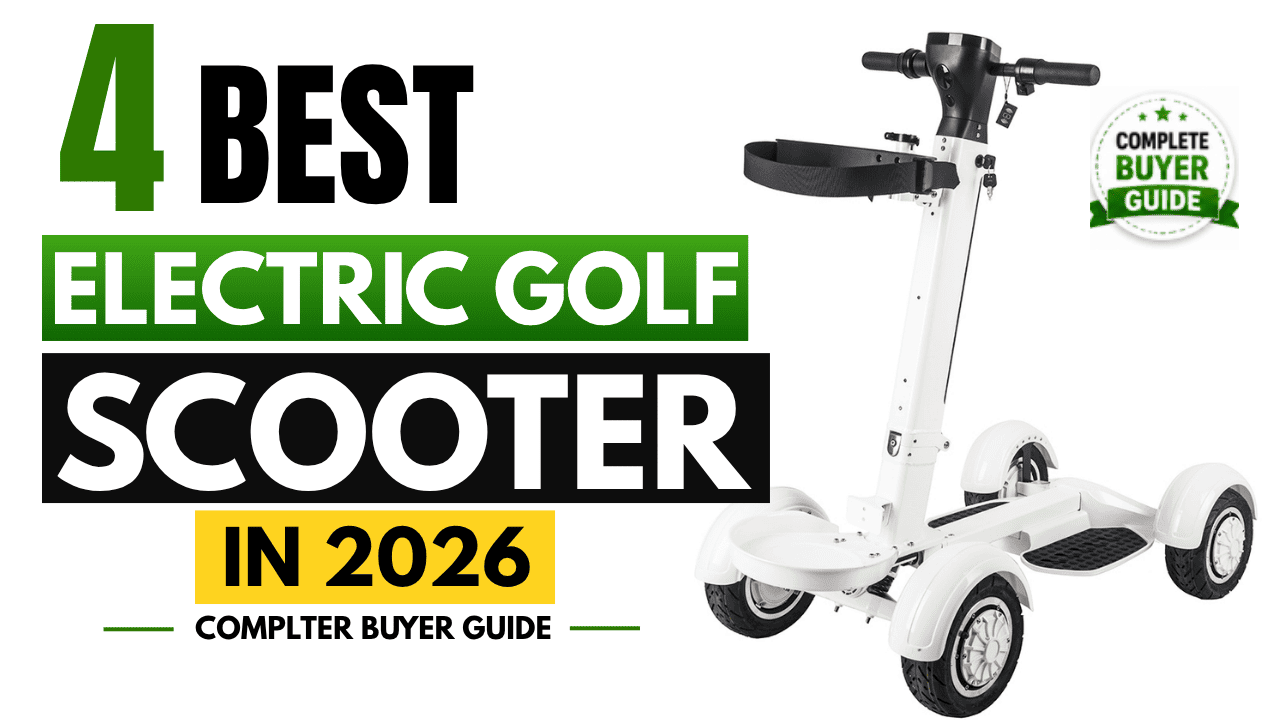
An electric golf scooter is a motorized, single-rider device built to carry a golfer and their bag around the course. It isn’t a repurposed commuter scooter with a bag strapped on — golf-specific models use wider tires, bag mounts, and a capped top speed designed for grass, hills, and wet mornings, so they’re safe to ride near other players.
This guide covers what these devices actually do, four real models worth considering on the US market, how to tell a smart purchase from a wasted one, and the course-access questions you should ask before you buy.
Quick Comparison: 4 Best Electric Golf Scooters
“`html| Model | Type | Battery Range | Best For | Price |
|---|---|---|---|---|
| AESWGOF Foldable | Stand-up ride-on | 9–15 miles | Compact, no-bulk riders | [Check current price] |
| HAOWEIH Multi-Passenger | Seated mobility scooter | Varies by charge | Heavy-capacity, general mobility use | [Check current price] |
| Alphard Club Booster V2 | Push-cart conversion kit | 18–27 holes | Owners who already have a push cart | [Check current price] |
| KEMIMOTO ApexR | Motorized push cart | Up to 36 holes | Remote-control walkers | [Check current price] |
Prices and specs change often — always confirm current numbers on the product page before buying.
What Exactly Is an Electric Golf Scooter (or E-Cart)?
“Electric golf scooter” gets used loosely to describe several different devices. Here’s how they actually break down:
- Stand-up (lean-to-steer): You stand on a platform and steer by leaning — think a heavy-duty skateboard with a bag mount on the side or back.
- Seated trike or quad: A small single-rider vehicle on three or four wheels, with the bag mounted alongside or behind the seat.
- Two-wheel, motorbike-style: A balanced, actively ridden model closer to a small motorbike than a scooter — good for golfers who want to stay engaged rather than just cruise.
- Conversion kit or motorized push cart: You walk alongside this one. It’s either a standalone remote-controlled cart or a motor kit that bolts onto your existing push cart so it can follow or steer itself while you walk.
Because that last category doesn’t fit the typical “ride-on” idea most people picture, this guide identifies each model by its specific type rather than lumping them all together.
Most run on rechargeable lithium-ion batteries, though some heavier models still use lead-acid. Ride-on models typically top out around 8–15 mph (13–25 km/h) — enough to save your legs, but well under street-scooter speeds to keep things safe around other golfers.
You’ll also see these called golf e-carts, e-caddies, or golf scooters — all referring to the same idea: motorized, single-user assistance built for the course.
The 4 Best Electric Golf Scooter Models (2026)
Here are four real models currently sold through major US retailers, split between ride-on scooters and motorized push carts, so you can compare both approaches to the same problem. Specs and availability change regularly, so verify current numbers before you buy.
1. AESWGOF Foldable Electric Golf Scooter -Ride-on stand-up
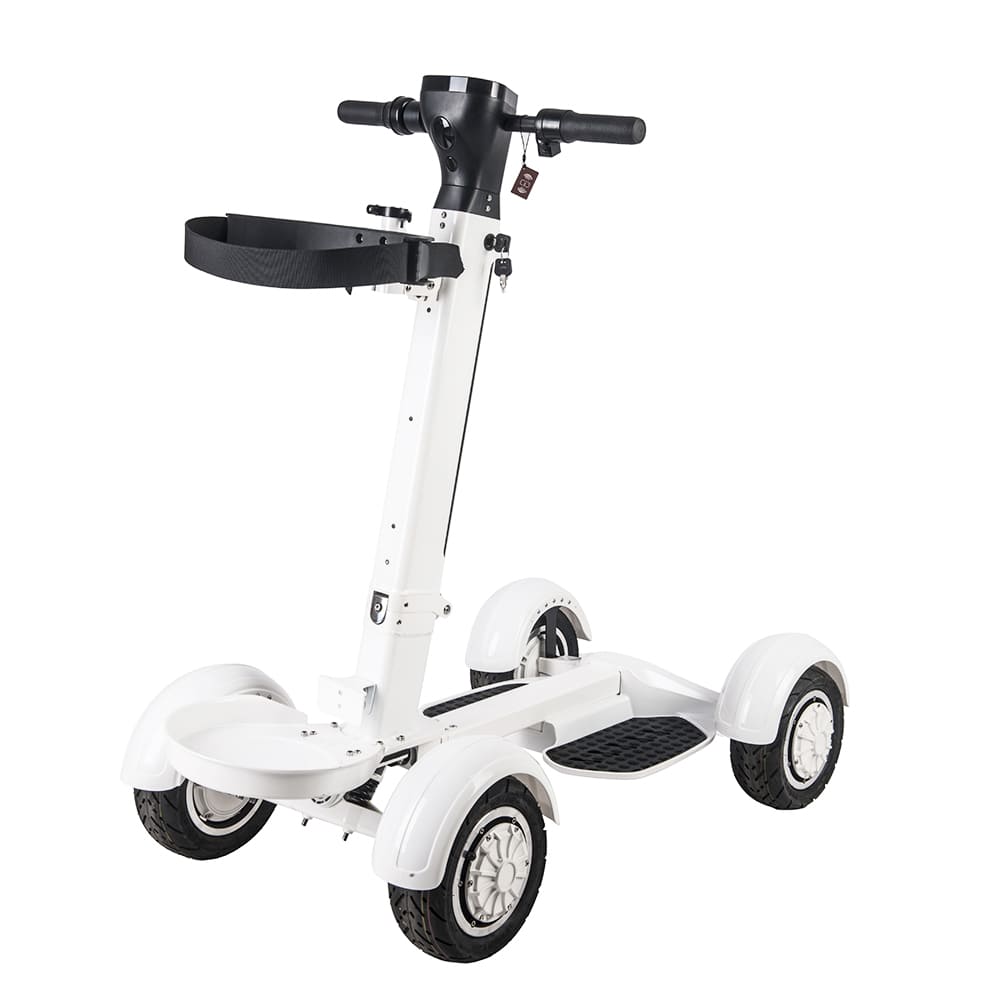
A true stand-up, single-rider scooter with a dual 2000W motor and a swappable 48V battery good for 9–15 miles (15–25 km) at up to 9 mph (15 km/h). It folds down small enough for a car trunk, and the swappable battery means you can extend your round without waiting on a charge.
Best for: Golfers who want a simple, compact ride-on scooter without added bulk.
2. HAOWEIH Multi-Passenger Mobility Golf Scooter
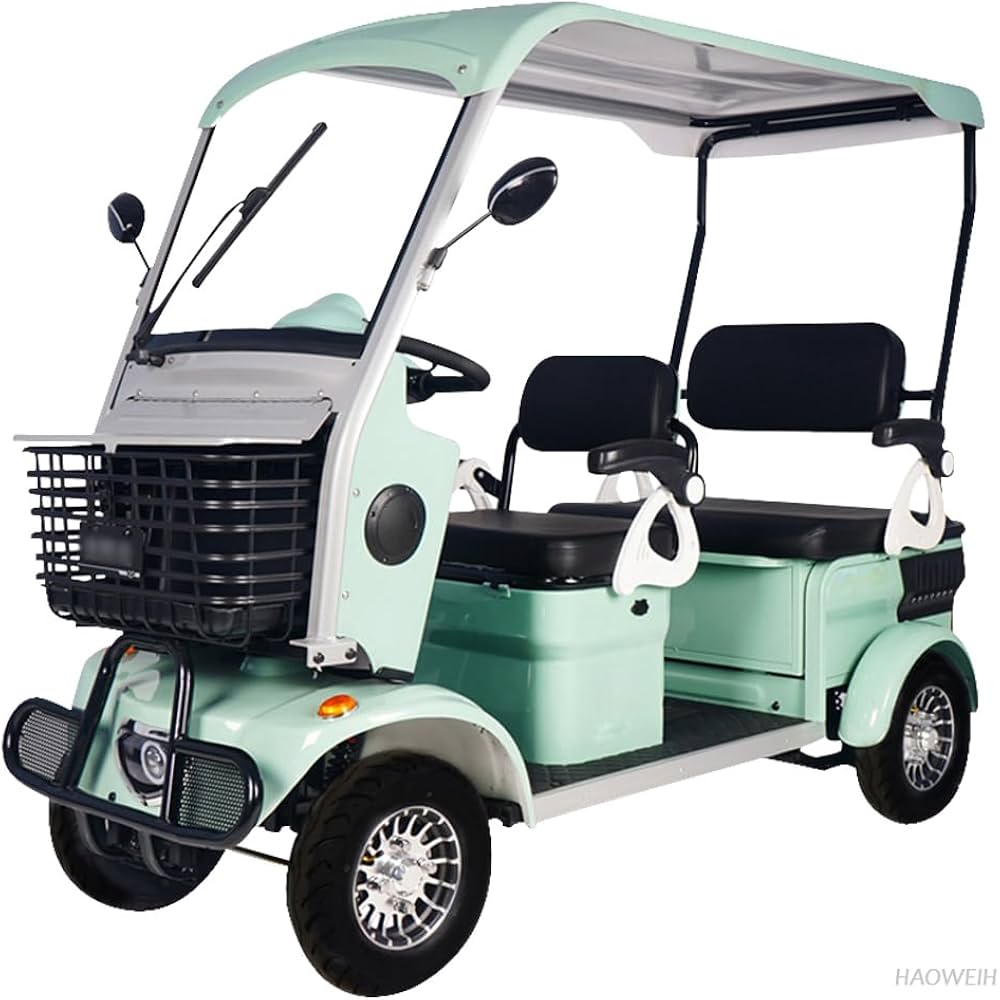
Unlike the other three models here, this is a seated multi-passenger mobility scooter rather than a golf-specific cart — closer to a general-use mobility scooter that’s marketed for course use. It runs a 650–800W motor and has a large rear storage container rated for over 660 lbs (300 kg).
Best for: Anyone who wants an all-purpose seated mobility vehicle they can also bring on the course, rather than a golf-only device.
3. Alphard Club Booster V2 — Motorized push-cart conversion kit
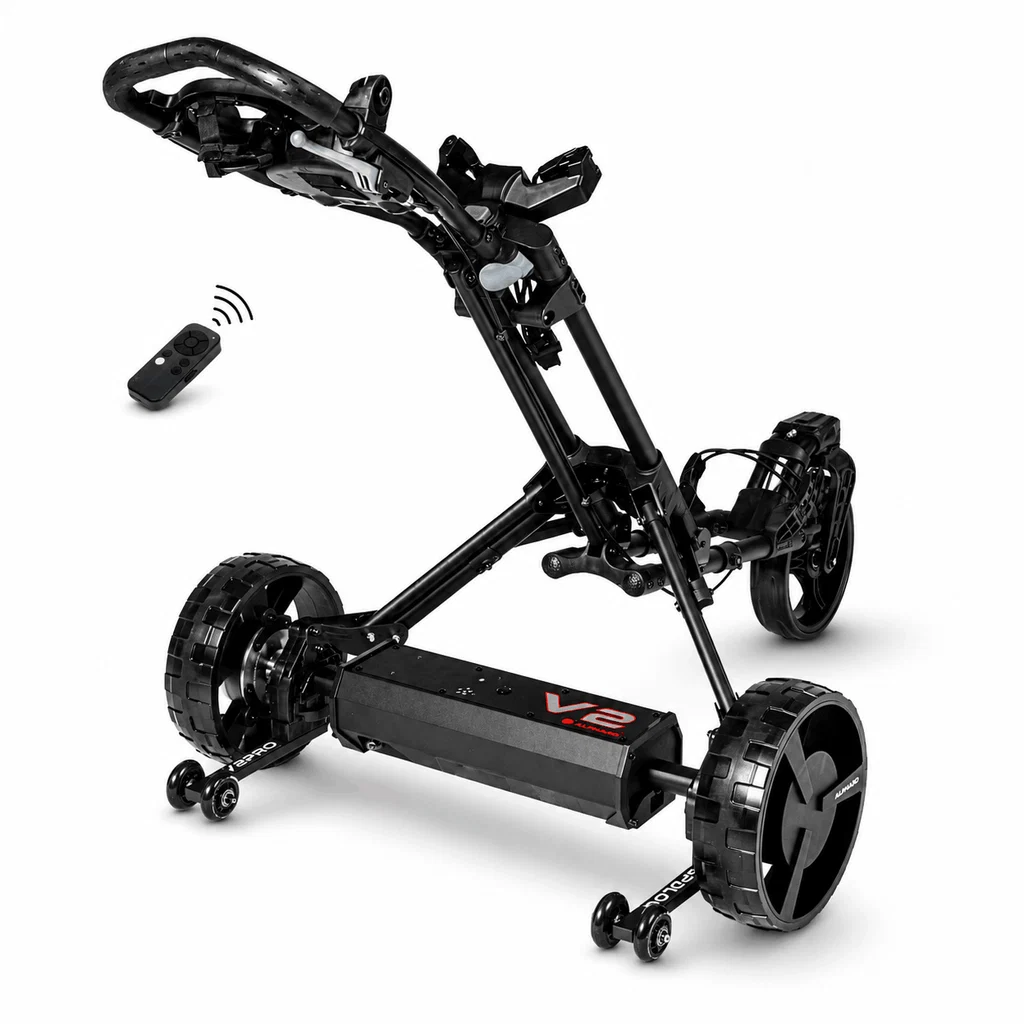
This isn’t something you ride — it attaches to the rear wheels of your existing push cart, turning it into a remote-controlled electric caddie that walks alongside you. A six-axis gyroscope keeps it tracking straight across hills and bumps, anti-tip wheels prevent tipping on slopes, and the removable battery covers 18–27 holes. Cart brackets are sold separately.
Best for: Golfers who already own a push cart and want to motorize it rather than buy something new.
4. KEMIMOTO ApexR Electric Golf Cart — Push cart with motorized drive
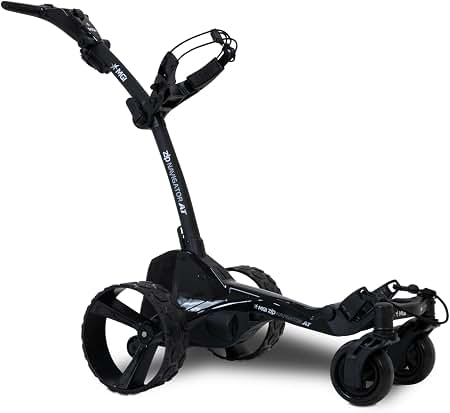
A standalone, remote-controlled push cart with dual 240W motors and an assist mode that matches your walking speed for navigating tight paths. The battery lasts up to 36 holes, it has roughly 492 feet of remote range, IPX5 water resistance, and USB-C charging. It also folds compactly for trunk storage.
Best for: Golfers who want remote control with the option to walk alongside and steer manually when needed.
Why People Actually Search for These
Buyers tend to fall into a few groups:
- Golfers with knee, hip, or back pain who want to play a full round without extra strain
- Solo golfers who don’t need or want to share a cart
- Older golfers who value independence over relying on someone else to drive
- Course or retail operators considering a rental fleet
What connects them isn’t the gadget itself — it’s less fatigue, more flexibility, and the ability to play without giving up the parts of golf they actually enjoy, like walking near their ball and setting their own pace.
Electric Golf Scooter vs. Golf Cart vs. Push Cart
| Factor | Electric Golf Scooter/E-Cart | Golf Cart | Push/Pull Cart |
|---|---|---|---|
| Riders per unit | 1 | 2–4 | 0 (you walk) |
| Speed | ~8–15 mph (13–25 km/h) | ~12–19 mph (19–30 km/h) | Walking speed |
| Course access | Varies by course — sometimes more flexible than carts | Often cart-path restricted | Access to all courses |
| Exercise value | Moderate (ride-on) to high (motorized push cart) | Low | High |
| Storage footprint | Small | Large | Very small |
If exercise and full course access matter most, go with a push cart. If you’re playing in a group, a shared cart makes more sense. If you’re a solo or semi-active player who wants simplicity without pushing a cart, an electric scooter or motorized push cart is worth trying.
Are Electric Golf Scooters Actually Allowed on Golf Courses?
There’s no single rule here, so don’t assume either way:
- Some courses allow them freely, and a few already rent similar single-rider equipment.
- Some restrict them to cart paths only, the same as golf carts.
- Some ban them outright, usually over liability or turf-damage concerns.
Golfers with a documented mobility need may qualify for accommodations at some courses, but this isn’t automatic and varies by location. The safest move is a quick call to the pro shop before you buy or bring one — ask whether personal scooters are allowed and whether there are terrain restrictions. Five minutes on the phone can save you an expensive mistake.
What Determines Whether One Is Worth Buying
- Battery type and size — lithium-ion is lighter and holds a charge better than lead-acid, which matters for a full round.
- Weight capacity — check it against your own weight plus a fully loaded bag, not just the bag alone.
- Terrain handling — tire width and tread matter more than most buyers expect on wet or hilly courses.
- Turning radius — a wide turning radius is a real penalty on narrow cart paths.
- Braking system — hydraulic, mechanical, and regenerative brakes behave differently on slopes, so know what you’re getting.
- Weather sealing — important if you play in coastal or humid conditions.
- Electrical safety certification — poorly built lithium-ion drivetrains carry fire risk. Seated and stand-up personal scooters are typically evaluated against UL 2272, the main US standard for personal electric mobility devices (battery, motor, controller, charger). Two-wheel, e-bike-style models may instead carry UL 2849, the same standard used for e-bikes. This certification isn’t always advertised, so ask the seller directly which standard their product meets.
- Parts access and warranty — battery replacement cost and turnaround time matter more than the sticker price. Frame and battery warranties are often separate, and batteries are usually covered for a shorter period.
How to Choose the Right One
- Call your course first and confirm personal scooters or carts are allowed.
- Decide between a ride-on (stand-up, seated, or two-wheel) and a push cart based on how much physical assistance you need versus how much activity you want.
- Match the model to your usual terrain — a flat municipal course has very different requirements than a hilly resort course.
- Ask directly about UL 2272 or UL 2849 certification if it isn’t listed on the product page.
- Test ride if you can — turning radius and brake feel vary more between models than spec sheets suggest.
- Check warranty terms and local parts/service support before buying. That’s what separates a good purchase from a great one.
Common Mistakes to Avoid
- Buying before confirming your course’s policy
- Comparing models on top speed alone instead of range and hill performance
- Ignoring weight capacity with a fully loaded bag
- Letting the battery sit fully drained for long periods, which shortens lithium-ion battery life
- Assuming a scooter automatically gets the same course access as a golf cart — check, don’t assume
- Skipping the electrical safety question just because it isn’t on the spec sheet
Maintenance and Safety Basics
Fully charge the battery after each use to extend its lifespan, and store it somewhere that avoids extreme heat or cold. Rinse the undercarriage after wet rounds to clear mud and grass, and check brake response and tire pressure regularly rather than waiting for something to fail.
Wet slopes and grass are the most common cause of slips — take hills slowly instead of relying on brakes alone. If you’re buying for someone with a mobility concern, a conversation with a physical therapist or doctor about seated versus standing posture is worth more than guessing.
Check with your insurance provider on whether a course’s liability coverage extends to your personal mobility device — confirm this before you ride, not after.
If a Scooter Isn’t the Right Fit
That’s fine — it’s not for everyone. Push or pull carts give you full course access and an exercise benefit. Shared carts work well in a foursome or on courses with strict cart-path rules. Caddie service, where available, sidesteps the equipment question entirely. Plenty of golfers are also perfectly happy with a strap bag as long as the weight and mobility aren’t an issue.
FAQ
Are electric golf scooters allowed on golf courses?
It depends on the course. Some allow free roaming, others restrict scooters to cart paths, and some don’t permit them at all. Check with your specific course before heading out.
How long does the battery last on a single charge?
Most batteries cover a full 18-hole round on one charge. Actual time varies with terrain, rider weight, and battery size.
Are electric golf scooters better than a golf cart?
They’re not really substitutes for each other. A motorized scooter or push cart suits golfers who want flexibility and independence, while a shared cart works better on courses with cart restrictions or when playing in a group.
Can older golfers or people with mobility issues use these?
Yes — several models, including seated and motorized push-cart options, are built with this in mind. Check your course’s policy and talk to a doctor or physical therapist before buying.
Do you need a license to use one?
Most golf scooters and motorized push carts count as low-speed personal mobility devices for course use only, so no license is needed on the course itself. Rules differ if you plan to use one on public roads — check your state and local regulations.
How long do the batteries last before needing replacement?
Typically two to four years, or a few hundred charge cycles, with proper care.
Do electric golf scooters damage greens and fairways?
Well-maintained models with the correct tires generally don’t cause more wear than a standard golf cart. Course superintendents set their own rules based on local soil conditions, so check locally.
Are they electrically safe?
It depends on the model and manufacturer. Seated and stand-up models are typically measured against UL 2272, and two-wheel e-bike-style devices against UL 2849 — both covering the motor, battery, controller, and charger. Ask the seller whether the specific model carries third-party certification, since it isn’t always listed.
The Bottom Line
Electric golf scooters and motorized push carts solve a real problem: an easier round, more independence from shared carts, and more flexibility in where you go. The right pick depends on your body, your riding preference, and — most importantly — what your course actually allows.
Confirm your course’s policy first. Choose between a push or ride-on design based on comfort. Ask about safety certification if it isn’t listed, and test ride when you can. Everything else is detail — and the sooner you find the right fit, the sooner every round gets a little easier.
The information in this guide is compiled from manufacturer specifications, expert reviews, and industry sources. Figures are flagged where independent verification wasn’t available.