Updated Written by Huzaifa, Electric Scooter Analysis
About the author: Huzaifa runs Electric Scooter Analysis, a blog that covers electric scooters and focuses on factors that affect performance on the ground — including hill torque, hill climbs, and battery performance.
Quick Answer
The most effective electric scooters designed for hilly terrain feature dual motors (500W–1,500W+), a battery of 48V or higher, dual braking (regenerative and mechanical disc), and pneumatic tires. The best electric scooter for hills combines high torque, a high-voltage battery, reliable brakes, and excellent traction.
As a rule of thumb:
- Slopes under 10% — a single 350–500W motor is sufficient
- 10%–20% grade — two motors of 500–750W
- 20%–30%+ grade — a motor rated 750W–1,500W, built specifically for hills
If you’ve felt your scooter crawl to a stop near the top of a hill, you already know the problem with most “top 10” lists — they’re built for flat cities. Hill performance depends on more than top speed; it depends on how the battery holds up under stress and how well the brakes perform on the way back down.
This article covers what actually makes a scooter good at climbing, which features matter, how to size up your own hill, and how to match a scooter to the terrain you ride every day — whether that’s a gentle slope near your house or a serious grade like Filbert Street in San Francisco.
How We Put This Guide Together
This guide is based on manufacturer-published specifications and publicly available incline and battery data. Our goal is to help riders choose the best electric scooter for hills using practical performance factors instead of marketing claims. Where a claim comes from manufacturer specs rather than independent testing, keep in mind that manufacturer data is typically measured under ideal, not typical, riding conditions.
How Electric Scooters Actually Climb Hills
Choosing the best electric scooter for hills starts with understanding how motors, batteries, and controllers work together on steep terrain. Wattage gets all the attention, but it’s only one part of the story. Three elements work together when a scooter is on an uphill slope:
1. Motor and torque Raw power alone isn’t what pushes a scooter uphill without bogging down — torque is. Dual-motor setups distribute this power evenly across both wheels, reducing wheel spin and keeping grip steady on steep or wet slopes.
2. Controller and battery voltage Climbing draws far more power than riding on flat ground. High-voltage batteries (48V, 53V, 54V or above) keep their output for longer in the event of stress. Battery systems with lower voltages are more vulnerable to power loss and voltage loss at the time you need them most.
3. Weight distribution and traction. Pneumatic tires with real tread grip, rough or dry pavement, are better than solid tires. A scooter with a lower center of gravity and an even wheelbase also resists the front wheel lifting during hard uphill acceleration.
What happens in practice: as a scooter climbs, it meets more resistance and sends more energy to the motor. More torque means more heat and battery draw. On long, steep hills, some controllers throttle back to protect the motor — which is why a scooter’s ability to sustain a climb matters more than a quick burst of speed.
Degrees vs. Percentage Grade: The Spec Sheet Confusion
This is where most buying guides go wrong. Manufacturers list incline ratings as either percent grade or degrees, and the two scales are not interchangeable.
- Percent grade = rise over run, divided by 100
- Degrees = the angle from horizontal
For example, a 45-degree angle is actually a 100% grade, not 45% — a common source of confusion when comparing spec sheets.
| Grade (%) | Approx. Degrees | What It Feels Like |
| 5% | ~2.9° | Slope barely noticeable |
| 10% | ~5.7° | An ordinary suburban hill |
| 15% | ~8.5° | An obvious hill on a bike |
| 20% | ~11.3° | Steep urban incline |
| 25% | ~14° | A steep San Francisco–style street |
| 30%+ | ~16.7°+ | Very extreme — few public streets exceed this |
Always check which scale a listing uses before comparing two scooters. A “20% grade” rating and a “20 degrees” rating are not the same thing — the second is much steeper. Understanding this difference makes it much easier to compare the best electric scooter for hills accurately.
What to Look For in a Hill-Climbing Scooter
Every best electric scooter for hills should offer enough torque, battery voltage, traction, and braking performance for your daily route.
- Motor power: 500W is a decent baseline for moderate climbs. 500W–1,500W, ideally in a dual-motor layout, handles long or difficult climbs comfortably.
- Drivetrain and torque: Dual-motor and all-wheel-drive layouts spread the climbing load and reduce wheel slip, especially on wet or slippery surfaces.
- Battery capacity and voltage: 48V+ batteries handle rising power demand far better than 36V batteries. Higher Ah ratings also help buffer against faster drain.
- Manufacturer incline ratings: Look for a specific degree or percent-grade figure. Vague claims like “handles any hill” are a red flag.
- Braking system: Dual brakes (regenerative plus mechanical disc, ideally hydraulic) are non-negotiable for hill riding.
- Tires: Pneumatic tires with deep tread outperform solid tires on grip — arguably the single most important factor on a slope.
- Payload and weight of rider. Specifications of the manufacturer are typically evaluated by light riders. For heavier riders, anticipate a slower top speed, a shorter span, and higher stress on their motors in the real world of climbing.
- Water resistance: IPX5 or IPX6 matters if your hill route sees rain, dew, or wet leaves.
- Certification for safety: UL 2272 certification confirms the electrical system’s safety standards. It is worth checking, especially for powerful models.
How to Actually Test a Scooter’s Hill Performance
Spec sheets only tell you so much. Here’s a practical way to test real climbing ability, whether it’s your own scooter or one you’re comparing before buying:
- Select a hill near you that has an estimated or known degree (Google Maps terrain view or the cycling apps, such as Komoot, are able to estimate this). Ideally, 150-200 feet (about 50-60 meters) in length.
- Start at a slow pace and hold the throttle open the whole way — don’t ease off.
- Watch whether your speed stays steady or drops sharply near the top. A steady speed signals endurance; a fast drop usually means the controller has throttled back to protect the motor.
- Repeat with a passenger or a weighted backpack matching your actual riding weight, since most models are spec’d for lighter-than-average riders.
A scooter that holds its speed through this whole test — not just one that’s fast off the line — is the one you can rely on for a regular commute.
A Simple Decision Framework: Match the Scooter to Your Hill
Follow this framework to choose the best electric scooter for hills based on the steepest roads you ride.
- Find your steepest hill. Use Google Maps terrain view or a cycling elevation calculator like Komoot to estimate the grade.
- Match the grade to a motor tier:
- Below 10% — a single 350–500W motor is enough
- 10%–20% — 500–750W, ideally dual motors
- 20%–30% — 750W–1,500W dual motors with a higher-voltage battery
- Over 30% — you’ll need a specialized, purpose-built hill-climbing scooter.
- Add power headroom for extra weight. If you’re over 200 lbs (91 kg) or regularly carry cargo, move up a tier.
- Don’t separate climbing power from braking. Any scooter rated 20% grade or higher needs dual brakes as a baseline requirement, not an upgrade.
- Weigh portability against performance. The best hill-climbing scooters tend to be the heaviest — worth considering if you’ll be carrying it up stairs or onto trains.
The 12 Best Electric Scooters for Hills
Rather than one “best overall” pick, the goal is matching a scooter to the incline and speed of your specific hills. Here are twelve options spanning budget commuters to extreme off-roaders.
1. INMOTION Climber — best for everyday hill-hopping.
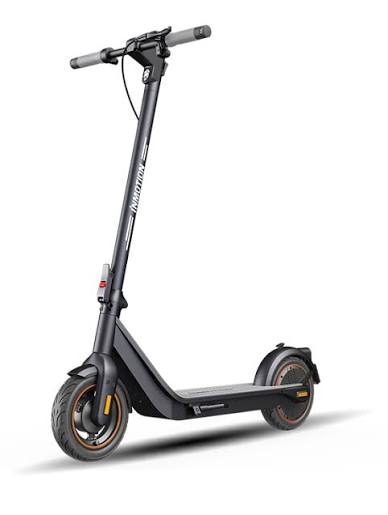
450W per motor (900W continuous / 1500W peak) that are rated by the manufacturer for slopes that fall in the 30-35 percent range, coupled with a battery of 533Wh suitable for 56 miles of smooth terrain. Three brakes (front and rear regens and a mechanical rear disc) ensure safe and secure descents. IPX6-rated to be used in wet conditions. It’s not the lightest, at under 46 lbs. However, it folds up for storage and transportation.
Segway Ninebot GT Series: best premium performance pick for hills.
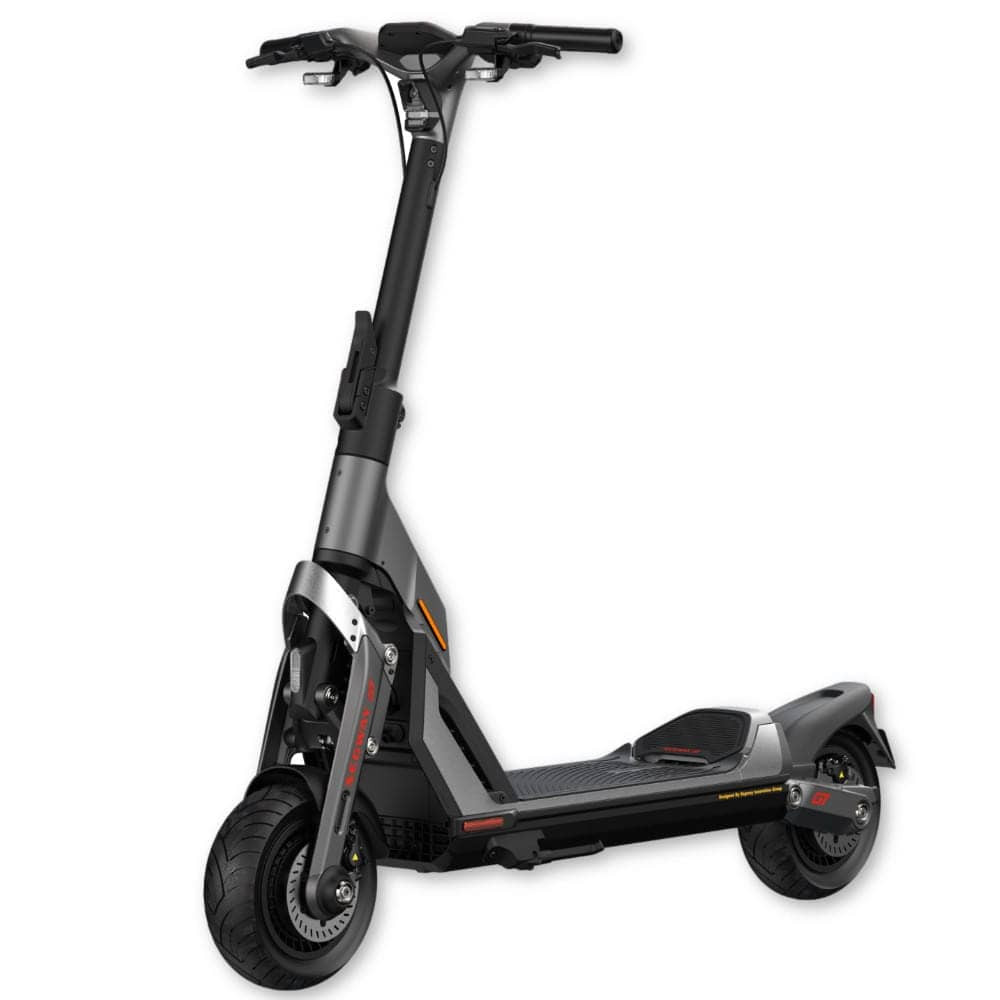
Motors usually range from 1,400W to 3,000W+ per motor It’s not as strong as the top-of-the-line dual motor scooters. Still, it is a reliable, sturdy choice for riders whose typical ascent is more urban than mountain roads. The durable build quality and the wide accessibility make it a solid choice for durability over brute climbing strength.
3. Fluid Mosquito — best lightweight option for moderate hills
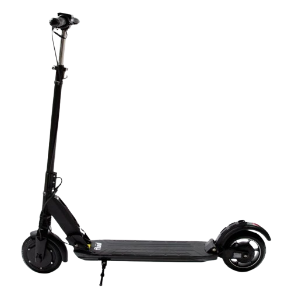
At just 29 lbs, the Mosquito is a combination of a 500W/700W peak front motor with a battery capable of handling 10% gradients effortlessly. The three brakes (rear drum as well as front step-on and the front regen) provide additional protection. Its small, simple-to-fold design is ideal for riders who value portability first and hill capabilities second.
4. Fluid Horizon — best everyday workhorse commuter.
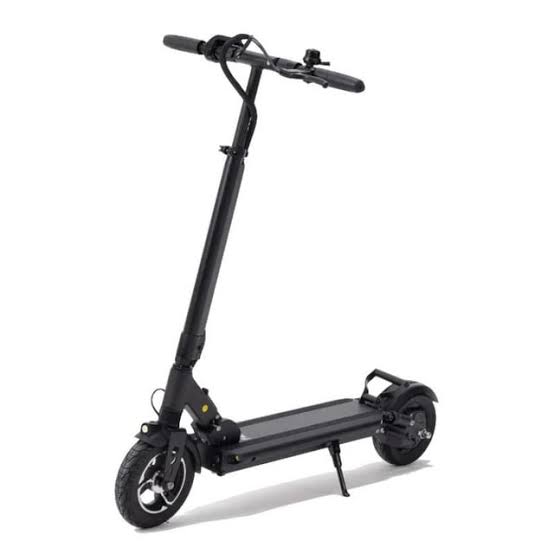
An alternative to the Mosquito that has a front-wheel-drive motor that is rated at 500W/700W peak power and a battery of 48V and solid tires that prevent punctures. Dual spring suspensions smooth daily traffic bumps, focusing on low-maintenance hill riding over raw speed.
5. Fluid Vista — best single-motor option for user-friendliness.
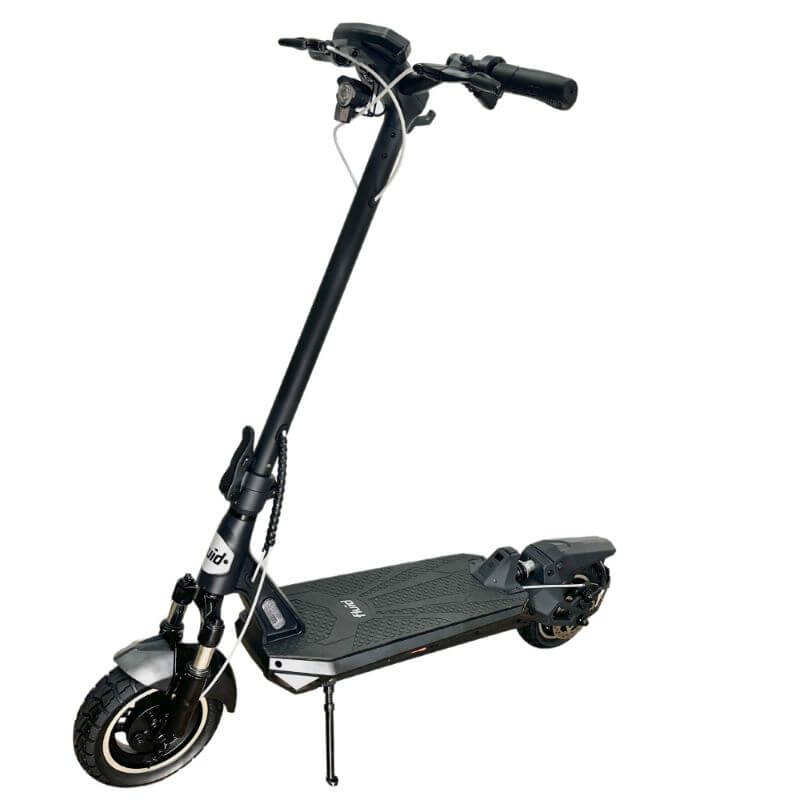
Most top climbers use dual motors, but the Vista’s single rear motor (1,000W/1,800W peak) and 60V battery handle 26% slopes with ease. It has a wide deck, adjustable front and rear suspension, and a long range. Front and rear disc brakes plus an IPX5 rating make it a strong all-rounder for riders who don’t need a second motor.
6. WideWheel Pro — best for stylish dual-motor commuting.
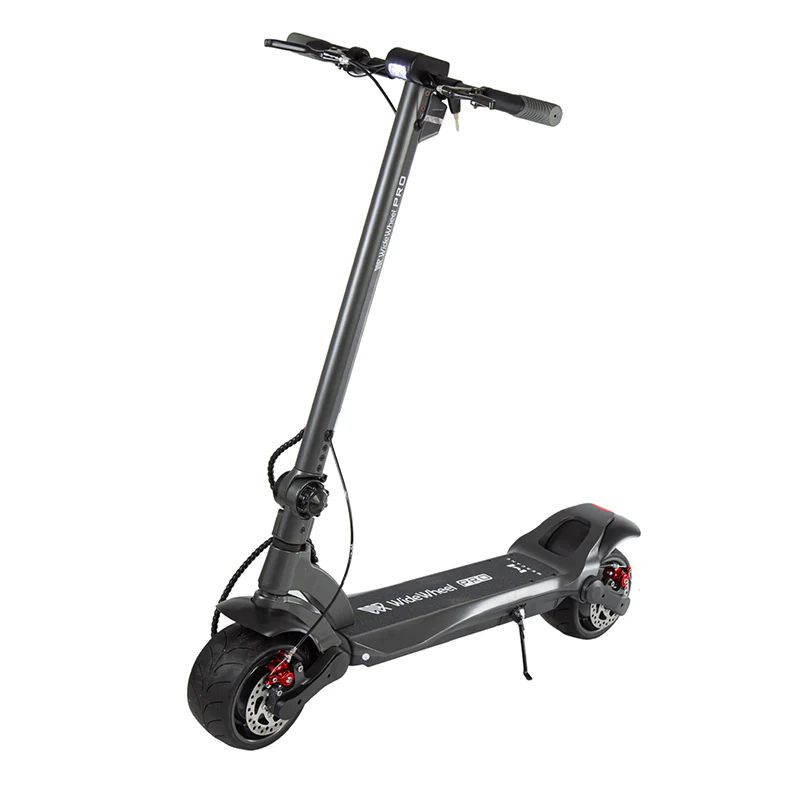
Dual motors totaling 500W/1,600W peak, with wide, foam-filled tires for comfort and control on steep, smooth roads (not built for trails or gravel). Front and rear disc brakes plus regen provide solid stopping power — a good pick for dual-motor hill control without going off-road.
7. Isinwheel S10 Max — cheapest all-round hill climber
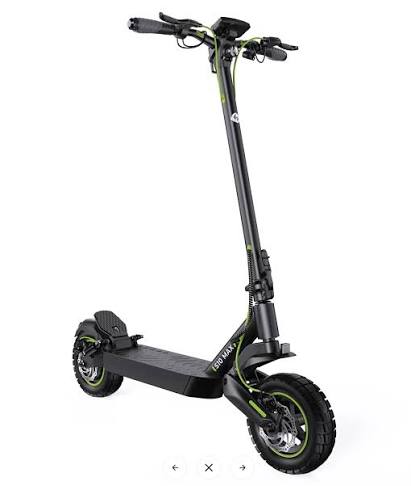
A 1,000W motor and 48V battery handle inclines that would stress lighter scooters, backed by 10-inch pneumatic tires and dual disc brakes. With a 28-mile range and foldability, it’s a solid all-day commuter for hilly routes at a budget price.
8. Isinwheel GT2 — most accessible off-road hill climber
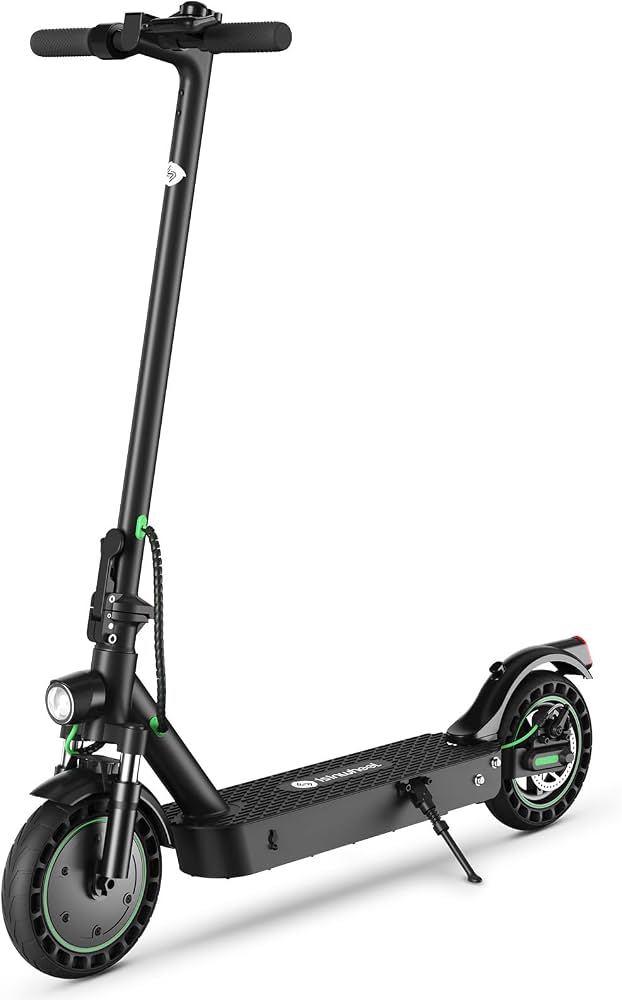
Shares the S10 Max’s 1,000W motor and 48V system but adds rugged 10-inch off-road tires and front/rear suspension, making it better suited to gravel, unpaved slopes, and uneven terrain. Added water resistance and a sturdy frame round out the off-road package.
9. Apollo Ghost / City Pro —
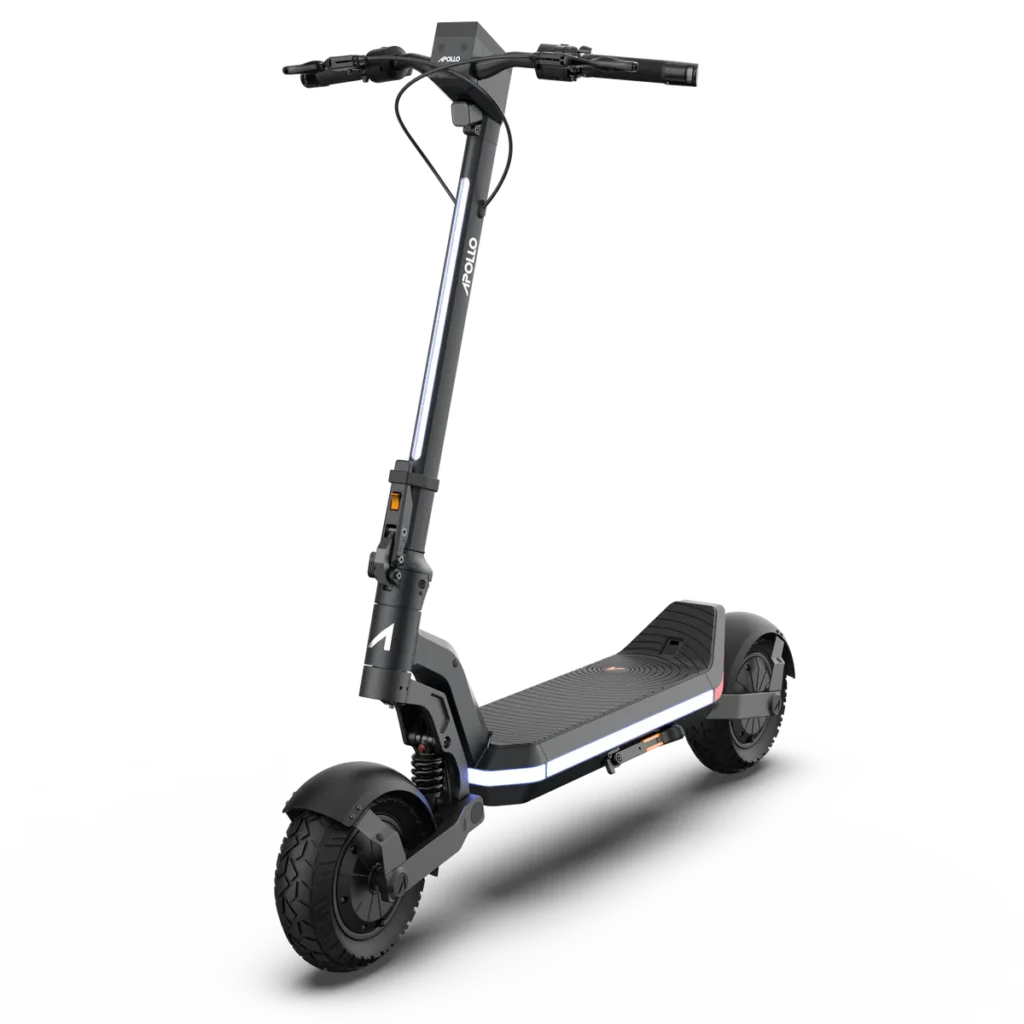
The most well-balanced commuter Mid-power motors featuring a comfortable ride and robust brakes. Designed for those who prefer smooth rides and moderate hills instead of sustained, steep climbs. It is a compromise between budget and flagship models. The focus is on durability over specs.
10. Kaabo Mantis V2 —
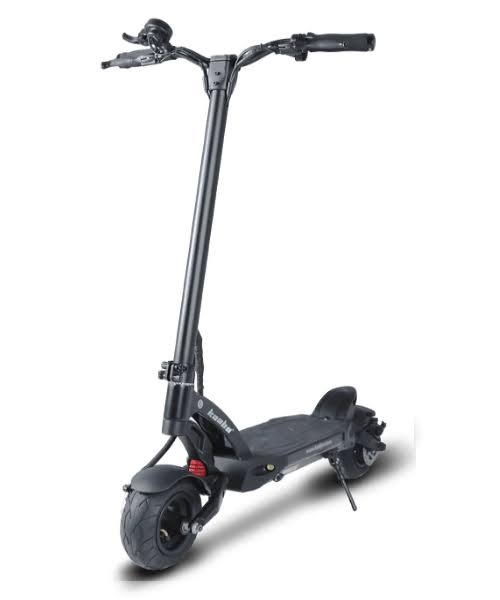
The most durable all-round climber. Dual motors with a power of 1000W (3,000W maximum) give you consistent and reliable climbing force, backed by a massive battery which can last for more than 45 miles. The front and rear adjustable suspensions can withstand rough terrain. The hydraulic dual disc brakes, as well as regen, ensure smooth descents suitable for longer commutes and weekend off-roading.
11. Nami Klima — best for riders who want speed.
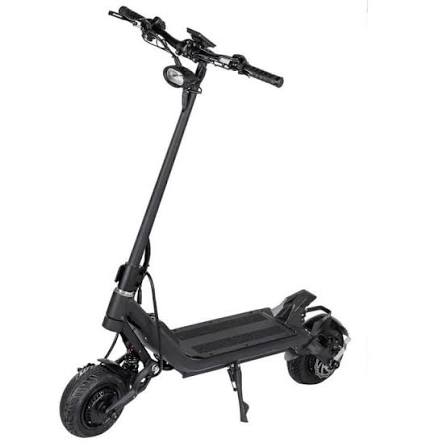
Two 1,000W motors with high torque, as well as a 60V battery, provide fast, smooth acceleration and steady climbing. This is accompanied by the ability to adjust coil shock suspensions for difficult terrains and hills. Dual disc brakes hydraulically paired with regen guarantee solid stopping power — an ideal choice for serious, high-performance climbing, at an expensive cost.
Kaabo Wolf King GT: best for extreme off-road terrain.
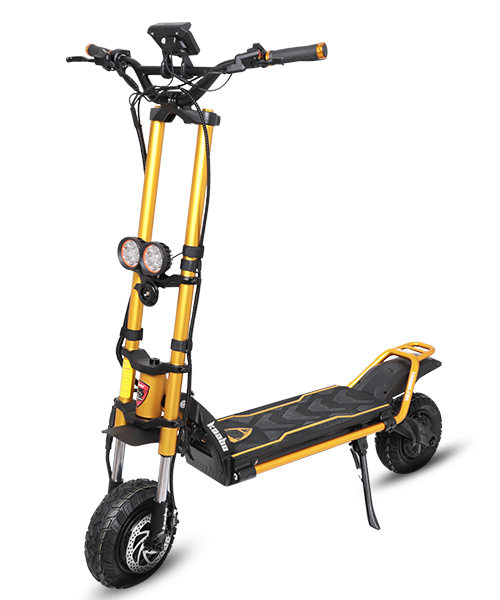
Dual 2000W motors (8400W peak) and a 72V battery, large-capacity batteries, and motorcycle-style front suspension forks give this model long-duration climbing ability on dirt or fully off-road terrain — not just urban hills. Hydraulic dual disc brakes are essential, given the power and speed on tap. Heavier and less portable, but hard to beat for the toughest conditions.
Quick Comparison Table
Use this comparison to find the best electric scooter for hills that matches your riding style and budget.
| Model Name | Motor Power (Nominal / Peak) | Battery | Best Suited Grade (Charhai) | Braking System | Weight (Wazan) | Best For (Kiske liye ha) |
|---|---|---|---|---|---|---|
| INMOTION Climber | Dual 450W (1,500W Peak) | 533Wh | 36% Grade (Steep Hills) | Dual Disc + Regen | ~46 lbs | Everyday light-weight hill commuting |
| Segway Ninebot Max G2 | Single 450W (1000W Peak) | 551Wh | 22% Grade (Moderate) | Front Drum + Rear Regen | ~53 lbs | Reliable, low-maintenance daily travel |
| Fluid Mosquito | Single 500W (700W Peak) | 48V 9.6Ah | 15% Grade (Gentle slopes) | Rear Drum + Front Regen | 29 lbs | Ultra-light portability & short commutes |
| Fluid Horizon | Single 500W (800W Peak) | 48V 13Ah | 15% Grade (Gentle–Moderate) | Rear Drum + Regen | ~42 lbs | Comfortable budget daily commuting |
| Fluid Vista | Single 1000W (1800W Peak) | 60V 14.5Ah | 26% Grade (Steep Hills) | Front Drum + Rear Disc | ~60 lbs | Zero-maintenance puncture-free hill climbs |
| WideWheel Pro | Dual 500W (1600W Peak) | 48V 15Ah | 30% Grade (Steep Hills) | Dual Disc + Regen | ~54 lbs | High-torque unique wide-tire cruising |
| Isinwheel S10 Max | Single 1000W | 54.6V 15Ah | 35% Grade (Steep claims) | Front Disc + EABS | ~48 lbs | Budget urban commuter with strong motor |
| Isinwheel GT2 | Single 1000W | 48V 15Ah | 35% Grade (Steep claims) | Dual Hydraulic Disc | ~53 lbs | Budget off-road look with heavy tires |
| Apollo Ghost | Dual 800W (2000W Peak) | 52V 18.2Ah | 25° Grade (~45% Steep) | Dual Disc (Hydraulic optional) | ~64 lbs | Smooth, fast, high-performance hybrid |
| Kaabo Mantis V2 | Dual 1000W (3200W Peak) | 60V 18.2Ah | 30% Grade (Very Steep) | Dual Hydraulic Disc | ~65 lbs | Powerhouse acceleration and agile handling |
| Nami Klima | Dual 1000W (High Torque) | 60V 25Ah | 30%+ Grade (Extremely Steep) | Dual Hydraulic Disc | ~79 lbs | Premium hyper-scooter, ultra-smooth ride |
| Kaabo Wolf King GT | Dual 2000W (8400W Peak) | 72V 35Ah | 50%+ Grade (Absolute Beast) | Dual Hydraulic Disc | 115 lbs | Extreme off-road heavy-duty performance |
Specs above are approximate and based on manufacturer-published figures. Make sure to confirm the current specifications directly with the manufacturer prior to purchasing, as the model year and firmware may affect the performance.
Why Range Drops on Hills (and What to Do About It)
The power required to climb is much greater than that required for riding on flat ground. It’s not uncommon to observe your range drop significantly below your flat-ground number. If you regularly commute in a hilly area, select an electric scooter that has enough capacity to travel the distance you normally take and still have room, rather than reducing it to a minimum.
A larger battery can help buffer voltage drop during climbs. This is one reason why the best electric scooter for hills usually comes with a higher-voltage battery. Still, it’s not a substitute for a motor with enough torque in the first place — the two aren’t interchangeable.
Riding Technique: How to Climb Hills Effectively
Even the best electric scooter for hills performs better when paired with proper riding technique.
- Shift your weight slightly forward to keep the front wheel planted and improve grip on steep slopes.
- Build momentum before the climb begins — approaching uphill with speed already up puts less strain on the motor than starting from a stop.
- Apply the throttle gradually, especially on wet or slippery surfaces, to avoid wheel spin and loss of traction.
- Bend your knees slightly to absorb bumps and stay balanced as the scooter’s angle shifts.
- On steep slopes, consider zigzagging like a cyclist would — this reduces the effective grade at any given moment.
- Switch to a lower speed or “eco” mode on long climbs if your scooter has one; some controllers deliver more torque at lower speeds.
Why Won’t My Scooter Climb Hills? Quick Troubleshooting
If a scooter that used to handle a hill fine is suddenly struggling, check these before assuming it’s underpowered:
- Low battery charge — most controllers reduce power below a certain charge level, and it shows up first on climbs.
- Low tire pressure — increases rolling resistance and hurts hill performance. Check the pressure listed on the tire sidewall.
- Dragging brakes — a pad that isn’t fully releasing causes constant friction, especially noticeable going uphill.
- Cold temperatures — reduce battery performance and climbing capacity even at a full charge.
- Excess rider or cargo weight — reduces speed, range, and climbing ability while adding strain to the motor and frame.
- Thermal throttling — some controllers cut power during prolonged, repeated climbs to prevent the motor from overheating. This is normal behavior, not necessarily a fault.
Maintenance Checklist for Hill Riders
Proper maintenance keeps the best electric scooter for hills performing at its full potential.
- Check tire pressure before every ride and inspect tread condition weekly.
- Check brake discs and pads regularly — they wear faster with frequent downhill riding.
- Keep battery charge between 20% and 80% for normal use; avoid leaving it at 0% for extended periods.
- Avoid charging in extreme heat or cold.
- Clean and lubricate moving parts (folding mechanism, suspension linkages) regularly.
Local Terrain: Why “Best for Hills” Depends on Where You Live
The best electric scooter for hills depends on where you ride, not just on the highest motor wattage.
- San Francisco — streets like Filbert Street hit a 31–32% slope (about 17.5°). Riders here should look for scooters rated 30%+ to handle the steepest blocks confidently.
- Seattle — frequent 10–15% grades combined with humid conditions make pneumatic tires and strong regenerative braking especially important.
- Pittsburgh, home to some of the steepest roads in the U.S., favors high-torque dual-motor scooters with good cooling.
- Lisbon — hills are often cobblestoned, so suspension and traction matter as much as raw power.
- Dense hilly cities generally — compact, folding scooters that fit in an elevator or small storage space are worth prioritizing.
- Wellington — wind and rain make weather sealing (IPX5 or higher) just as important as power.
If you’re shopping locally, ask a shop to let you test a model on an uphill similar to your actual route — most test rides happen on flat ground. They won’t tell you much about real hill performance.
Common Mistakes to Avoid
Avoid these mistakes when shopping for the best electric scooter for hills.
- Judging power by top speed alone — top speed is usually measured on flat ground and says little about climbing ability.
- Ignoring rider weight in the specs — manufacturer incline ratings are typically tested with lighter-than-average riders.
- Treating brakes as an afterthought — a scooter that climbs well but can’t stop safely on the descent is a real safety risk.
- Buying on range alone — range is one of the specs most affected by hilly terrain; don’t assume advertised numbers will hold on your actual route.
- Exceeding the rated max grade — this can overload the motor and cause loss of control, no matter how powerful the scooter claims to be.
Safety on the Way Down
The climbing aspect gets the most interest, but safely and efficiently descending is just as important. Utilize dual braking instead of using one brake system. Take care when descending steeply, as well as be alert on the road in areas that are wet or covered with leaves, in which even the most reliable scooter could lose control. Be sure to wear a helmet, be sure to check local speed limits and wattage requirements prior to buying the most powerful model. The rules differ by city and country. The best electric scooter for hills should always provide strong braking performance as well as climbing power.
When a Scooter Isn’t the Right Tool
For long, steep climbs, some riders are better served by other options:
- E-bikes with mid-drive motors are often more efficient than hub-motor scooters thanks to gearing.
- Seated electric mopeds typically offer more efficiency and comfort on steep slopes, though they can’t be carried or folded.
- Purpose-built mobility scooters offer a different approach to slope safety and stability for riders who need extra security and control.
FAQ
These answers will help you choose the best electric scooter for hills with greater confidence.
What’s the best motor wattage for climbing hills?
500W is sufficient in moderate terrain. When climbing steep and long, 500W-1500W in a dual-motor setup is more stable.
Can single-motor scooters handle steep slopes?
To some extent, but single motors under 500W usually struggle above a 15% gradient, especially with a heavy rider or cargo.
How much do hills affect range?
Expect a shorter range than the manufacturer’s flat-ground figures, since climbing takes more energy than cruising.
Are dual-motor scooters better for hills?
In general, spreading torque between two wheels improves traction and reduces strain on one motor. This is especially important on slippery and wet slopes. That’s why many riders consider dual-motor models the best electric scooter for hills.
What counts as “steep” for a scooter?
Anything above 20% (about 11°) is considered steep. Beyond 25–30%, you need a dedicated, high-torque model.
Does a bigger battery help with hills?
It helps maintain power supply and reduce voltage fluctuation under load. Still, it doesn’t add motor torque — it’s not a substitute for having enough torque to begin with.
Why doesn’t my scooter climb hills the way it used to?
The most likely cause is the depletion of batteries, low-inflated tires, brakes pulling during colder weather, as well as extra load for the driver or cargo. Check these things out prior to assuming the existence of a motor issue.
Is it safe to ride at full speed on steep hills?
Braking capability, not top speed, is what really sets the limit. Dual braking and a moderate speed matter most, especially on wet or uneven pavement.
The Bottom Line
The best electric scooter for hills isn’t necessarily the one with the flashiest spec sheet — it’s the one whose battery voltage, torque, and incline rating actually match the terrain you ride every day. Identify your hill, pick a motor tier with brakes built for the descent, and you’ll have a scooter that performs where it counts — not just in a showroom with a flat floor.
“The information on this website is gathered from industry reports, manufacturer specifications, expert reviews, and trusted sources such as electric scooter guide to provide accurate and valuable insights for our readers