If you’ve ever tried to take your dog to the vet, the park, or even the café while staying on schedule, you’ve probably wondered if there’s an easier way to get there together. That’s the gap these scooters are built to close.
Pet-ready electric scooters come as seated, stand-up, and cargo-style models, fitted with baskets, slings, or padded compartments that let a small dog ride along. They’ve become popular with commuters, pet owners without a car, and people caring for older dogs who enjoy the outdoors but can’t manage long walks anymore.
This guide covers what these scooters actually offer, who they work well for, and what to check before buying — plus the mistakes we see most often, whether you’re picking one for yourself or sourcing in bulk.
Quick Answer: What Should You Actually Buy?
If you’re short on time, here’s the fast version:
- Small dog (under 25 lbs), tight budget → Foldable 4-Wheel Mobility Pet Scooter
- Small dog, want the most secure carrier design → Gyroor C1S electric scooter with dog carrier, removable middle basket
- Medium dog or heavier rider → Gyroor C1S electric scooter with dog carrier, 1,000W motor, ~300 lb combined capacity
- Already own a scooter? → Skip the full unit and get a retrofit clip-on basket instead
- Bulk/B2B buyers: confirm UL2272/UL2849 and CE certification before placing any order, regardless of manufacturer.
No matter which model you choose, two things are non-negotiable: certified battery safety (UL2272/UL2849), and a carrier that actually secures your dog with a leash anchor point — not just an open bag.
Four Models We Compared
A note before the reviews: these impressions come from personal experience riding one unit of each model, in light and mixed conditions. It’s one person’s experience per scooter, not a substitute for checking current owner reviews — build quality can vary batch to batch.
We compared these four on basket security, certified battery ratings, and combined rider+pet weight capacity — not just top speed. One thing worth knowing going in: brands almost always advertise peak motor wattage (a short burst under load) rather than continuous wattage (what the motor actually sustains on a real ride), so the headline power number below is a rough guide, not a hard spec.
Gyroor C1S electric scooter with dog carrier
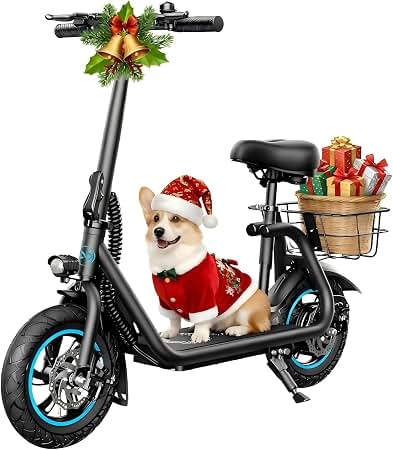
- Motor: 1,000W peak, removable middle basket
- Combined weight capacity: ~300 lbs
- Tires: 14″ pneumatic with rear suspension
- Battery: UL2272-tested, ~20–25 miles range
What we liked: Solid build quality from the first ride; the tires and rear suspension handled bumpy pavement and light off-road sections comfortably; real-world battery range came close to manufacturer claims; the removable middle basket doubled well for groceries or a gym bag.
What to watch for: Heavy — hard to lift into a car alone; assembly instructions and the basket latch could both be better.
Best for: Riders who want the best all-around build quality, comfort, and cargo versatility — our top pick overall.
Gyroor C1 Pro Electric Scooter
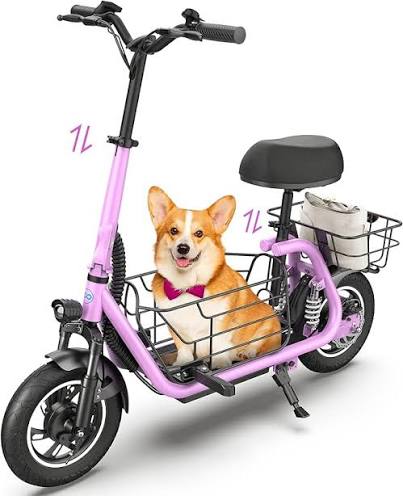
- Motor: 500–800W peak, front-mounted padded basket
- Combined weight capacity: ~265–280 lbs
- Tires: 10–12″ pneumatic
- Battery: UL2272-tested, ~18–20 miles range
What we liked: Power and suspension felt more than adequate for getting around town; no real issues came up during testing.
What to watch for: Nothing major — it simply doesn’t stand out the way the C1S does on build or cargo flexibility.
Best for: Daily commuters who want strong mid-range value.
GREATWORK Seated K7
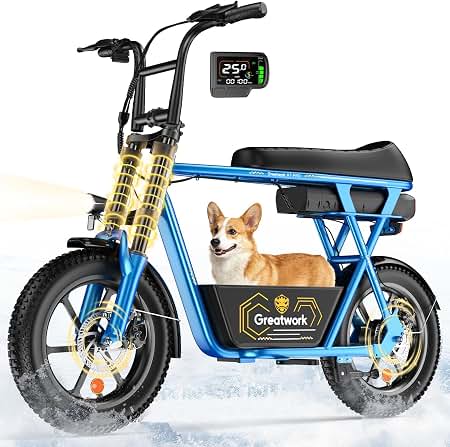
- Motor: 350–500W peak, front basket
- Combined weight capacity: ~250–265 lbs
- Tires: 10″ (wears faster than expected on rougher surfaces)
- Battery: UL2272-tested, strong range but loses power on hills
What we liked: Excellent battery life and range; frame felt sturdy overall.
What to watch for: Clear drop in power when climbing hills; stock tires showed wear faster than expected on rough surfaces.
Best for: Flat-terrain riders on a tighter budget who prioritize range over hill performance.
Foldable 4-Wheel Mobility Pet Scooter
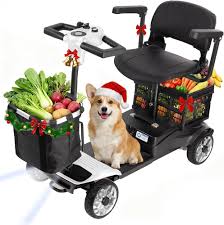
- Motor: 350W peak, small front/rear basket
- Combined weight capacity: ~250 lbs
- Tires: 4-wheel stable base, smaller wheels
- Battery: UL2272-tested, but basket only suits small dogs
What we liked: Simple assembly; basket works fine for shopping and errands.
What to watch for: Basket is small and only suits a small dog; smaller wheels mean tires need more frequent servicing than the larger-wheeled models on this list.
Best for: Budget daily errands with a small dog, where stability matters more than speed.
Quick Comparison
| Model | Motor (Peak) | Combined Weight Capacity | Basket Type | Best For |
| Gyroor C1S electric scooter with dog carrier | 1,000W | ~300 lbs | Removable middle basket | Best overall build, comfort & cargo versatility |
| Gyroor C1 Pro Electric Scooter | 500–800W | ~265–280 lbs | Front-mounted padded basket | Mid-range value, daily commuting |
| GREATWORK Seated K7 | 350–500W | ~250–265 lbs | Front basket | Budget pick, flat terrain |
| Foldable 4-Wheel Mobility Pet Scooter | 350W | ~250 lbs | Small front/rear basket | Budget daily errands, small dogs |
How to Choose the Right One
Start with the math, not the marketing. Add your weight to your dog’s weight, plus anything else you’ll carry, and look for a scooter rated 20–30% above that total. A scooter “rated” for 300 lbs with a 180 lb rider and a 25 lb dog leaves no room for error once you add a bag or two.
Look closely at how the basket restrains your dog. A leash anchor point, elevated sides or mesh, and a non-slip bottom matter far more than how the basket looks in photos. An open basket with nothing to secure your dog is a real fall risk once you’re moving faster than a stroll.
Match your speed to your dog’s comfort, not the scooter’s top speed. Even if a model advertises 18 mph, it’s best to travel at 5–10 mph with a pet aboard. Look for a model with a lower speed cap or a lockable eco-mode.
Verify proper battery certification before buying. UL 2272, UL 2849, and UL 2271 are Underwriters Laboratories standards for testing scooter, e-bike, and mobility-device batteries and electrical systems for fire and short-circuit risk. UL 2272 covers personal mobility devices like hoverboards and scooters; UL 2849 applies to e-bikes.
Several U.S. cities, including New York City, now legally require this certification for sale, and the U.S. Consumer Product Safety Commission has publicly urged the wider market to adopt it. Given how often uncertified batteries have been linked to fire incidents, this is worth verifying rather than assuming.
Tires and suspension matter for ride comfort. Larger pneumatic tires (12 inches or more) absorb shock far better than small solid wheels — important for a dog in a basket, just as it is for the rider.
Check your local regulations before you ride. Most cities apply scooter rules similar to bicycles, but few have explicit guidance on transporting animals, so the responsibility falls on the rider to use good judgment alongside legal compliance.
What Is a Pet-Ready Electric Scooter?
It’s a battery-powered scooter built with an enclosed or attached carrier for transporting small dogs safely. Most commercial versions are seated scooters, sometimes marketed as electric mopeds or pet-friendly e-bikes. They typically have a detachable front or middle basket, sometimes with a smaller rear compartment for gear.
Brands like Gyroor and GREATWORK build around this idea — a fold-away scooter frame paired with a padded, removable dog carrier positioned between the rider’s feet or on the handlebar stem. The idea is simple: instead of choosing between walking your dog and getting somewhere quickly, you do both at once.
At a glance, most models share these traits:
- Motors ranging from 350W to 1,000W peak output
- Top speeds usually between 15.5 and 18.6 mph
- Battery range from 15 to 30 miles
- A dog sling, basket, or vented pod
- Combined load ratings (rider + pet) generally between 250 and 300 lbs for seated models
Who Actually Uses These, and When They Make Sense
Good fits:
- Owners of smaller breeds, usually 20–25 lbs — the weight range most carriers are rated for
- City dwellers running errands who want to bring their dog without a car
- Caregivers of senior or mobility-limited dogs who enjoy outdoor air but can’t walk far
- Professional dog walkers or sitters covering multiple stops in a day
Poor fits:
- Large-breed dogs that exceed the weight limit
- Dogs afraid of motion or vibration in open, unenclosed spaces
- Long-distance or fast-paced road riding — a proper pet bike trailer works better here
If your dog gets carsick or bolts at loud or high-pitched sounds, this isn’t the right transport method, no matter how well-reviewed the scooter is.
How the Carrier Actually Works
Most models use one of three mounting styles, and the difference matters more than buyers usually expect:
- Front-mounted basket — attaches to the handlebar stem, usually cushioned, with or without an internal leash anchor
- Mid-deck sling/crate — sits between the rider’s feet or under the seat, keeping the dog’s weight low and centered for stability
- Rear cargo basket — best for very calm pets or small animals, but the least safe option since it’s furthest from the rider’s control
Basket position affects handling more than most buyers expect. A heavy front basket can make steering feel heavier and destabilize the scooter at low speed, while a centrally-mounted carrier keeps the ride steadier.
Types of Pet-Ready Scooters
| Type | What It Is | Best For |
| Stand-up scooter + clip-on basket | A standard commuter scooter with an aftermarket front basket | Very light dogs, under 10 lbs, short trips |
| Seated pet scooter | Purpose-built moped-style scooter with a padded, higher-capacity basket | Daily errands, dogs up to ~20–25 lbs |
| Cargo e-scooter or e-trike | Three- or four-wheeled, wide-deck design with a larger, more enclosed pet pod | Multiple pets, heavier loads, stability-focused riders |
| Retrofit dog carrier basket | A universal basket added to a scooter you already own | Anyone upgrading an existing scooter |
Every model trades off stability, cost, and carrying capacity differently.
Pros and Cons
Pros
- Combines a commute or errand run with pet transportation
- Faster and more flexible than walking for short distances
- A good option for dogs with mobility issues or sensitive feet
- Most models fold for storage in car trunks or apartments
Cons
- Weight limits exclude anything beyond small-to-medium dogs
- Legal gray area in several cities around riding with an animal
- Motion and vibration can stress anxious dogs
- Purpose-built pet scooters cost more than standard commuter models
Getting Your Dog Comfortable With It
Introducing your dog too quickly is one of the biggest reasons these scooters end up sitting unused. A gradual introduction makes a real difference:
- Let your dog sniff and explore the parked, powered-off scooter for a few days first.
- Place familiar bedding in the carrier and praise calm behavior near it.
- Put your dog in the carrier with the scooter powered on but stationary, and praise calm body language.
- Let the motor run without moving so your dog gets used to the noise and hum.
- Walk the scooter slowly with your dog in the carrier before riding.
- Start with a short test ride — around 30 minutes — on flat terrain at very low speed.
- Gradually increase distance and speed over one to two weeks, watching for signs of stress like tensing, panting, or trying to climb out.
The most common mistake is rushing to a full-speed ride, which can turn a nervous first outing into a dog that won’t ride again. If your dog shows persistent fear, shaking, or refuses to cooperate even after a gradual introduction, talk to your veterinarian before continuing — not every dog is a good candidate, regardless of size.
State and City Rules to Check Before You Ride
Regulations are mostly set at the state and city level in the U.S., not federally, so what’s legal depends on where you live.
New York City has the strictest relevant rule: since September 16, 2023, all powered e-bikes, scooters, or mobility devices sold, leased, or rented in NYC must be certified to UL 2272 or UL 2849 (Local Law 39/Int 0663-2022). An uncertified pet scooter isn’t just risky there — it’s illegal to sell.
Sidewalk, bike-lane, and street rules vary by city. Some classify e-scooters as bicycles and allow bike-lane or street riding; others restrict them to slower sidewalk speeds. Check your city’s Department of Transportation page before your first ride.
Speed limits in many U.S. city ordinances sit around 15 mph — but that’s a legal ceiling, not a target. With a dog aboard, stick to the 5–10 mph range regardless of what the local limit allows.
Climate matters too — southern and southwestern states call for a ventilated carrier and avoiding hot afternoon pavement, while northern and mountain states should factor in reduced battery range in cold weather.
Because this remains a niche category, supply is concentrated on online marketplaces rather than local specialty shops. Bulk or wholesale buyers should confirm UL2272/UL2849 documentation, CPSC compliance, and after-sales support before signing with any supplier.
Common Mistakes to Avoid
- Choosing a model based only on motor power, ignoring combined weight capacity
- Using an open-air basket for an anxious or jump-prone dog
- Skipping certification checks for unfamiliar brands
- Riding at full speed with a pet aboard
- Ignoring your dog’s body language during early rides
- Not verifying whether local law permits pet transport at all
Alternatives Worth Considering
- Dog bike trailers — closed and ventilated, better suited to longer or faster pedal-bike rides
- Front-mounted bicycle dog carriers — a similar concept, at bicycle speeds
- Pet strollers — unmotorized, but often the safest and most widely accepted choice for small or elderly dogs
- Slings and dog backpacks — good for walking or public transit, not built for scooter speeds
- Cargo bikes with pet baskets — more stability and weight capacity than most scooters
FAQ
Can I ride one of these safely? Y
es, as long as the scooter and carrier are rated for your combined weight and the carrier effectively restrains your pet. Ride carefully and check local laws before heading out.
What size dog fits in a scooter carrier?
Most commercial models are designed for dogs between 20 and 25 lbs. Anything larger needs a trike or bike trailer instead.
Is it safe to ride at speed with a dog in an open basket?
Only at walking-to-light-jog pace. Open baskets carry real fall or jump-out risk at higher speeds.
Do I need a special license?
Most cities don’t require one since these are treated as regular e-scooters, but local rules on rider age, helmet use, and where you can ride still apply.
What certification should I check before buying?
Look for UL 2272 (personal electric mobility devices) or UL 2849 (e-bikes) — proof that the battery and electrical system were independently tested for fire and safety risk.
Can I add a carrier to a scooter I already own?
Generally yes — universal clip-on baskets come in various sizes, but confirm your scooter’s weight rating and handlebar/deck compatibility first.
What’s the difference between this and a dog bike trailer?
A scooter carrier keeps your pet close and visible on short, low-speed trips, while a bike trailer is enclosed and sturdier, better suited to longer, faster rides.
Making the Decision
Choosing the right scooter comes down to a few things: know your combined weight before picking a capacity rating, choose a carrier that actually secures your pet, ride slower than the scooter’s top speed, and check your local laws before taking it out.
Get it right, and it’s a genuinely useful way to combine your own exercise with your dog’s need to get outside — not a replacement for a full walk, but a solid complement to one.
About the Author
Huzaifa is the creator of Electric Scooter Analysis, a blog that covers electric scooters of all kinds, including off-road, city, and special circumstances. Data is obtained from manufacturer specs, as well as opinions from riders. Figures are flagged if there’s no proof.
“The information on this website is gathered from industry reports, manufacturer specifications, expert reviews, and trusted sources such as gyroor to provide accurate and valuable insights for our readers