If you’ve ever looked for a commuter scooter, you’ve probably noticed certain models restrict speed up to 19 miles per hour. It’s not just a coincidence or an ad hoc marketing tactic. It’s a result of battery economics, physics, and U.S. regulation all converging at the same time.
The article starts by introducing our top choices for scooters with 19 mph range, before defining what 19 mph or more signifies, whether it’s legally allowed in the location where you reside, how it compares to larger or less powerful scooters, and the best way to choose if one is the right choice for you.
5 Best 19 mph electric scooter
If you’re searching for the best scooter within the category of low-speed legal scooters, the following five models rank as some of the best recommended models at all price points, ranging from low-cost commuters to top-of-the-line models. Four models are classified as 19 mph, while the 5th (NIU) is just a bit higher at 20 mph. It’s included as a comparable to a popular choice, but not simply due to the fact that it’s a 19 mph electric scooter. Be aware of this difference when making comparisons between specifications.
1. VOLPAM Electric Scooter — Best Overall Choice
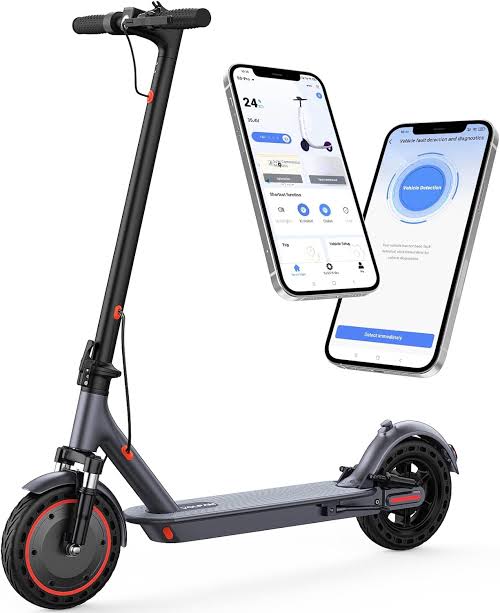
VOLPAM is the best 19 mph electric scooter alternative because it comes with the broadest range of models (350W-500W motor, 19-22 mph, 16 to 28 miles) for an affordable price.
A majority of users can locate the right model for their preferences without shelling out an exorbitant amount of money.
VOLPAM offers several trims with identical names. The 350W base model and 19 mph trims fall into the 19-mph category. Some VOLPAM versions are tuned for 21-22 mph. They should not be taken to mean that they are equivalent. If remaining within the 19 mph range concerns you (e.g., to satisfy private or legal reasons), make sure you know the precise model number as well as the rated maximum speed prior to ordering, because it’s possible to purchase a higher-speed version.
- Motor/Speed: 350W (19 speed trims). Higher trims that exceed 500W can reach 21-22 speed.
- Range: 16-28 miles depending on configuration
- Tires: 8.5″ or 10″ robust tires, puncture-proof
- Braking: Dual (mechanical and electronic)
- Maximum weight capacity is 264 pounds on some models.
- Cons: The fact that models overlap, as well as the speed/range combination, makes it easier to choose the wrong model. Double-check that the list is correct. Solid tires also transmit more road vibration than pneumatic ones.
- The ideal choice for commuters with a tight budget looking for the ideal combination of price and quality without having to buy the best model.
2. Hiboy S2 — Best Brand Value
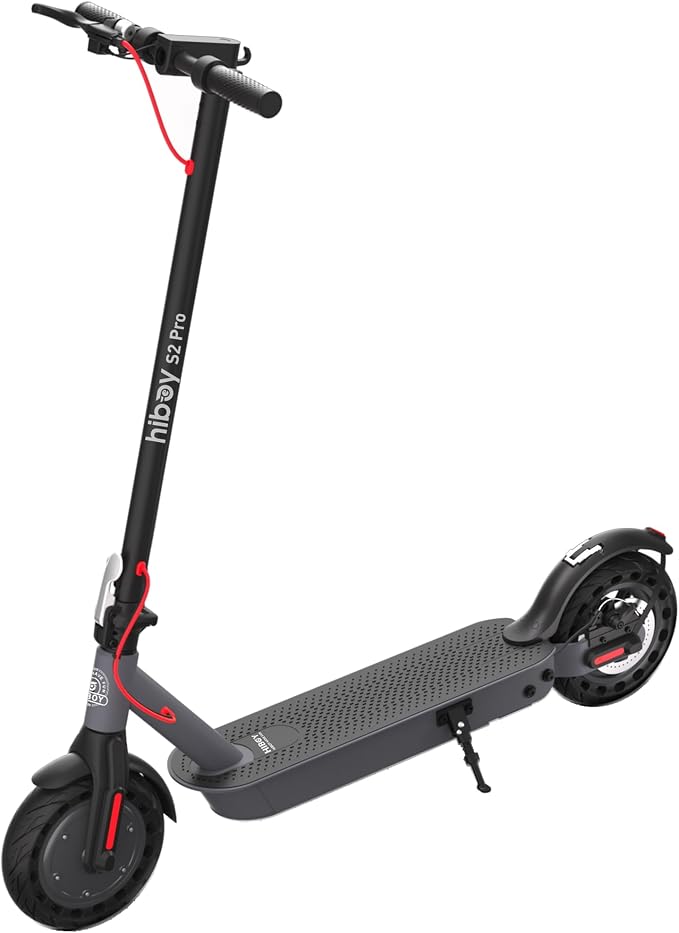
Hiboy S2 Hiboy S2 is the best option for value, as it comes from a reputable, UL 2272-certified maker of scooters with a reasonable price and comes with independent GPS test results that confirm that the claim of 19 mph is true (measured at 18.9 miles per hour).
Its S2 has a 350W Hall brushless motor and comes with a 36V 7.5Ah battery that can last for about 17 miles. It is equipped with a UL 2272 certificate as a safety measure that most budget scooters do not have, and disc brakes that are paired with an electronic brake to provide robust stopping performance.
- Motor/Speed: 350W. Rated 19 speed (independently tested at 18.9 miles per hour)
- The range can be as long as 17 miles.
- Tires: 8.5″ honeycomb (airless flats)
- Braking: Dual disc + electronic
- Capacity for weight: 220 pounds
- Con: Some reviewers have noticed that the ride is bumpier when driving at greater speeds or when riding on rough surfaces. The S2’s base S2 has no front suspension (rear shocks are only available on certain models), so stick to maintained roadways and bike paths.
- Recommended for: New purchasers who are looking for a reliable and reputable brand that doesn’t cost extra to add options or items they will not use.
3. WERHY Electric Scooter — Best for Low Maintenance
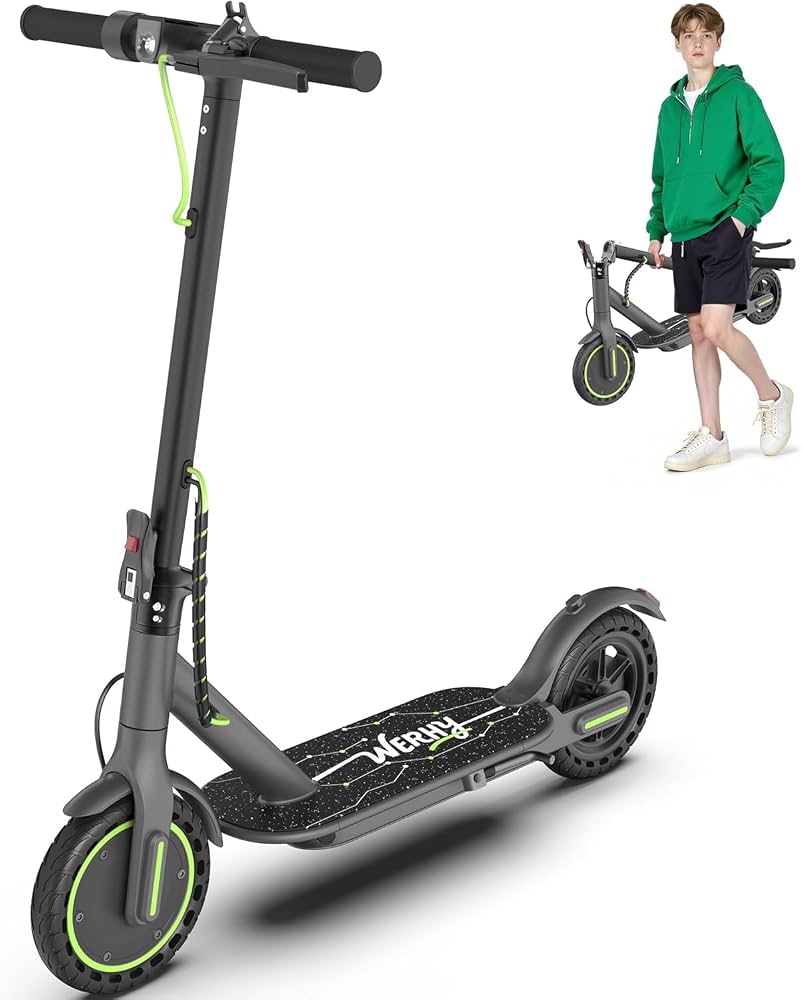
The WERHY is the most low-maintenance option because its robust tires and double-braking system are sealed and aren’t something you need to be checking in between runs — there are no tubes to puncture, and there is no pressure gauge to check.
The 19 mph trims of WERHY make use of 350W motors as well as 36V batteries. The trims have an operating range of 16-25 miles, based on specifications. Similar to VOLPAM, WERHY sells multiple models with overlapping names; be sure to read the specific spec sheet and check the speed for the specific model prior to purchasing.
- Motor/Speed: 350W. Top speed: 19 mph
- Range: 16-25 miles depending on trim
- Tires: 8.5″ or 10″ Solid
- Braking: Dual (mechanical + EABS regenerative)
- Capacity for weight: Up to 265 pounds on the majority of trims
- Cons: WERHY is a newer company with fewer reviews from independent sources than Hiboy or NIU, and, similar to VOLPAM, its models’ names are often confusing between the various retailers.
- The best choice for those who would like not to think about their scooters between rides and without the need for tire-pressure checks or tube repairs.
4. Joyhis Electric Scooter — Best for Comfort / Seated Ride
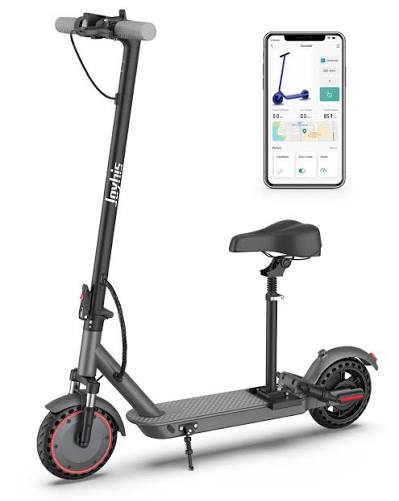
The Joyhis sitting model is a top-of-the-line option for comfort, as it’s among the very few 19 mph electric scooters that are built around a seat that has double suspension starting from the ground up, as opposed to a standing one equipped with a bolted-on seat.
The 500W model is mounted with 10″ tires, with two suspensions and a 36V 7.8Ah battery with a rating of around 22 miles. Dual brakes combine the electronic EBS system, which includes drum brakes on the rear, as well as a seat that can accommodate passengers up to 265lbs.
- Motor: 500W, rated at 19 mph or more.
- Distance: Up to 22 miles
- Tires: 10″ Dual front and rear suspension
- Braking: Dual (EBS electronic plus rear drum)
- Capacity of weight: 265 lbs
- Cons: The seats as well as the suspension increase weight, which makes it more difficult to lift up steps and onto buses compared to stand-only models in this list. This model is more recent and doesn’t have the long-term reliability of Hiboy and NIU.
- Ideal for: Commuters who have longer journeys (4-6 miles) as well as any person who finds sitting on a scooter tiring — seniors, students, as well as comfort-first users.
5. NIU KQi3 Pro — Best Long-Range / Premium (Not a 19 MPH Scooter)
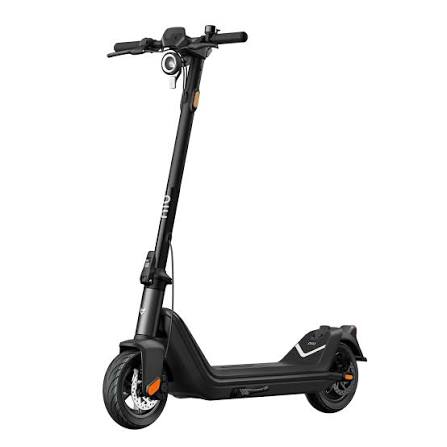
An important note prior to this article: The NIU KQi3 Pro is officially listed at 20 mph, but not 19 mph electric scooter. This is included because it’s a popular, close alternative for those who are willing to accept slightly faster speeds, and also since independent GPS tests put the actual speed of this scooter at 18.6- 19 mph, which is just at or just below the 19-mph threshold, but not over the 19 mph mark.
If you require the scooter to remain within the legal 19-mph range, don’t count on the company’s 20 mph rate; the actual speed is more in line with what you’d anticipate from the other items on the list; however, the specs that are rated are in an entirely different category.
It is powered by a 350W motor (700W maximum) and comes with a 486.7Wh battery. NIU promises that it has up to 31 miles of reach, but testing by independent experts shows a range of 20-21 miles, approximately a third lower than the advertised figure, and a bigger distance than some of the brands on this list. Triple braking -dual disc brakes plus regenerative braking provides the most powerful stopping force on this list. Additionally, it’s protected by a 2-year warranty.
- Motor/Speed: Nominal 350W; 700W peak power; 20mph max speed rated by the manufacturer (independently measured at 18.6-19 mph)
- The range is up to 31 miles as claimed; approximately 20 to 21 miles in test-based testing conducted in real-world conditions -plan your route on the basis of the lower estimate.
- Tires: 9.5″ tubeless pneumatic
- Braking: Triple — front disc, rear disc, regenerative
- The NIU spec sheet specifies as much as 265 pounds; however, some sellers offer 220 pounds for the exact model. Make sure you check the weight limits for your particular listing prior to purchasing, not only NIU’s general specs.
- Cons: There is no front or rear suspension, despite its premium price. Officially rated higher than 19 mph; however, real-world tests fall within the range. This is the priciest model; the range claimed is notably over-inflated compared to actual results.
- Ideal for: Those who are looking for the most realistic range and brakes available in this category and who don’t mind a vehicle that is rated at or above 19 mph, even if it doesn’t always reach that speed when riding.
Comparing the 5 Models
Overall, for the money, the Hiboy S2 and VOLPAM (base trim) outshine the competition in cost. Joyhis has the edge in comfort due to its suspension and seat, as well as its NIU KQi3 Pro leads in braking and range — for a greater price and having a maker rating higher than the other models in the listing.
| Model | Motor | Rated Top Speed | Real-World Tested Speed | Range (claimed) | Range (real-world) | Tires | Braking | Weight Limit | Best For |
|---|---|---|---|---|---|---|---|---|---|
| VOLAM (base trim) | 350W | 19 mph | — | 16-28 mi | — | 8.5″/10″ solid | Dual (mech + e-brake) | ~264 lbs | The best value for money overall |
| Hiboy S2 | 350W | 19 mph | 18.9 mph | Up to 17 mi | — | 8.5″ honeycomb | Dual (disc + an e-brake) | 220 lbs | The most trusted brand for beginners |
| WERHY | 350W | 19 mph | — | 16-25 mi | — | 8.5″/10″ solid | Dual (mech + EABS) | ~265 lbs | The lowest maintenance |
| Joyhis | 500W | 19 mph | — | Up to 22 mi | — | 10″ + dual suspension | Double (EBS plus drum) | 265 lbs | Most comfortable and seated seat |
| NIU KQi3 Pro | 350W (700W peak) | 20 mph | 18.6-19 mph | Up to 31 mi | ~20-21 mi | 9.5″ pneumatic | Triple (disc + disc + regen) | 265 pounds (some stores list 220 pounds; check with the retailer) | Premium long-range but rated above the 19 mph class. |
The quick takeaway is that if your state limits legal ride speed to 15mph regardless of the scooter type (California, NYC), no scooter could legally be used at full speed in those states, which is why the NIU’s added capacity and brakes are more important than the top speed it is rated at. If you’re on a tight budget, the Hiboy S2 and VOLPAM base trims offer a safe and certified 19 mph electric scooter that isn’t pricier.
If you’re looking for a commute that goes over four miles, or when you’d prefer sitting rather than standing in a chair, this Joyhis is the only one in this listing that is specifically built for this. If you’re specifically looking to keep within the 19 mph category, think of it as an example of an edge case instead of a comparison between like models.
What Does a “19 MPH Electric Scooter” Actually Mean?
A 19 mph electric scooter is a standing, battery-powered scooter that has a manufacturer-rated top speed of around 19 mph. Most models utilize a 350W-650W hub or brushless motor. There is also a 36V-48V lithium-ion battery as well as, in some situations, dual brakes (usually the drum or disc brake, which is coupled with electronic brakes or regenerative brakes).
“19. “19” isn’t arbitrary. U.S. low-speed electric scooters typically described as having less than 750W that have a maximum speed of 20 mph are treated in a similar way as bicycles in the United States and don’t require permits and registrations, nor insurance. The controller’s manufacturer usually adjusts its software to keep the speed to a maximum of 20 mph, providing an extra buffer to ensure that they can keep the scooter from crossing city or state limits, rather than rushing right up against the limits. However, not every manufacturer operates in the same manner, but the NIU illustration above illustrates this.
Additionally, there’s a rationale that explains this. Most bicycle lanes and trails are constructed for a 10- to 20-mph traffic flow. A motorbike that travels at around 19 mph is able to move naturally along in tandem with cyclists and is not a bottleneck or forced to keep pace with slower cyclists.
Why 19 MPH Specifically — Not 18 or 20?
It’s one of the most frequently asked questions that individuals ask when they begin looking at different models. It requires a thorough response.
In the majority of states, authorities determine their thresholds for scooters with low speeds at 20 to 20 mph. Also, they know that the real-world speed is influenced by rider weight, wind speed, hills, and tires- that’s why a scooter that is rated at 20 mph can occasionally go 20.5- 21 miles per hour on a hilly stretch of road, effectively pushing it out of the “low-speed” legal category under certain states’ specific definitions. When a scooter is rated at 19 mph, the manufacturers create a tiny space to ensure that it is in the lawful definition; the conditions make it slightly higher than the stated speed.
Efficiency of the battery plays an important role as well. The power draw does not scale linearly as speed increases — accelerating an electric scooter between 19 and 22 mph requires a significant amount of energy when compared to a rider that goes from 15-18 miles per hour. Limiting the 19 mph electric scooter speed lets manufacturers boast of the highest speed possible without requiring a larger, heavier, and costlier battery that can sustain the speed.
The fact is that not all manufacturers build in the same manner. The NIU KQi3 Pro covered above, for instance, is listed at 20 mph, but it is tested slightly below 19 mph in real-world situations. For a 19 mph electric scooter, it’s important to remember that “rated speed” and “real-world tested speed” are two distinct numbers, and it’s important to verify both before buying.
Is a 19 MPH Electric Scooter Street Legal?
In the majority of U.S. states, yes. A 19 mph electric scooter fits into the usual low-power scooter range of 15-20 mph and is typically treated as a bicycle and not as a motor vehicle.
However, “legal to own” and “legal to ride at full speed” aren’t always identical. There are states that limit the permissible speeds of riding below the top speed of the machine.
| State/City | Legal Riding Speed | License Needed? | Notes |
| California | 15 mph, on roads/bike lanes posted <=25 mph | Yes, permits or driver’s licenses | Legal to possess a more powerful scooter; however, you cannot legally ride it faster than 15 mph in public areas. |
| New York City | 15 mph | No | Local laws also determine which areas are allowed for riding. |
| Texas | There is no statewide cap; local laws vary | No | Austin, Dallas, Houston, and San Antonio each set their individual downtown regulations. |
| Alabama | Roads posted <=25 mph | No | The helmet is required for riders younger than 16 years old. |
| Other states are not as common. | 15 mph for bicycle lanes and on roads | Not in all states. | The requirements for helmets typically only apply to minors. |
A few states consider higher-wattage, speedier scooters as mopeds. These need registration or a permit. If your state falls into one of these states, make sure you know your precise limit on watts and speeds prior to considering that your scooter is a normal low-speed device.
A quick check of two minutes: Search “[your city] electric scooter ordinance,” check that the speed limit is posted, review the sidewalk regulations, and verify that the helmet requirement is for your age. Local laws are often in conflict with or modify statewide rules, and the statewide answer may not always be the best.
15 MPH vs. 19 MPH vs. 25 MPH: Which Speed Tier Fits You?
The majority of riders are in the 19 mph electric scooter tier. These three tiers are actually different from day to day, and not just in theory.
| 15 MPH | 19 MPH | 25-30 MPH | |
| Best for | First-time riders, short trips. States with a cap of 15 mph. | Two to six miles of daily commute and longer trips when the local law allows for higher speeds. | Longer commutes or in areas with no legal cap, where riders wish to cut down on the amount of time they travel and feel comfortable having the additional weight, price, and stopping distance. |
| Motors that are typical | 250-350W | 350-650W | 500W+ (often dual motor) |
| License/registration | Rarely is it required | Very rarely is it necessary | More likely to invoke moped-style regulations |
| Real-world spectrum | Most efficient battery in relation to size | Moderate drain | Highest drain, shortest range per charge |
| Stopping distance | Shortest | Moderate | The longest — the brake quality is the most important thing here |
| Price | Budget-friendly | Mid-range | Premium |
If your region has an official limit of 15 mph, the cost of 19 mph electric scooter primarily gives you better performance on hills, along with a longer power reserve, but not an additional speed that is legal. If the area you live in permits higher speeds, and your commute is longer and more frequent, then a model with a speed of 25-30 mph could be worth the extra expense and the added complexity. For the majority of commuters who work daily, the 19-mph speed range is the ideal balance between safety, speed, and compliance with the law.
Who Should Buy a Scooter in the 19 MPH Tier (and Who Shouldn’t)
It’s a good match:
- Commuters substituting a 2- 6 mile trip by car, bus, or rideshare journey.
- Customers using it to make the purpose of a “last mile” connection to the public transportation system.
- Students on campus or suburban commuters using areas with little traffic
- Anyone who wants to upgrade from a 15-mph entry-level scooter but does not want a heavier and more expensive version
A bad fit
- States with an official 15-mph limit where the speed increase cannot legally be utilized
- The younger teens of states that have compulsory helmets or age requirements
- Anybody who requires long-range travel that is 15-25 miles or more in a row
- Drivers of delivery or fleets that require consistent speeds across many shifts instead of an expensive top-of-the-line number
How Real-World Speed and Range Compare to the Spec Sheet
The claims of the manufacturer regarding range and top speed are typically evaluated under the ideal conditions of the ground is level, with a moderate-weight user, full battery, and a low resistance setting. In reality, the distance isn’t as high as the assertions, particularly when a scooter is operated predominantly at full speed. The NIU’s approximately one-third gap in range is an excellent example of how wide this gap can become.
There are a few variables that pull the actual performance down from the specifications sheet:
- The weight of the riders: The heavier riders draw greater energy, which slows speeds, particularly at inclines.
- The long hill climbs could slash a couple of miles off the top speed when the motor does not have sufficient wattage to sustain it.
- Pressure of the tire — low tires can increase resistance when rolling and limit speed and range
- Lithium-ion batteries are less effective when temperatures drop below freezing.
- Mode of riding — racing at full throttle drains your battery more quickly than steady, smooth cruise
An excellent general rule is to consider the range advertised as an ideal number, and make your journey between 60 and 75 percent in the case of hilly roads or if your weight is higher than the “average rider” the manufacturer probably tested using.
What Powers a 19 MPH Top Speed
Maintaining speeds of around 19 mph electric scooter typically will require a motor that falls in the 350 to 500W range, but with greater power for those who ride on hills or are heavier riders. A battery (usually 36V or 48V for top models) is the source of energy, and controller firmware determines the maximum speed; two scooters that have identical motors can be adjusted to different speeds, based upon the configuration of the manufacturer for the controller.
Brakes are as important as motor power when you are at this velocity. Be on the lookout for:
- Dual brakes such as a mechanical brake (disc or drum) coupled with electronic braking or regenerative braking. They perform better than the other brakes.
- UL 2272 certification is an independent standard of safety for batteries and electric systems.
- Battery management systems (BMS) that include overcharge (over-discharge), short-circuit, and protection against overcurrent.
Buying Decision Framework
- Make sure you check your state and city speed limits prior to doing so. If the legal speed limit is restricted to 15 mph, then a 19 mph electric scooter will mostly give you power reserve as well as the ability to climb hills, but not legal speed.
- Find a range that matches your real journey, not just the advertisement. Find your commute’s one-way distance, and then add a 25% to 30% buffer for hilly terrain and the battery’s age.
- Consider portability in relation to the power. Small, folding models are more convenient to transport on trains or climb steps; larger dual-motor models are able to handle steep slopes and heavy riders better.
- Make sure you brake at a slower speed. A properly braked 18-mph scooter is more secure than a badly braked one at 19 mph. The braking distance is much more than the numbers listed on the specifications sheet.
- Verify the safety certificate. UL 2272 (or the equivalent standard) is a good idea to verify prior to letting a battery recharge overnight without supervision.
- Review the speed rating and test results from real-world conditions separately. Like the NIU earlier, a company’s rating doesn’t necessarily match the results of independent tests, and you should verify both results when the specific class is important for you.
Quick Pros and Cons
Pros:
- Better than scooters with a speed of 15 mph at entry level with the same weight and price as the 25plus speeds models.
- Most often, it is not necessary to register, license, or meet other insurance obligations.
- A wide range of models are available at a variety of price points.
- Excellent balance of speeds for commutes and usability in everyday life
Cons:
- In states that have a legal limit of 15 mph, this speed may never be utilised
- It is noticeable that range drops when riding at full speed, not “eco” settings
- The longer stopping distance is greater than the slower scooters, which makes brake quality crucial.
- Range and speed claims tend to be overly optimistic when compared with the actual performance
- The model names of certain brands (VOLPAM WERHY, VOLPAM) make it simple to purchase the wrong model
What You’ll Typically Pay
Beginner-level scooters in this category generally run between 250 and 400, featuring a single motor, basic app features, and good pneumatic tires. Models in the middle (400-700) typically include app-based ride tracking, higher-quality suspension, bigger battery packs, as well as full UL 2272 approval with a verified BMS. Prices change with cycles of sales and therefore, treat them as generalized bands instead of a fixed number.
Fleet and Campus Use
The speed tier doesn’t only work for consumers who aren’t a part of the group. Universities and rental fleets prefer it since it is within the legal limit and still allows people to travel across vast campuses more quickly than walking. Fleet owners should follow the same purchasing framework, paying particular care to the charging infrastructure, battery cycle time, and brake performance that is consistent throughout a variety of daily rides and not just a single trip.
Common Mistakes to Avoid
- If you assume that your scooter’s maximum speed is your legally allowed speed for riding
- Don’t wear a helmet, as it’s not required for the age range you’re in the state you live in.
- Do not ignore the reduced range or longer stopping distances when it is wet.
- Buy based only on the top speed, without checking motor wattage as well as the hill’s performance
- Do not check sidewalk riding regulations that vary greatly even within the same state.
- If a company’s top speed is consistent with test results from independent tests, check both.
FAQ
What are scooters in this class useful for?
It’s located at the fastest part of the commuter category that is more efficient than basic 15-mph models; however, it’s not at the performance level of 25-30 mph. It’s ideal for city and suburban commutes; this model is fast and doesn’t risk getting into more risky territory.
Can these vehicles be legal to use in public?
In the majority of states, the answer is yes. They fall in the normal 15 to 20 mph range for low-powered scooters. Certain states, such as California, have a limit on the permissible speeds of riding below the speed of the scooter’s top rating.
Do I require a permit?
In the majority of states, no license is required for scooters with less than 750W. Some states, like California, require drivers to have a license or a learner’s permit.
What is the distance an electric scooter goes with a single battery?
Actual range, even at higher speeds, is typically 15-25 miles, depending on the capacity of the batteries, the weight of riders, and the terrain; it is usually lower than the advertised amount and is tested under ideal conditions.
what is difference between 15 mph scooter and 19 mph electric scooter
The main difference between a 15 mph scooter and a 19 mph electric scooter is the top speed and hill-climbing capability. 19 mph electric scooter generally feature stronger motors and bigger batteries. This adds extra weight and expense compared to simple 15-mph scooters.
Why do most scooters of this class limit their speed to 19 speed?
Manufacturers usually build in some buffers that are lower than the 20 mph threshold. Therefore, the real-world elements — like a stretch of downhill and a more sedentary rider or a tailwind- don’t make the scooter go above the limit for low-speed legal categories. Some manufacturers aren’t like this, so make sure to check the rated and tested speed.
Do I require head protection?
There are different requirements for each state as well as age. The majority of states require helmets for youngsters under 16, but wearing a helmet is an excellent idea regardless of the legally required minimum.
Do I have to ride on the sidewalk?
This depends on local regulations. Certain cities prohibit sidewalk use on scooters that can reach two-digit speeds, while others allow lower-powered scooters. Make sure to check your city’s regulations before thinking.
What model should I choose?
The VOLPAM base trim and the Hiboy S2 offer the best price, while the Joyhis is a top choice in terms of suspension and seating. There’s also the NIU KQi3 Pro, which is worth taking into consideration if you’re looking for the greatest range as well as the best brakes. You don’t have to worry about the fact that it’s rated one grade over 19 speed (even when it’s a bit less than 19 mph on the road).
Bottom Line
A scooter that falls in this class is right in the middle, where commuting speeds, battery power, and U.S. regulations all line up with each other. It’s quick enough to avoid the waiting or walking for transportation, but without the costs, weight, and legal issues that come with a speed of 25-30 mph on a performance scooter.
Before you purchase 19 mph electric scooter, check the legality of your state and local speeds, and then match the distance to the actual speed of your journey, not the number on the box. Be sure to look for dual brakes as well as a UL 2272 certificate. Make sure you check both the highest rated speed and independent testing results. They do not always correspond. If you can get them right, the speed level will be one that you are legally able to drive.
About the Author
Huzaifa is the creator of Electric Scooter Analysis, a blog that covers electric scooters of all kinds, including off-road, city, and special circumstances. Data is obtained from manufacturer specs, as well as opinions from riders. Figures are flagged if there’s no proof.
“The information on this website is gathered from industry reports, manufacturer specifications, expert reviews, and trusted sources such as gyroor to provide accurate and valuable insights for our readers