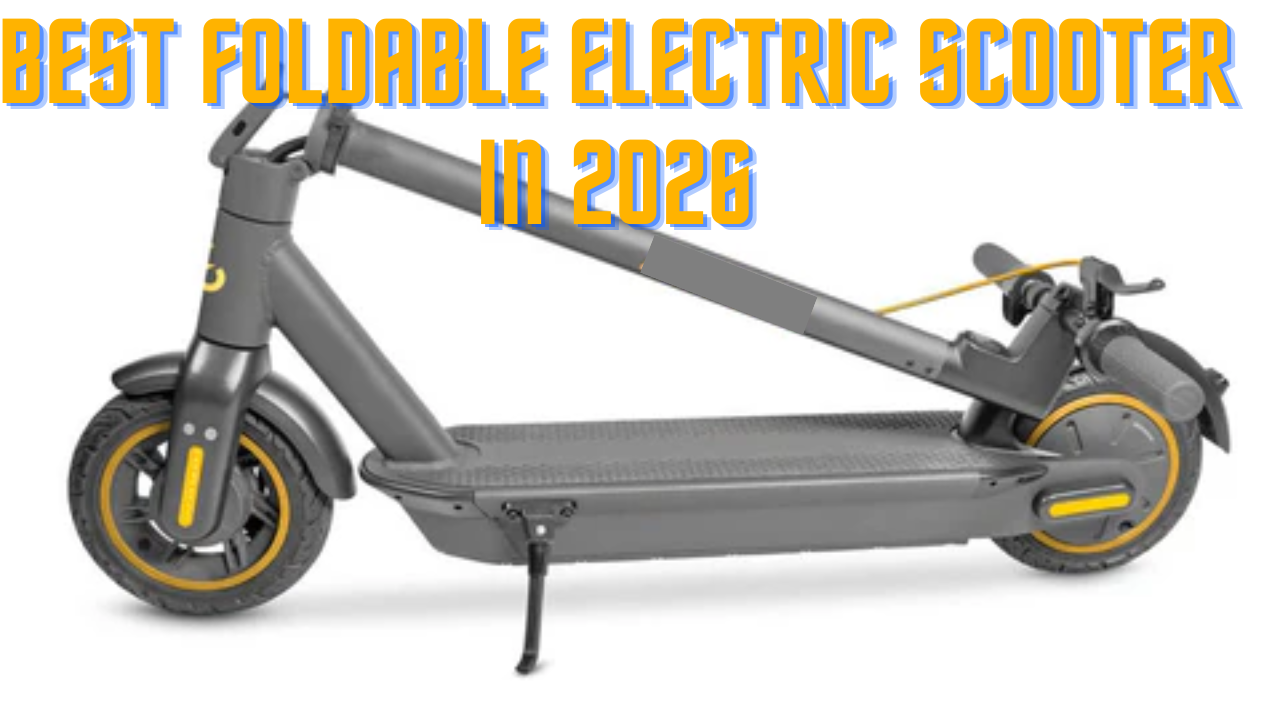
All over New York, London, Berlin, Singapore, and Dubai, the majority of commuters are taking small electric scooters, putting them under desks or slipping into subway cars, bypassing the obstacles that made working long and tiring. Foldable electric scooters are now a flimsy novelty in a real urban infrastructure. 2026’s line-up is one of the best ever launched on the market. However, acquiring the wrong product can be an expensive and serious mistake. Inaccurate range estimates, weak hinges for folding, and insufficient rules in your town can turn an investment into a disaster in a matter of several weeks. This guide can help fix this foldable electric scooter.
What is a foldable electric scooter?
two-wheel foldable electric scooter powered by batteries and electric motors that fold. They are vehicles that fold . This makes them easy to transport and keep in. A weight for an object could vary from 10 to 25kg. The speeds vary from 15 to 45 km/h. They are able to provide live travel times of 20 to 70 kilometers according to the vehical model.The mechanism for folding, whether it’s a one-click stem fold, hook latch, or telescoping model, is the basis of the classification and distinguishes reliable models from flimsy ones.
Who Actually Needs One?
The commuters of the day use electric scooters that fold up to travel to the end of the road between the station for transit and the office.
Students in schools that have huge number of students are able to move about the city without worrying about parking. Business travelers heading towards Tokyo, Singapore, or Amsterdam can conveniently get to their meetings without needing taxis
Delivery drivers enjoy the flexibility of multi-modal routes.There’s also a rapidly growing B2B market. Logistics hubs, corporate campuses, universities, and hotel groups are buying foldable electric scooter in large numbers. Unlike shared rental platforms like Bird or Lime, owned fleets provide operators with complete control over condition, tracking, and availability.
The Specs That Actually Matter
Motor Power -Rated Wattage (not peak) will tell you how much power the motor can handleThe 500W model is better than the 250W motor, which is able to boast”1,000W peak” claims “1,000W peak” claim.In urban areas that have flat terrain, and riders with a weight of between 80 and 120 kg 350-500W is a suitable range. Cities that have heavy traffic or steep slopes may want to consider motors that are 500W or greater.You should also consider at least two motors .
The Battery Capacity and the Real-World Range are measured in Watt-hours (Wh) . The formula for battery Wh/15 is the approximate range in kilometres. A 360Wh battery can provide around 24 km of real-world range, not the 40 km stated on the packaging. Add 25-30% to any manufacturer’s claim for a commuter weighing 80kg on mixed terrain.
Folding mechanism quality — Budget foldable electric scooter develop hinge wobble after a few hundred cycles. Premium models from Segway and Apollo publish fold cycle durability ratings (1,000–5,000 cycles). At two folds per day, five days per week, that’s 500 cycles per year.
Weight — Carrying a 22 kg scooter up three flights of stairs daily ends the experiment fast. If stairs, buses, or trains are part of your routine, target models under 14–15 kg.
IP Rating–IP54 may be hard on splashes and rain . IP65 handles direct spray. The Consumer electric scooters are water-resistant. Don’t drive over standing water, regardless of the safety rating.
| Model | Motor (Rated) | Real Range | Weight | IP Rating | Price (USD) |
| Segway ninebot max G2 | 450W | ~55 km | 19.3 kg | IPX5 | ~$849 |
| Apollo Air 2023 | 500W | ~38 km | 13.6 kg | IP54 | ~$699 |
| Xiaomi electric scooter 4 pro | 600W | ~45 km | 16.9 kg | IP55 | ~$649 |
| NIU KQi3 Pro | 450W | ~50 km | 16.4 kg | IPX5 | ~$599 |
| EMove Cruiser | 600W | ~90 km | 26 kg | IP67 | ~$1,199 |
| Hiboy S2 Pro | 350W | ~35 km | 14 kg | IP54 | ~$449 |
| Fluid Mosquito | 350W | ~22 km | 8.7 kg | IP54 | ~$599 |
| Apollo Ghost | Dual 800W | ~56 km | 27 kg | IP54 | ~$1,499 |
| Kaabo mantis 8 pro+ | Dual 500W | ~50 km | 24 kg | IP54 | ~$1,099 |
| GoTrax GXL V2 | 250W | ~15 km | 12.5 kg | — | ~$299 |
The best foldable electric scooters in 2026. The most effective all-around Segway Ninebot Max G2 Self-healing tyres. It also has a single-click folding and a reputable worldwide service system. The best value for money: Hiboy S2 Pro -Solid construction with a 350W motor, dependable folding mechanism. Best ultralight: Fluid Mosquito at 8.7 kg. The most versatile range: The EMove Cruiser’s 52V battery is the best in the mid-range, even though the 26-kg weight limit is the maximum you can carry daily.
Buyer Profiles: Finding the Right Match
Foldable electric scooter for heavy adults—
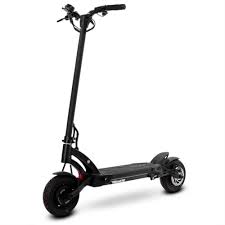
at weighs over 100kg will need an engine of at minimum 500W, a solid deck and pneumatic tyres that have a the width of 10 inches.Its Kaabo Mantis 8 Pro+ (max load of 120kg) and the EMove Cruiser (150 pounds) are top picks. Beware of models weighing less than 100kg. . The frames, hinges, and brakes aren’t specifically designed to support this kind of load..
Foldable electric scooter for students —
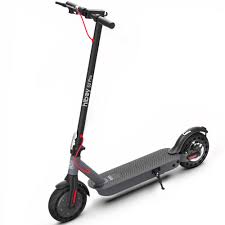
Budget, portability, and storability matter most. The Hiboy S2 Pro and GoTrax GXL V2 cover short campus distances for under $450. Under-desk storage and a lightweight fold are more valuable than range here.
The Foldable Electric Scooter is a fantastic choice for older adults
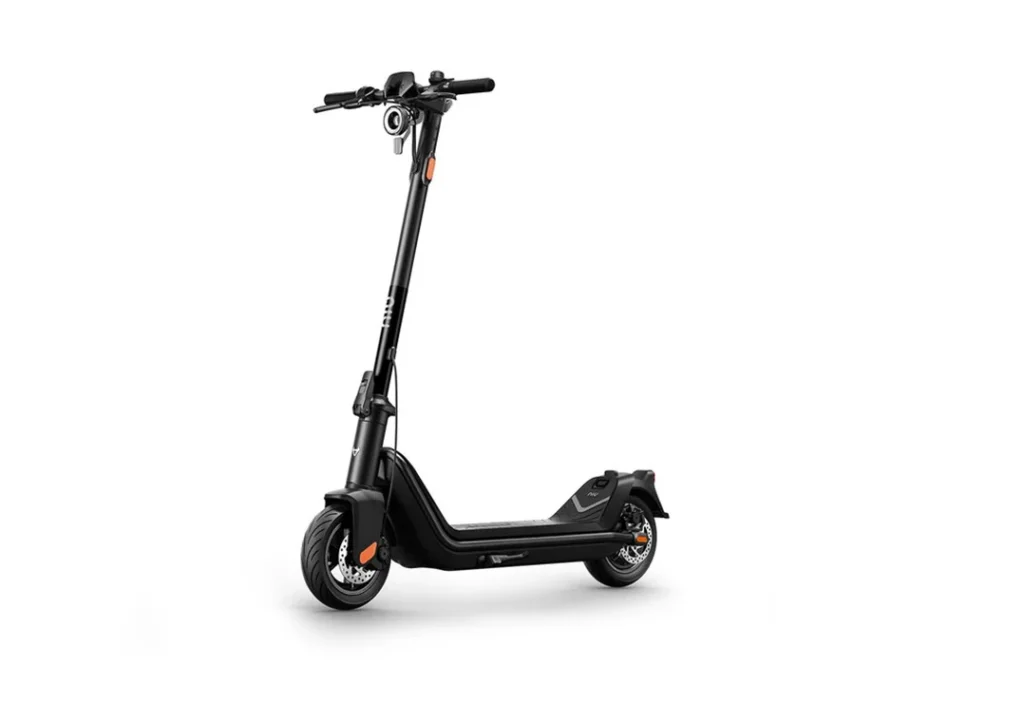
More important than speed is stability. Find decks with larger sizes (18 centimetres and more), Dual-braking (disc plus Regenerative), a lower step-over, and a clear LCD screen. Its NIU KQi3 Pro and Segway Ninebot Max G2 both provide easy, predictable acceleration suited to a more gentle riding style. Avoid dual-motor performance models — their instant torque is genuinely unsuitable.
Foldable electric scooter for delivery riders.
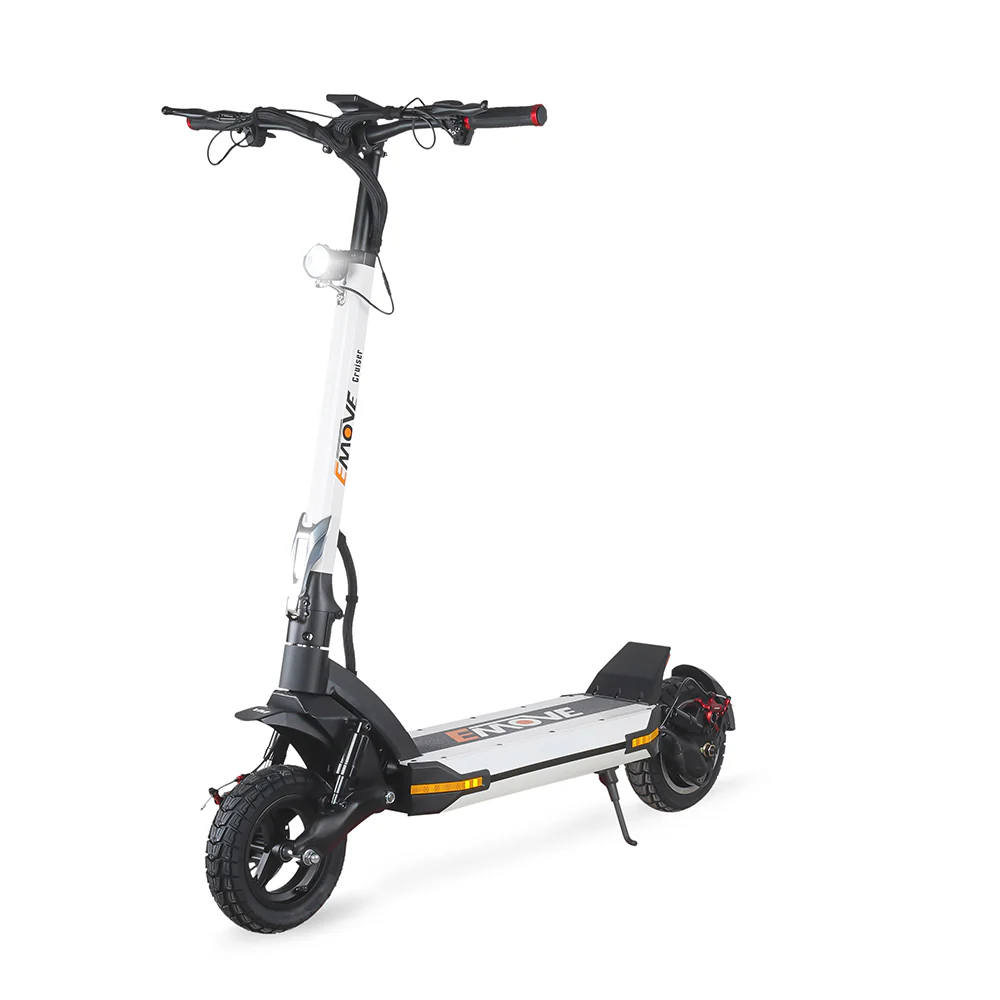
Delivery uses require IP65and waterproofing. a longer distance (50 km or more), as well as a bag for cargo capacity for payload, and sturdy, puncture-resistant tyres. The EMove Cruiser’s IP67 rating and 90 km real-world range make it the practical choice. Build in a maintenance budget: delivery use puts roughly 3–4× the wear on brakes and tyres compared to commuter use.
Foldable Scooter vs E-Bike vs Public Transport
The difference between. Electric bikes can be used to travel further lengths (80-150 miles) and are also able to be climb more.They may also be able to carry more weight. They’re higher-priced ($ 1,000-$5,000+). These weigh more (18-30 tonnes) and cannot be folded for transport or placed under desks. If you’re planning to travel under 15 km on an even surface, folding scooters offer the ideal mix of price and speed.If you are planning to travel over long distances, move massive loads, or travel through difficult terrain the electric bicycle might be the ideal choice option.
Vs Public transport. The most expensive scooter costs $700, amortised over two years, or $0.35/day of depreciation. To that, you may add $0.02 to $0.05 in daily fees. Compare this to an annual transit pass costing $120-$180 in most major cities. Break-even is usually within 4-8 months for commuters who work daily. The financial case is also evident: no waiting, no crowds, door-to-door speed even over short distances.
Smart Features Comparison
2026 foldable electric scooter models have all converged on a similar set of smart features. However, their implementation quality differs significantly.
The GPS tracker is a feature for mid-to-high-end models. Segway’s app tracks its location in real time, enables geofencing for fleet use, and sends an alert in the event of theft. Xiaomi is part of its wider IoT ecosystem. The lower-cost models from Hiboy and GoTrax offer basic Bluetooth connectivity but lack GPS.
NFC unlocking (tap-to-unlock with keycard or phone) is available on NIU’s NIU KQi3 Pro and the Apollo range. It’s extremely beneficial for fleet or shared deployments that have multiple users riding the same device.
Regenerative brakes can capture 5-10 per cent of energy when decelerating and are useful for city-riding stop-and-go. The majority of models that have more than 450W have it, whereas low-end 250W models typically don’t.
OTA firmware updates for Segway and Xiaomi models let manufacturers make range improvements, speed limit adjustments, and bug fixes after purchase, which is a long-term investment that will pay off.
Scooter Security and Anti-Theft Guide
foldable electric scooter are among the most valuable things to get. A security lock can deter thieves from entering your home, while the GPS tracking aids in recovery.
Use a U-lock or a folding lock that can be inserted into the frame, and cut the wheel’s cable in just a couple of minutes. Kryptonite The Evolution Mini-5 ($60-$80) is a great option for the city. For overnight street storage, it is recommended to add a second cable lock that runs through both wheels.
Alarms based on apps (such as Segway’s Built-in tilt warning) and third-party trackers (such as Apple AirTags and GPS modules) greatly enhance the recovery rate. For fleet operators, integrated GPS and geofencing features are not a requirement.
Do not leave scooters unattended in the same place often — theft based on pattern is common in urban areas.
Battery Lifespan and Replacement Cost
The majority of lithium batteries used in foldable electric scooter provide between 300 and 500 recharge cycles at their highest capacity before their capacity decreases to about 80%. For a person who commutes or uses their vehicle daily, that’s around 4 or 5 years of their time
.Replacement batteries can cost anywhere from $100 to $400, depending on capacity and manufacturer . Segway and Xiaomi provide OEM replacements via official channels. Third-party products are more affordable, but pose a real risk of fire. Don’t use lithium batteries that aren’t accepted for use in consumer electronics.
This will extend battery lifespan by stopping it from becoming totally exhausted. This will ensure that your battery doesn’t fully charge when you travel for long periods and stays fully charged after prolonged time periods.Storage temperatures that are below 1°C may impact battery performance.
Common Problems Riders Face and Their Solutions
The capacity of batteries declines–as the battery ages This is common. If the range falls by more than 20% in a single year of use, it could be damaged. Many brands cover this under warranty.
Hinge wobble–is caused by wear and tear on the components of the fold mechanism. Budget models show this issue after 6-18 months of regular usage. Adjust the screws for folding first. If the wobble continues, then the hinge collar requires replacement.
Tire punctures – pneumatic tyres are a great choice for enhanced road comfort, but require repair. Use a puncture kit and self-sealing slime tyre commuters. Auto-healing tyres (Segway Max G2) solve this problem completely.
The fade of brakes–disc brakes require periodic pad replacement (roughly every 6-12 months in regular usage). Drum brakes require less frequent maintenance but are less responsive in wet conditions.
Error codes–Most Segway or Xiaomi models display errors in the application. The most frequently encountered (E1-E3) are connected to motor controller communications. They are typically resolved by either resetting the software or the connection.
Scooter Insurance and Warranty Guide
Warranty: Search for a 12- to 24-month guarantee on labour or parts. The warranty for battery-specific components is generally shorter (6-12 months) and differs from the chassis warranty. Apollo and Segway provide among the best foldable electric scooter warranty terms available in the industry. Do not choose brands with only 90 days of coverage, as this indicates a lack of confidence in their product quality.
Insurance: In most US States and EU countries, personal liability insurance for foldable electric scooter isn’t mandated by law; however, it’s worth considering. Specialised policies offered by companies such as Velosure (UK) and Markel (US) protect against theft, accidental damage, and third-party liability. The cost per year for a $750-$1,000 scooter typically is between $80-$150.
For fleet operators, commercial premises liability and equipment insurance are standard requirements before deployment.
Seasonal riding: winter, rain, and summer
Cold weather–Lithium-ion batteries are prone to losing between 20-30 per cent of their capacity if temperatures drop below 5 degrees Celsius (41 degree F). A battery that is capable of delivering 40 km in summer may provide 28-30 km in winter. Take note of the added 30% factor when you choose the best model for warmer climates.Keep your foldable electric scooter in a safe spot during winter, especially in which temperature drops to the lowest.This could cause damage.
Rain–IP54-IP55 will withstand intense water and rain. Avoid standing water and puddles regardless of the score. Rainwater infiltration into the vents used by the charge motors can be the primary issue with the weather.Verify that your bike is dry and clean before returning it to the garage following a relaxing ride that wasn’t nearly as wet.
Summer–Temperatures that exceed 35 degrees Celsius (95 degF) in summer could affect battery performance and speed up the degradation of cells.. Avoid long-term storage in direct sunlight . Maintain your battery at room temperature whenever possible.
Apartment and Office Storage Solutions
Under-desk storage is suitable for scooters less than 14 kg and with a slim folded profile. Its Fluid Mosquito (8.7 kg, folded size: 107 x 43x 35 cm) truly disappears into a workspace.
Wall mounts with vertical walls ($20-$60) use the foldable electric scooter hook to allow parking in garages and hallways without taking up floor space. The majority of Segway models, as well as Xiaomi versions, are compatible.
For those living in apartments without elevator access, the apartment’s weight is the primary factor. A trip up the stairs with 13 kg of scooter per day is manageable; however, 22 kg is not feasible for most people.
Used foldable electric scooter Buying Guide
The used market is the best resource for information; however, it needs to be scrutinised. When you purchase an older foldable electric scooter model,be certain to verify the battery’s condition (visible in the app for manufacturers such as Segway and Xiaomi). Avoid batteries with over 400 cycles. Look over the hinge’s fold to see if it is playable and wobbles. Test both brakes at a speed. Check for cracks in the frame near the stem weld and the folding collars — these are structural issues, not cosmetic concerns.
Shop with sellers who show the app’s connection and track ride history. Do not buy “as-is” sales where no app pairing is possible. The battery management system (BMS) could be in error.
It is suggested that you spend 40-60 per cent of the retail price when purchasing a premium or mid-priced 3-to 4-year-old model. Add $100-150 to the brake pads. It is also recommended to inspect the tyres and change the charging cables if needed.
Global Regulations: What You Need to Know
Region | Legal Status | Speed Limit | Key Requirements |
USA (varies by state) | Legal in most states | 15–20 mph | UL2272 certification, no sidewalk riding |
California | Legal | 15 mph | Helmet under 18 |
New York City | Legal (since 2020) | 20 mph | No sidewalk riding |
UK | Private scooters illegal on public roads | — | Rental trial schemes only |
Germany | Legal | 20 km/h | Mandatory insurance, bike lane only |
France | Legal | 25 km/h | Banned from sidewalks |
Australia (NSW) | Legal with restrictions | 25 km/h | Helmet mandatory, 200W cap in some states |
Singapore | Legal (park connectors only) | 25 km/h | LTA registration required |
Japan | Legal since 2023 | 20 km/h | Registration required |
In the UK, private ownership remains in a holding pattern — only government-sanctioned rental trial schemes can legally use public roads. The EU EN17128 standard establishes the security framework for member states. All models that are sold in Europe must carry the CE label.
Airline and Transit Rules
Airlines: worldwide prohibit lithium batteries for foldable electric scooter when they are checked or carried as baggage. IATA regulations allow batteries with a capacity up to 100 Wh. The majority of batteries used in foldable electric scooter range from 150 to 500 Wh. 500Wh. However, most airlines do not allow electric scooters in luggage . Call your airline directly to get more details.
Metros, trains, and train lines: London Underground, Paris Metro, and most Singapore MRT lines, and Amtrak permit personal e-scooters that fold with standard luggage dimensions. Check with the operator before travel — policies change often.
Buying in Bulk: B2B and Fleet Procurement
Fleet buyers should focus on central application management (Segway Fleet application, Xiaomi IoT platform), a 12-month warranty on labour and parts, and availability of local service centres.
The minimum order quantity for brand-named direct channels is 10-20 units. Orders for 50+ units from Segway’s business division, the B2B team at Xiaomi, or established distributors generally deliver at 15-30% below the retail price per unit.
Important fleet considerations: Standardise on a single model to simplify inventory management. Also, you must have IP55+ outdoor storage. Allocate 8-12 per cent of the fleet’s value each year for repairs; check local repair capacity before signing with a particular brand.
Future foldable electric scooter Technology
The next generation of foldable electric scooter is moving in three clear directions. Solid-state battery prototypes from manufacturers including Xiaomi’s parent ecosystem promise 30–40% more energy density at equivalent weight — meaning realistic 80+ km ranges in sub-15 kg packages within 2–3 years.
Artificial Intelligence-Assisted Adaptive Torque Control, currently in the early stages of deployment on top models, automatically adapts power delivery based on terrain and rider weight, extending range while improving hill performance. Modular battery swapping is now a common option for many brands gaining recognition in the Asian market (particularly Japan and South Korea), and could revolutionise the business by removing charging costs for commercial heavy-duty use.
5 Simple questions to ask before buying a foldable electric scooter
- What is my actual daily distance? Multiply the round-trip by 1.3 as a buffer, then buy a model rated 45%+ above that distance to account for real-world range reduction.
- Will I carry it regularly? If stairs or transit are daily, anything over 15 kg becomes a problem within weeks.
- What terrain do I ride? Flat city: 350–500W. Hills that are consistent over 8percent up to 500W+, or even two motors.Roads rough: pneumatic tyres 10 inches.
- Is it legal where I ride? Non-negotiable — verify local regulations before purchasing.
- What is the realistic total budget? Add a certified helmet ($50–$150), lock ($30–$80), and annual maintenance (~$80–$120).
FAQ
Are there electric vehicles in 2026?
Many commuters will be pleased with the Segway Ninebot Max G2, offering a range of 55 kilometres and self-healing tyres. It also has an IPX5 rating and is the world’s largest service provider. Buyers Hiboy Pro.Ultralight priority: Fluid Mosquito.
What is the greatest distance an foldable electric scooter could travel with a single charge?
Use the battery Wh/15 to cover about km. Cut by 25 per cent in order to expose the truth. The model with 40 km of range can cover 32 miles for most commutes. Are foldable electric scooter that fold down legally allowed to be used in public spaces by authorities? Location is not the sole factor that counts. A majority of US States, EU countries, Australia, Japan, and Singapore. The UK restricts private citizens from using electric vehicles on public roads for a limited period, until mid-2026.
Do I require an electric bike that folds down for air travel?
Most likely, it’s not . The majority of batteries are IATA-compliant for carry-on and have a capacity of more than 100 Wh Examine the policies on dangerous goods in your transportation company.It is essential to read the report thoroughly. Are you able to provide a plan for estimating
The battery life of foldable electric scooters.
Between 300 to 500 cycles, it’s reduced by about 80 percent.It is usually 4 to 5 years for those who regularly use bicycles. Replacement packs cost $150-$400.
Conclusion
Foldable electric scooters are among the best transportation investments urban commuters can make if they purchase the right one. The market of 2026 is sufficiently mature that any important need can be met with a product specifically designed for it. It includes an extended range, a lightweight design, heavy-duty capacity, senior-accessible designs, and durable fleets. The crucial decisions occur before choosing the right model. Calculate your actual range requirements to determine whether you’ll be carrying the device every day, check that it is legal in your area, and then set up a sensible budget for accessories and an entire year of service. Choose a company with an established local service network, not just the one with the best specification sheet. Begin by using your Segway Ninebot Max G2 as your base, then modify from there based on your weight, range, and budget. Your commute, which you’ve endured, is now a viable, affordable alternative that can be tucked away beneath the desk.
“The information on this website is gathered from industry reports, manufacturer specifications, expert reviews, and trusted sources such as Electroheads to provide accurate and valuable insights for our readers