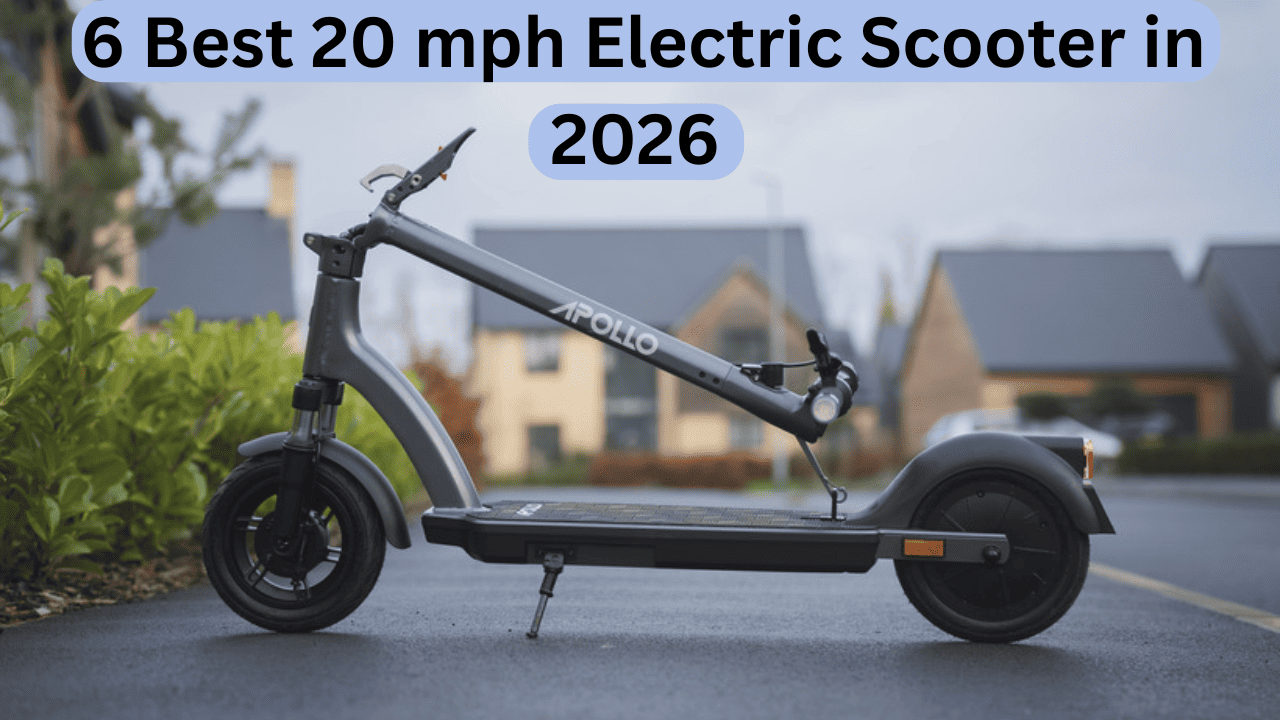
An electric vehicle that can travel up to 20 mph is a battery-powered, stand-up personal mobility device capable of reaching this speed under ideal conditions. In the majority of US states, this speed category qualifies the scooter as a low-speed personal vehicle, meaning no permit, registration, or insurance is required. However, regulations across the rest of the world vary greatly by country.
It doesn’t matter if you’re a regular commuter, a student navigating an expansive campus, or an enterprise evaluating the last-mile mobility of your fleet; the 20 mph electric scooter class is probably the most useful speed class available. It’s quick enough to beat urban traffic when you’re in a bicycle lane, and it’s legal enough to avoid having the scooter confiscated on the first day.
This guide covers everything you need to know about the most reliable models to be tested in 2026, the details that really are important, what 20 mph electric scooter is legally ascribed to in your nation, and the best way to avoid costly buying errors.
Is 20 MPH Actually Fast for an Electric Scooter?
The context matters. Riding at 20 mph electric scooter feels four times faster than walking and lets you easily pass urban commuters. When you are on open roads, the thrilling sense of speed will truly come alive. A 5-mile ride takes around 15 minutes, which is about the same time it would take to drive in dense city traffic, but with no parking costs.
However, riding a 20 mph electric scooter demands more of the vehicle as well as the driver. With this speed, the distance to brake increases dramatically, and surface imperfections can be more damaging, and falling without safety gear poses a serious injury danger. It’s not a “fast” scooter in the realm of high-performance electric scooters -Dual-motor models from Kaabo, Dualtron, and Inmotion may be over 50mph; however, for daily use in urban areas, 20 mph is a reasonable limit most people require.
The Global Reality: Is a 20 mph electric scooter legal where you live?
This is the issue that many purchasing guides don’t answer, and it is the question that is most crucial to international buyers.
Most places across America handle e-scooter rules on their own, state by state, city by city. Some allow scooters going up to roughly 20 miles per hour without needing plates or a license, yet things like speed caps, head protection rules, and where it’s okay to roll differ widely. Since regulations shift depending on the spot, looking into your area’s transport office first makes sense.
For folks outside the U.S., one hiccup shows up when 20 miles an hour means about 32 kilometers per hour. This is more than the legally required speed limit in the majority of Europe, as well as a lot of Asia, and a few Australian states.
| Region | Legal Speed Cap | License Required | Helmet Law | Notes |
| USA (most states) | 20 mph (32 km/h) | No | Under 18 (varies) | 49 states require no registration |
| UK | 15.5 mph (25 km/h) | No (rental trials only) | No (rental) | Private e-scooters still being legalised |
| Germany | 12.4 mph (20 km/h) | No | No (recommended) | Insurance sticker required |
| France | 15.5 mph (25 km/h) | No | Required under 18 | Banned from sidewalks; phone use fined |
| Australia (QLD) | 15.5 mph (25 km/h) | No | Yes | Bike paths and roads allowed |
| Australia (NSW) | Private property only | N/A | N/A | Public riding illegal |
| Canada (Ontario) | 15 mph (24 km/h) | No | Yes | 5-year pilot; roads and bike lanes |
| Japan | 12.4 mph (20 km/h) | No | No | New low-speed category; bike paths only |
| Singapore | 15.5 mph (25 km/h) | No | No | Theory test required; cycling paths only |
| UAE/Dubai | 12.4 mph (20 km/h) | No | Yes | Designated tracks only |
For buyers who are global and aren’t in North America, a scooter that is factory set to 20 mph overrides your local speed limit. Modern scooters like Segway, Xiaomi, Hiboy, and NAVEE come with speed-limiting settings that permit you to set a limit on the speed at which you can ride to ensure compliance with the local laws; however, you must be able to adjust this prior to the first time you ride.
The UK is currently experiencing a period of change. In early 2026, MPs introduced the “E-Scooters (Review and Awareness) Bill,” and the Transport Minister announced the intention to allow private e-scooters, along with more safety requirements. Trial rental schemes are in use in select UK cities, where the speed limit is 15.5 miles per hour with compulsory third-party insurance.
What the Spec Sheet Doesn’t Tell You
Before you evaluate any model, you must understand the reasons behind how claims of manufacturers diverge from actual experience.
Motor Wattage: The difference between the rated and peak
Each scooter has two motor numbers that are Rated Wattage (continuous output) and peak Wattage (short flashes). The phrase “350W motor” with “700W peak” will tell you two completely different facts. The rating figure is what determines long-term hill performance. The peak figure is utilized in the field of marketing.
A 350-watt bike motor handles flat roads without issue; when the path rises higher – say 10-12% – speed drops significantly until eventually stabilising at 12-15 miles an hour. 500W motors are much faster than advertised when you’re on moderate slopes — this is crucial in the case of cities with hills.
Voltage Architecture: The Spec Nobody Talks About
This is what nearly every purchaser is unaware of: battery systems with 48V far outperform those with 36V in the same power, as greater voltage implies lesser power loss when batteries drain. The data on fleets from Apollo Scooters, collected across hundreds of thousands of real-world rides, indicates that 48V scooters keep speeds longer in the battery’s cycle. When charged to 30, an electric scooter with 36V could reach 15 mph, while A 48V model could reach 20 mph until it is nearly empty.
If two scooters declare “20 mph,” check the voltage of your battery prior to assuming they’re equally efficient.
Real-World Range: Apply the 20-25% Rule
Manufacturer range numbers are based on ideal conditions: level roads, a 165-pound rider with full power, with no wind, and a moderate speed. If you are using the actual conditions — an average-weight driver as well as hills and a 20-mph speed limit cruising– you can expect the real-world range to be around 20 to 25% less than the advertised figure, and sometimes higher in winter temperatures. The scooter that advertises “30 miles range” will generally provide 22-25 miles.
Key Specs That Actually Determine Your Ride
Battery Capacity (Wh)
| Battery Size | Realistic Range | Best For |
| 270 Wh | 12–17 miles | Short commutes under 5 miles |
| 374–420 Wh | 18–27 miles | Mid-range 5–12 mile commutes |
| 500–551 Wh | 28–40 miles | Long commutes, range-anxious riders |
Tire Type
Pneumatic tires give you the smoothest road-based riding experience; they cushion the vibrations and give better traction even in showers. The downside is punctures that can occur occasionally. Honeycomb or solid tires need no maintenance and will never wear flat. However, every flaw or pothole is transmitted directly to your feet, wrists, and fingers.
Self-healing pneumatic tires – that are on Segway MAX G2 E -Split the difference in air-filled comfort and an elastomer layer that seals small punctures instantly.
Braking System
With a braking speed of 20 mph, distance is a real security factor. If a scooter doesn’t have adequate brakes, it isn’t just uncomfortable; it’s also a risk. A minimum-quality setup for a 20-mph ride is having a disc brake installed at the very least on one wheel. The most effective systems incorporate mechanical disc brakes and the E-ABS (Electronic Anti-lock Braking System) that prevents wheels from locking when wet.
Do not ride on scooters in this class that rely only on drum brakes or electronic brakes.
IP Rating (Water Resistance)
- IPX4: Splash-resistant only. Perfect for dry climates.
- IPX5-IPX6: Manages light rainfall and puddles—a minimum requirement for urban riders.
- IP66: Complete weatherproofing. The price is worth it if you often ride around Seattle, London, or Singapore.
UL 2272 Certification
This is the security of battery certification that many riders do not understand. Scooters that have UL 2272 certification are able to pass independently tested security in the fire and electrical areas, particularly the lithium-ion battery system. This doesn’t impact the speed of your scooter, nor its range. It is important if you’re charging in your home overnight, as the majority of scooter owners are. Fire cases tied to budget devices often trace back to unverified batteries. When picking between close-priced options, go for ones marked UL 2272-approved. Safety shows up in details like certification.
Best 20 mph electric scooter in 2026
Best Overall: Segway Ninebot MAX G2 E (~$899)
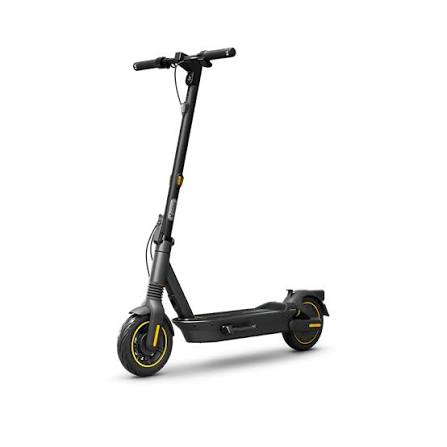
The MAX G2 E is the standard for the speed category and is the benchmark that all other scooters for commuters are assessed against. The battery’s 551 Wh capacity provides the real-world performance that regularly beats or surpasses Segway’s assertions, with independent tests having recorded 27+ miles of uneven terrain. Front and rear hydraulic spring dual suspension and self-healing tubeless tires, as well as Apple Find My integration, make it the complete everyday driver within this category. The RideyLONG efficiency program optimizes tires, motors, and controller behavior to maximize the range of the vehicle at high speed.
Ideal for: Riders who have longer commutes than 10 miles and who require maximum reliability and minimum maintenance.
Price: The premium is heavier than the budget options by around 43 lbs.
Best Value 20 mph electric scooter: TurboAnt X7 Max (~$330)
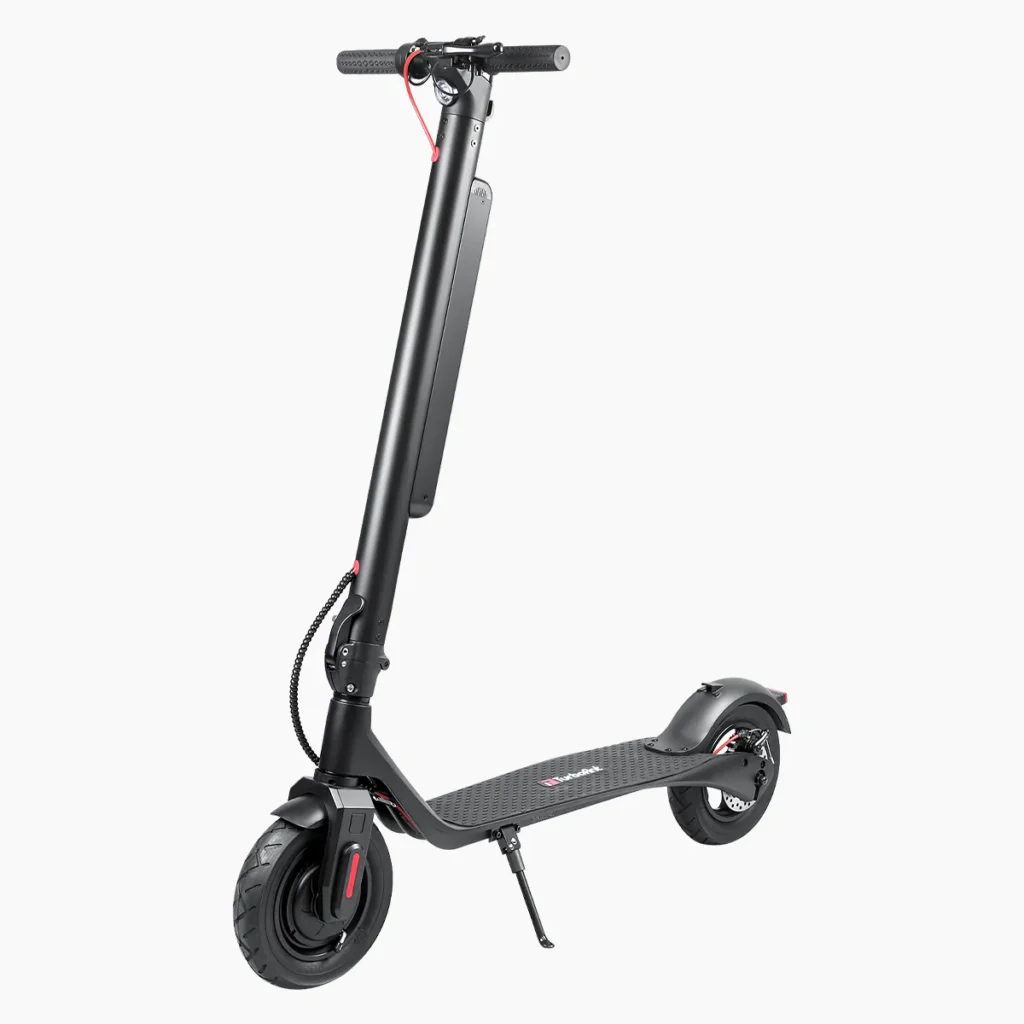
The most notable feature of the X7 Max isn’t range or speed -it’s its removable battery. In the case of apartment dwellers who aren’t able to take the entire scooter into their home for charging, this is a feasible solution that many competitors do not offer. The 10-inch pneumatic tires offer superior road stability and ride quality compared to traditional tires that are available for this price. In real life, the range is a reasonable 20-25 miles for riders who prefer flat surfaces.
The best option is for those who are budget-conscious urban commuters living in urban areas that have flat terrain, and apartment users who require charging indoors.
The trade-off is that the 350W motor will lose speed on steep slopes, but it’s without suspension.
Best Budget 20 mph electric scooter : Gotrax G4 (~$290-$320)
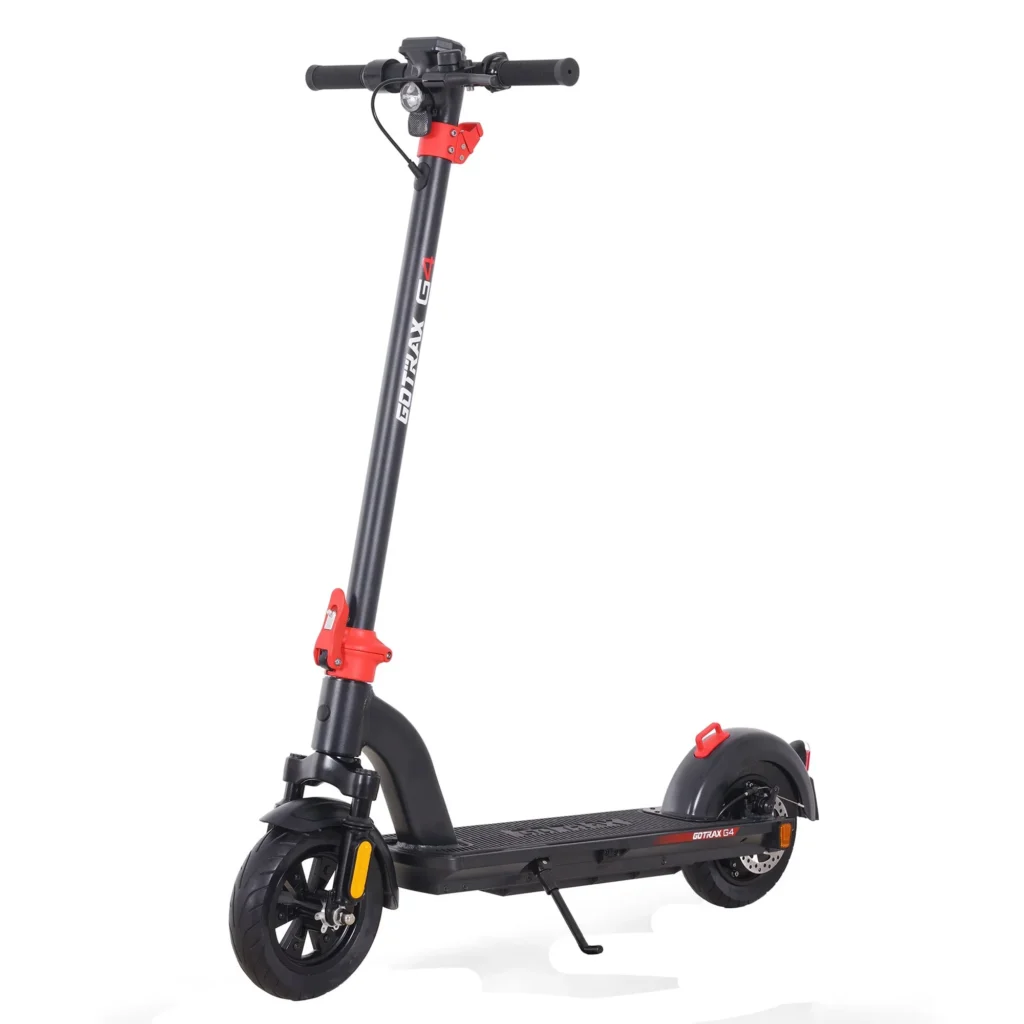
The G4 provides genuine, true 20 mph electric scooter performance on flat terrain for a price that most competitors will make sacrifices for. It’s one of the lighter options of this review, and that is important when carrying the vehicle up a flight of stairs or on trains. The battery’s capacity is 270 Wh, which gives an estimated 15-18 miles, enough to provide a 6- mile commute each day using a buffer.
Ideal for students who are light-weight, have quick flat commutes, and those who depend on transit.
Trade-offs: A 250W motor is a struggle when you climb a hill of any kind. No suspension, lower weight limitation (220 pounds).
Best for Heavy Riders: Hiboy KS4 Pro (~$450-$500)
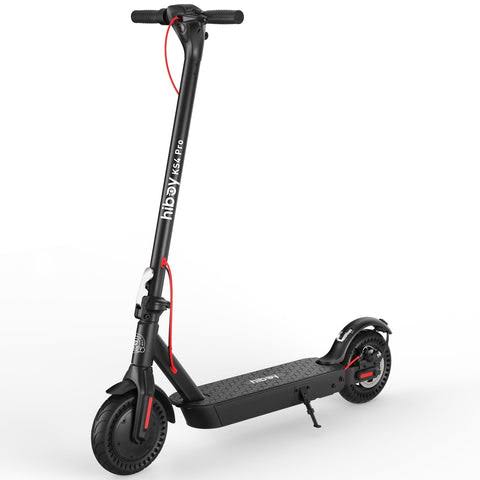
Heavy enough to support adults weighing nearly 260 pounds, the KS4 Pro offers 20 miles per hour speeds without slowing. On slight hills where weaker scooters struggle, its 500-watt engine keeps momentum steady. Front suspension increases comfort when riding on asphalt pavement that is cracked, and the app that comes with it allows monitoring of the battery, speed customization, and ride tracking. Dual braking systems -E-ABS front, with rear discs, can be used for this class of speed.
Great for those with heavier bodies (180-260 lbs), city riding with hills that are moderate.
It’s a tradeoff. Tires that have good tread offer a smoother riding experience, whereas the heavier frame of the motor.
Best Tech: Xiaomi Electric Scooter 4 Pro (~$520-$550)
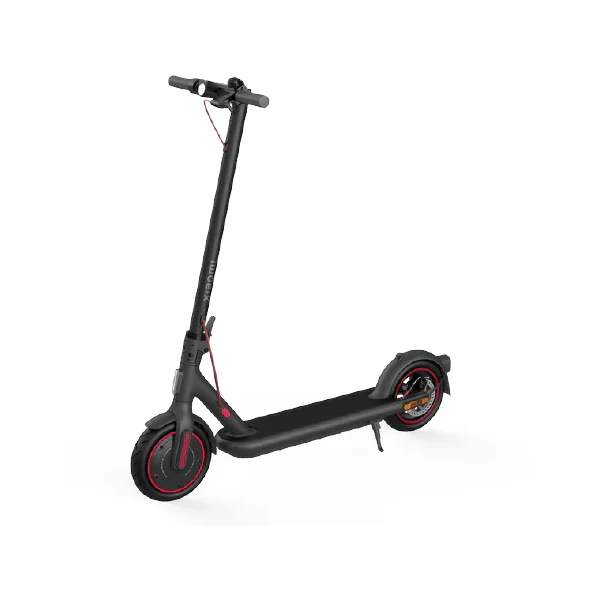
Ever since 2016, Xiaomi’s taken notice across continents by redefining dependable personal electric transport. Their 4 Pro commuter version stands out, often topping buyer interest. A shift began quietly, then – now hard to ignore. Its design is elegant and subtle, and it is the type of scooter that you can lock behind your desk with no shame. The accompanying app is among the top of the line at this price: live diagnosis, remote lock, and speed mode customization, as well as over-the-air firmware upgrades. The presence of the company in retail means that the parts and services can be easily accessed across the US, Australia, and up to Europe.
Perfect For: Urban commuters attracted by aesthetics, interconnection of ecosystems, and global brand recognition.
The tradeoffs are that it is slightly more costly than competitors with comparable specs. There is no suspension in the base model.
Best Budget 20 mph electric scooter : Apollo Dash (~$549)
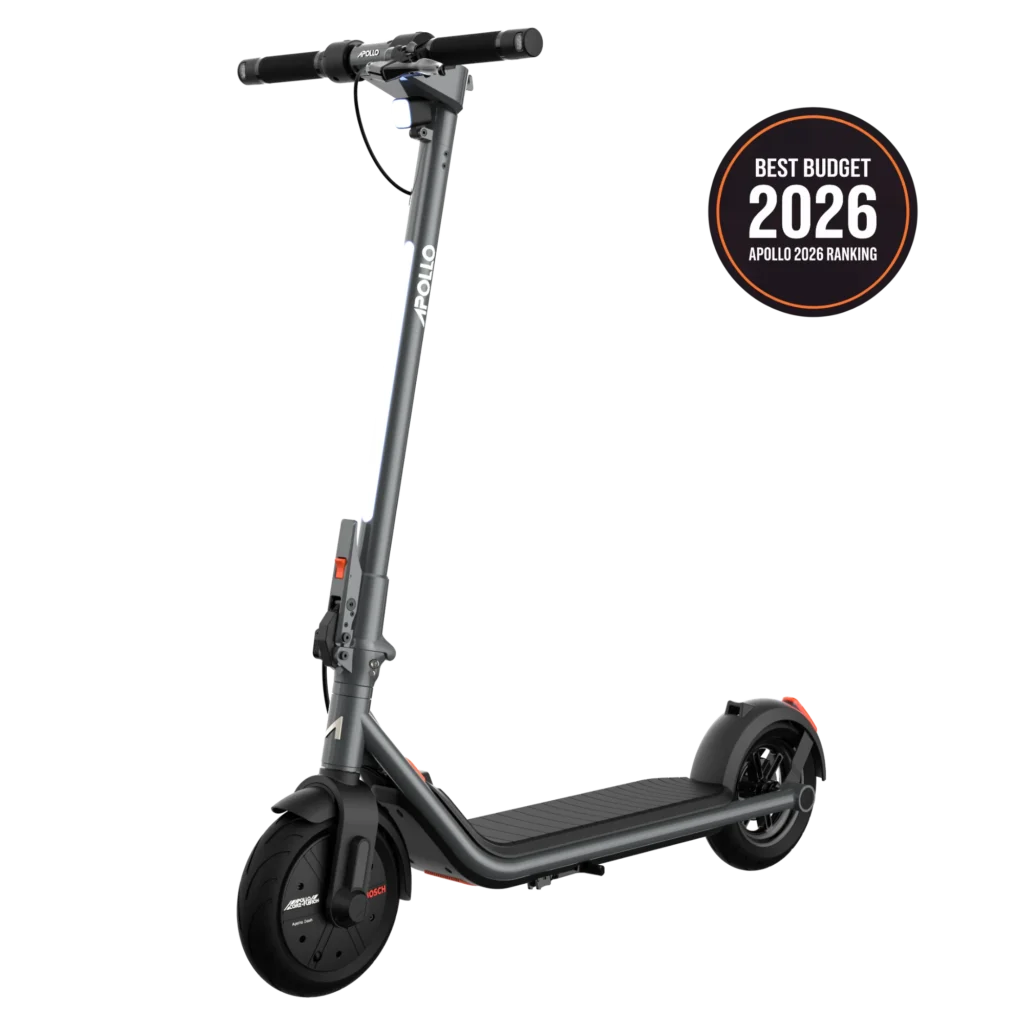
Apollo Dash is a great value 20 mph electric scooter. Apollo Dash outperforms its price in a key way: it has an impressive 600W Bosch motor that is mounted on a battery system that is 48V -the kind of motor you’d normally find in $800+ scooters.
This 48V-based design is the reason independent testing has shown it to hold 20 mph by the close of battery cycles, and 36V models have dropped down to 15 speeds. Dual disc brakes are able to stop at 9.3 feet when you’re traveling at 15 mph. This is one of the fastest stopping distances ever tested within this class of price. Apollo’s frame guarantee for life is one of the most comprehensive for this cost.
Recommended for: Speed-driven riders who are looking for top engineering but at a lower cost.
Trade-offs: No suspension; IP54 ratings (lower than rivals), older platform design.
How All Six Models Compare
This Segway Ninebot MAX G2 E places in the middle of the list and has a price of around 800 dollars. It’s driven by a peak power of a 1000W motor. The unit also comes with an energy-efficient battery that is 551 Wh, which can provide 27 to 40 miles of range. It is able to accommodate riders as much as 220lbs. The scooter has two suspensions -with both hydraulic front and rear springs as well as an IPX5 Water resistance rating. It’s the ideal selection for those who travel regularly and require a reliable bike without compromising.
Its TurboAnt X7 Max comes in the price range of $330-$390.Some say it costs less than others like it. Riders weighing up to 125 kilograms are okay on this one – that’s more than most handle. Travel range hits about 32 to 40 kilometers, thanks to its 350-watt engine. Few models offer so much at such a low price. There is no suspension, and it has an IPX5 certification. The ability to remove the battery is the main aspect of the scooter, making it an ideal alternative for those living in apartment complexes or who need to recharge their batteries inside without taking the scooter.
Stepping up, there’s the Gotrax G4 priced between $300-320 dollars that runs on a 250-watt motor for 15-18 mile range operation. Its affordability helps it shine. In addition, it’s designed to take on riders who have a maximum weight of 220 lbs. There is no suspension, and it is only the IPX4 classification. That means it’s able to handle small splashes but is not appropriate for severe rain. The lighter scooter within this category makes it simple to take public transport. This is the best scooter for college students or for short commutes in cities.
Its Hiboy KS4 Pro is priced at $475, and it’s specifically designed for riders who weigh more. A 500W motor powers this ride, tackling slight hills more effectively than budget versions. Hauling loads up to 260 pounds feels steady thanks to its build. Expect around 22 to 28 miles on a single charge when used daily. Upfront, there’s suspension smoothing out bumps from rough pavement. Water resistance comes in at IPX5 – good enough for wet streets but not heavy spray. Check battery status anytime through the linked smartphone application. Speed settings are tweakable using that same digital interface. Heavier riders, say 180 to 260 pounds, gain real benefit here if their route dips or climbs slightly.
The Xiaomi Electric Scooter 4 Pro site at around $530, the cost might feel steep. Traveling 25 to 28 miles realistically, it runs on a 500W motor. Built for riders up to 220lbs, yet lacks suspension support. Rain or splashes? The build holds up with an IPX5 mark. The thing that makes Xiaomi stand out is its app-based ecosystem, the ability to diagnose in real-time, remote locking, speed mode control, and the ability to update firmware over-the-air. Its wide-ranging retail presence implies spare parts, and support can be found in more countries than other brands in this list.
Its Apollo Dash is priced at approximately $549. It is also the most efficient model in this class. It is powered by a 600W Bosch motor – not just any unit, but the actual Bosch model – it sits atop a 48V battery system, moving past the outdated 36V setups common among peers at this price. Real usage gives about 20 to 24 miles between charges. Riders up to 265 pounds are supported, while braking from 15 mph takes only 9.3 feet, standing out as exceptionally quick for its group. Without built-in suspension, it carries an IP54 mark for water resistance, landing at the lower edge among similar models. Frame protection from Apollo goes further than what others in the field provide.
How to Choose: A 5-Step Decision Framework
Step 1 — Calculate Your Real Commute Distance
Do the measurement door-to-door and not in the direction of the crowd. Five miles or less, a model of any kind works. 5-12 miles: aim for at least 374 Wh. Beyond 12 miles: The Segway MAX G2 E class is the best option.
Step 2 — Check Your Terrain
Go to Google Maps, switch to perspective view, then examine your route’s actual elevation. A flat city? An engine of 350W is enough. For regular hills over 8-10 percent? It is recommended to have 500W at a minimum and a battery that is 48V to keep that power throughout the journey.
Step 3 — Account for Your Weight
The majority of scooters in this category are rated at 220 to 265 pounds. The riders who weigh more than 80% of their weight will suffer from a reduced range and performance. Pick a motorbike that is at least 20-30lbs over your body weight.
Step 4 — Solve Your Storage and Charging Problem
Do you have no elevator access to your residence? The X7 Max’s fully removable battery allows you to charge the battery, but not the whole thing. Are you riding in an area that is wet? Prioritise IPX6 minimum. Do you ride public transport every day? Target scooters under 28 lbs.
Step 5 — Verify Your Local Laws Before Buying
The most common mistake customers make is one they only regret later. Before you purchase, go to your state DMV site (US) or your provincial transportation authority (Canada), as well as the regulations for your local city’s micromobility (EU, Australia, Asia). Verify the speed limit on bicycle lanes, if the helmet is legal, and if your bike is required to be registered. Legislation changes regularly.
The Real Cost of Ownership
A majority of buyers are only thinking about price. People who make the optimal decisions are those who consider price per mile over the course of 2 to 4 years.
| Cost Category | Budget Scooter (~$300) | Mid-Range (~$500) | Premium (~$900) |
| Purchase price | $300 | $500 | $900 |
| Electricity (2 yrs daily) | ~$40 | ~$40 | ~$50 |
| Maintenance (tires, brakes) | $60–$120 | $40–$80 | $30–$60 |
| Battery replacement (if needed) | $80–$120 | $100–$160 | $150–$220 |
| Estimated 2-yr total | ~$480–$580 | ~$680–$780 | ~$1,130–$1,230 |
The scooter with the lowest price is usually not the cheapest choice overall. These budget models can eventually become more expensive because they come with shorter lifespans for components, fewer replacement parts available, and less reliable warranties. In the mid-range, you’re usually purchasing lower maintenance expenses and a longer functional life.
20 MPH E-Scooter vs E-Bike: Which Is Right for You?
Both options solve the same commuting problem differently. Most of the time, the choice comes down to three main factors.
- On most mornings, a 20 mph electric scooter moves smoothly through urban roads. As areas get tighter – like when stepping onto public transit or weaving between pedestrians – a less heavy version becomes more practical.
- Some tip the scales at only twenty-six pounds; others near forty-five. Folding happens fast, no tools needed. Tucked beside a chair or under a table, they stay out of the way. Riding stops, storage begins, all in seconds. E-bikes weigh 50 to 70 lbs, and aren’t.
- Starting a long commute? An e-bike might make sense when the path climbs hard and never lets up. Rain every few days? That’s another reason some choose these bikes. Riding with power while still pedaling keeps effort under control. Tough terrain suits them well – know the price tag bites. Expect to pay double, maybe even quadruple regular bike costs. Moving it around gets harder, too, because the weight goes way up.
Safety at 20 MPH: What You Actually Need
In this situation, safety gear is not optional. A crash on a 20 mph electric scooter without a helmet poses a serious risk of head injuries — CDC’s accident data is consistent regarding this issue. The lawful requirement for helmets varies according to the country (see the table below); however, the physics does not.
A minimum of 20 mph for gears is required. for riding:
- A certified bicycle or skating helmet (not one that is a novelty), a budget of $30 to $80
- The wrists of gloves — fractures are the most frequent accidents that occur on scooters.
- Jacket or vest with reflective material to wear for commutes in the evening or early morning.
Practices of riding that substantially reduce risks:
- Be invisible to drivers of cars -Position and adjust your light according to
- Don’t ride your mobile as it is the most common traffic crime in major cities like Los Angeles and Atlanta
- Beware of metal surfaces that are wet. Road markings that are painted, maintenance hole covers, and grates can be very slippery.
- Don’t carry a passenger when riding tandem, as it alters the dynamics of handling on the scooter by modifying the way that the frame wasn’t designed to handle.
A Note on Speed Limiters and Unlocking
The topic is the subject of a lot of discussions on forums and demands an honest answer.
The majority of 20 mph electric scooter come with speed governors that are configurable through software or hardware. Certain models can be adjusted to speed increases through adjustments to firmware. This is legal in many regions — it’s not just a violation of the terms of service. If you exceed the legal limit in your area, speed limit can lead to the confiscation of scooters and fines, and, in certain regions, it could result in a reclassification as a motor vehicle that requires registration, insurance, and the issuance of a licence.
In addition, operating the scooter above its speed limit accelerates the degradation of batteries and wear on brakes, and — in the case of uncertified battery packs– creates a real fire hazard. If you want to go faster than 20 mph, you should purchase the scooter that is designed and approved to handle greater speeds.
For B2B and Fleet Buyers
If you’re looking to purchase scooters for corporate campuses, last-mile logistical operations, hotel properties, or a fleet of shared mobility, the buying requirements change significantly.
Prioritize: UL 2272 certification (essential to allow Indoor charging within commercial environments), swappable battery systems (for efficient operation of the fleet), as well as waterproofing IP66 (for outside storage), and direct supply from the manufacturer programs that offer bulk prices. NAVEE, Segway, and Apollo each have B2B channels. In the case of fleet deployments that are large-scale, the shared mobility models of Lime’s commercial divisions provide telematics integration, which consumer models can’t offer.
The maintenance infrastructure is as important as the purchase price on a large scale. Make sure you know the availability of spare parts as well as service turnaround times, and if the company offers commercial support prior to committing.
FAQ
Do I need a license or registration for a 20 mph electric scooter?
In most parts of the US, if your electric scooter goes under 20 miles per hour, it usually isn’t treated like a regular motor vehicle. Because of that, you typically won’t need a driver’s license or ongoing registration to ride one. Hawaii stands apart from this pattern – there, riders must pay a thirty-dollar charge for a single, non-renewable registration. In countries outside the US, the laws are different. Be sure to consult your local authority for transportation prior to boarding.
Can a 20 mph electric scooter handle hills?
Most times, how well things go ties back to what kind of motor you have. If the number says 350 watts, flat streets aren’t a problem – yet anything above 9 percent grade begins to slow it down. Go with five hundred watts instead, and hills near fifteen percent won’t drag progress much at all. Urban terrain that is extremely steep -like San Francisco, Seattle, and Edinburgh is best suited to the 500W+ motor, or a double-motor scooter above this category.
How long does a 20 mph scooter battery last before replacement?
A majority of lithium-ion scooter batteries are designed to last between 300 and 500 fully charged cycles prior to noticing a decrease in capacity. If you take good care of them and keep the charge at 20-85% and keep them in a closed space at room temperatures — the majority of riders will see between 2-4 years of continuous use prior to a significant reduction in range. Replacement of batteries typically costs between around $100-$200 based on the model.
What’s the best 20 mph electric scooter under $500?
One scooter shaping this category? That’d be the Hiboy KS4 Pro, priced around four hundred seventy dollars. Close behind sits the TurboAnt X7 Max at roughly three hundred thirty bucks. When it comes to handling bulkier riders and slight inclines, the edge goes to the KS4 Pro. Hauling over level city streets? The X7 Max fits tighter living spaces – thanks to its detachable power pack.
Are 20 mph electric scooters legal in the UK?
In the moment, privately-owned electric scooters aren’t legal to use on UK streets, pavements, or bicycle trails. Rent-e-scooter trial plans are available in select cities and are capped at 15.5 miles per hour. UK laws are actively working towards legalizing private electric scooters -visit Pure Electric’s E-scooter law tracker to see the most recent information.
Are 20 mph electric scooter different all over the world?
Twenty miles per hour equals thirty-two kilometers per hour. That number climbs past what Germany allows – just twenty klicks an hour. In France, drivers can go up to twenty-five, yet still less than that mile-based figure. Australia also sticks to twenty-five as its cap inside towns. Japan matches Germany at twenty, showing how measurement systems shape rules differently. Some places stay lower, making conversion matter when crossing borders. If you’re located outside North America, verify that the speed limiter on your scooter is set to the local limit before you ride.
Final Guidance
The best 20 mph electric scooter isn’t one with the largest spec sheet nor the cheapest cost. It’s the one that can handle your commute and the terrain you’re on, as well as your body weight, as well as the rules of the actual city, time and time again.
The most common commuters in the flat city of less than 10 miles, the TurboAnt X7 Max or Hiboy KS4 Pro offer the best value for money without excessive spending. It is ideal for riders who require flexibility and dependability as an everyday driver. The Segway MAX G2 E justifies its price by reducing the costs of ownership over three to four years. For performance-conscious buyers who want the best engineering under $600, the Apollo Dash’s Bosch motor and 48V architecture set it apart from everything else at the price.
No matter where you’re going — and who you’re purchasing from– check local laws before you start, set correctly, and pick the model that is approved according to UL 2272. The rest is simply specification comparison.
The information on this website is gathered from industry reports, manufacturer specifications, expert reviews, and trusted sources such as Electroheads to provide accurate and valuable insights for our readers