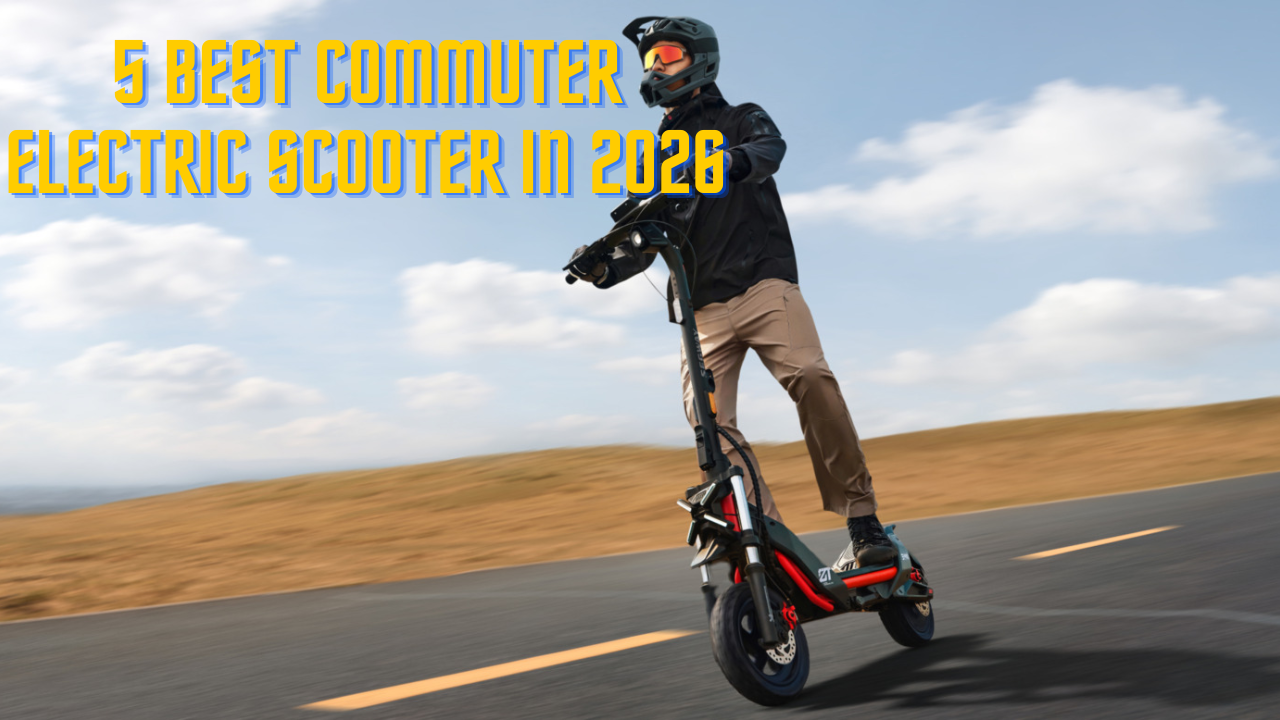
Last updated: June 2026. Verified against current US State laws, the specifications of manufacturers, and independently verified GPS test results
Getting from your front doorstep to work in the morning would be a matter of deciding between parking charges, traffic, or crowded transport. In 2026, an additional option is now a reality: the Commuter Electric Scooter.This is not the type that rents that is parked on the street — but your Commuter Electric Scooter, which is charged overnight, is always ready to go in the morning
The wrong choice is not difficult to make. The manufacturer’s claims are exaggerated by 30-50 percent. There are various laws that vary by city. Also, a bike that seems great on a flat test route will be a struggle on the first steep climb. This guide will help you navigate it with real-life facts, honest and accurate reviews, and a comprehensive guide to choosing the right scooter for your daily journey
What Is a Commuter Electric Scooter?
Commuter Electric Scooter specifically designed for commuters are foldable and powered by batteries. Additionally, they are powered by PEVs, which are portable electric vehicles (PEVs) specifically intended for use during the day, not for weekend excursions. It’s important to distinguish Commuter Electric Scooter, as they’re built to last, weatherproof, and maintain the same distance over multiple charging cycles. They can also provide the flexibility of a subway car or a building’s lobby.
They’re the basis of micromobility and can fill gaps in transportation and between locations, or serve as a substitute for short car journeys entirely. Urban cyclists who cycle 3 to 15 miles generally consider these trips economical, productive, and enjoyable.
Who Benefits the Most from a Commuter Electric Scooter?
Many commuters living in suburban and urban areas commute for under 12 miles in the direction they travel.
It includes workers who ride to the train station and campus workers who cross an enormous area, urban residents who replace Uber rides, and, in increasing numbers, corporate workers who participate in employer-micro-mobility plans.
If your journey is on the highway only and regularly exceeds the 20-mile limit without the charge option, a scooter may not be a suitable option. For the rest of us, it’s compelling math. Apollo Scooters analyzed 741,000 real commuters’ trips through their app. The researchers discovered that most riders believe that anxiety about range can be a positive thing, but the issue is not just about the number of miles a scooter can travel; however, it’s about how it will deal with the various situations that arise between the places it’s in and not.
The Real-World Range Problem (And How to Solve It)
It is by far the most crucial aspect to be aware of prior to investing a dime. Each range number displayed on the product’s page is measured under ideal conditions, such as flat roads, a 165-pound driver, eco mode, and 68 degrees Fahrenheit. You’re not subject to any of these constants.
Information from independent GPS tests shows that in the real world, the range is 30-50 percent lower than the advertised range. Weather that is cold — any temperature lower than 40 degrees F reduces distance by another 15. A climb, a rider’s weight over 200 pounds, and in sport mode also reduces the range.
The most common rule is to divide the advertised range by 0.65 to obtain a reasonable estimate, then add a 30 percent buffer to your mileage requirement for the day.
Real-World Range Adjustment Table
| Condition | Range Reduction |
| Heavier rider (200+ lbs) | -10 to -20% |
| Hills (5–10% grade) | -15 to -30% |
| Cold weather (below 40°F) | -15 to -20% |
| Sport/High mode | -20 to -35% |
| Battery aged 2+ years | -15 to -25% |
| Strong headwind | -10 to -15% |
A scooter rated 40 miles can realistically provide 26-30 miles in mixed urban conditions. You should plan according to your needs.
How to choose the right commuter electric scooter: 5-Step Framework
Step 1 — Calculate Your Real Daily Distance
Do the same for door-to-door, both ways, and compare it to the exact route you’ll take and not an exact straight-line figure. Include 20 percent of deviations from the route, battery fluctuations, as well as the occasional longer time. This number, divided by 1.5, gives you the minimum recommended range to consider.
Step 2 — Assess Your Terrain
Flat, smooth streets can be tolerant. Anything higher than a five percent slope alters the way you talk. For hills that are moderate (up to ten percent), look at a minimum of 500 milliwatts in motor output. For steeper terrain like Seattle’s hills and San Francisco’s hilly neighborhoods, dual-motor models that start at 1,000 milliwatts are the standard for practical use, not upgrading.
Step 3 — Decide on Portability Requirements
If you ride buses, the subway, or transport the scooter up stairs, it is difficult to carry the weight. It is the case that the MTA will require folded scooters for NYC transport, as do the CTA in Chicago and the LA Metro. Most transit authorities have a maximum weight limit of 30 to 35 pounds for what riders may carry in one hand. If your scooter is stored upon arrival at your destination, the weight you carry won’t matter as much.
Step 4 — Set a Realistic Budget (Total, Not Sticker)
The sticker’s cost is only the first step. In the coming three years, think about the security equipment ($80-$200), excellent locks ($40-$100), and tire replacements ($60-$180), as well as routine maintenance ($30-$80 every year), in addition to (for normal) NMC lithium-ion batteries that are found on the majority of scooters) It is possible to replace batteries in years 3-4 ($150-$400).
The Commuter Electric Scooter price was set at $934 when they were first released in 2026. (Rider Price Guide data). The median budget was $335 throughout the year. The most expensive models range from $ 1,400 to $2,800. The price range for typical smartphone users is $700 to $ 1,200.This will give you enough coverage, weatherproofing rated IP, and a battery with enough time to run computations.
Step 5 — Check Local Laws Before Clicking Buy
The step will prevent more purchases than any spec-comparison ever could. Commuter Electric Scooter will be legal in all 48 US states from 2026. In many states, a license is required for vehicles with power outputs of less than 750 watts and a speed of 20 mph or less. Only six states require a driver’s license, and only three require helmets for everyone. City-level laws are layered on top of state laws and differ significantly.
New York City requires UL2272 safety certificates for privately owned scooters. The city is also considering legislation on registration (Priscilla’s Law), which could be required to obtain NYC registration with DOT and license plates. Portland, Oregon, enacted an ordinance in 2026 that requires scooters to be parked on bike racks accessible to cyclists or in sign-posted parking spaces. Atlanta is planning to alter the curfew, which will ban motorbikes during the hours of 2 a.m. to 4 a.m. Seattle has a requirement that all residents wear a helmet regardless of age. This isn’t just for little youngsters. Los Angeles limits scooter speed up to 15 miles per hour. It’s just like bikes.
If you are in an area currently subject to regulations, make sure you check the regulations in force with the local authority for transportation before buying.
Top Commuter Electric Scooter in 2026
They are the most reliable choices across various commuter profiles. Based on real GPS tests, results of expert review, and feedback received from the local group.
Best Overall: Segway Ninebot Max G3
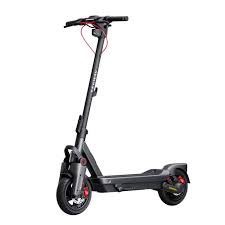
G3 is the exact equivalent of G2. This is an extremely powerful model that has a maximum power of 1000 Watts. It is also equipped with self-healing tubing with an 11.2-inch diameter, as well as a distinct Traction Control System (TCS) that prevents sliding on rough surfaces such as manholes and covers. This may catch riders out by surprise. In urban environments, it is 40 miles. This surpasses the claims made in Segway’s published press releases, as confirmed by independent tests. The latest SegRide stability feature and integrated 3A rapid charger (no external brick needed) provide the most comprehensive package available for commuters.
It’s not light; it weighs just 48 pounds. However, it’s certainly not cheap. If you’re looking for the electric vehicle that functions exactly like it did the first time around, this might be a great option.
Best alternative for those who commute 10-18 miles, as well as for those seeking reliability and mobility.
Best for Portability: Unagi Model One Voyager
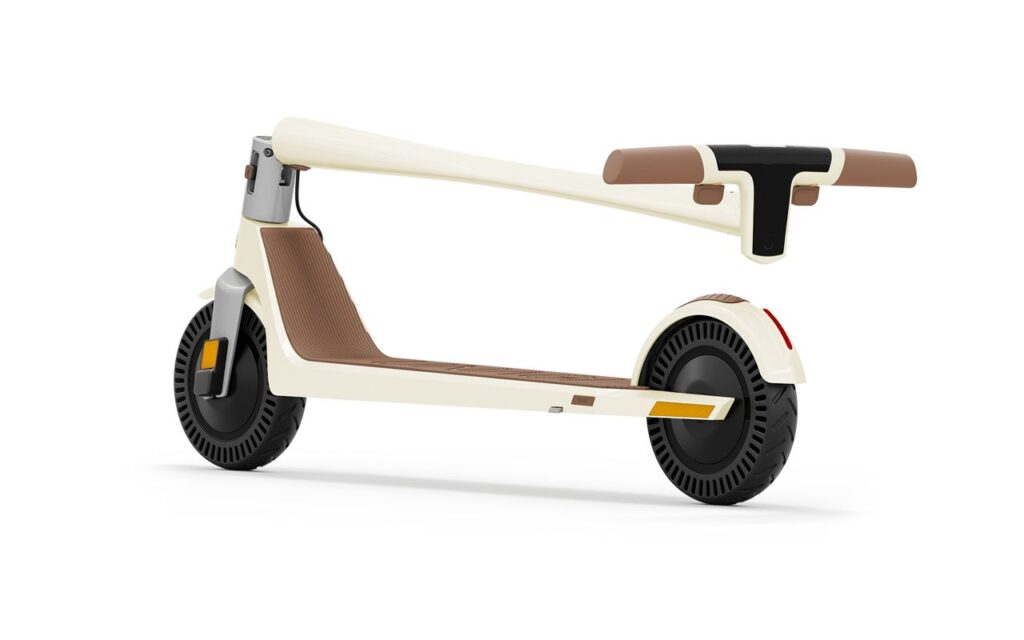
Under 27 pounds, it features a magnesium alloy frame and carbon fiber. Voyager is one of the lightest, fully featured, dual-motor commuters available. It’ll replace its predecessor, the NIU KQi3 Max, in the community rankings beginning in April 2026. It will be in accordance with feedback from riders who have been riding for real. There’s a compromise on range; you could expect to travel between 14 and 18 miles, subject to the circumstances. This is limited to shorter journeys. Subscription models (starting at $49.00 monthly) can be a viable alternative to upfront ownership, making them perfect for people who aren’t sure how long they will commit.
Best for: Transit commuters who carry their scooter every day, or short routes of less than 8 miles each way.
Best Performance Value: Apollo City Pro 2026
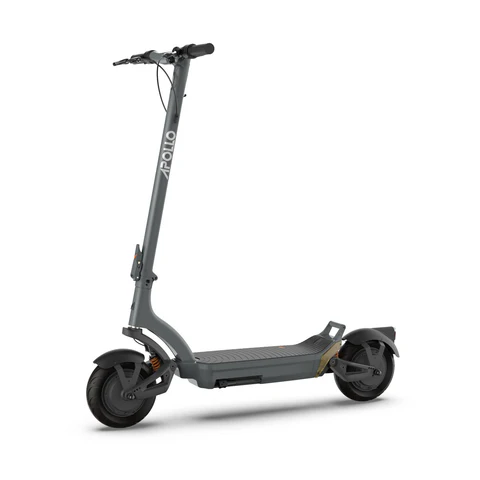
This Apollo City Pro’s MACH control system provides the smoothest throttle response on the market and is a real distinction in stop-and-go city cycling. Hydraulic disc brakes with dual suspension, as well as an optimum speed of 28 miles per hour (with unlock), make it a capable machine over its cost tier. Apollo’s Lifetime frame warranty is a first in the market and significantly reduces the risk of ownership.
A braking distance test conducted at 15 mph using GPS measured 9.3 feet, according to independent testing, ranking among the top stopping performances in the commuter category.
Best for urban drivers who are adamant about the speed and confidence of their braking, and for commutes with variable road quality.
Best Budget Pick: Apollo Go
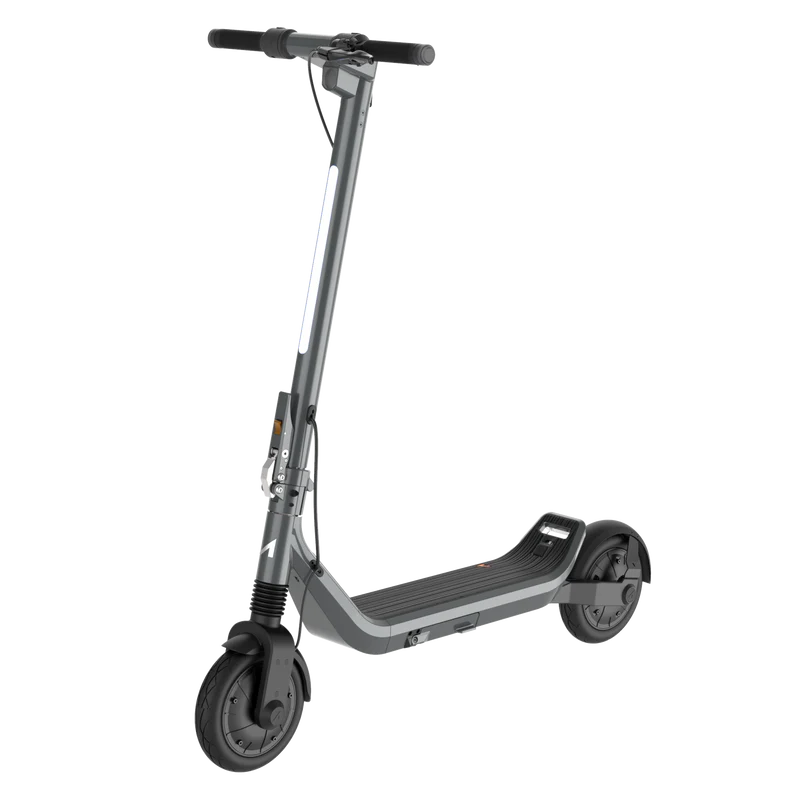
The only dual-motor scooter priced under 1,000 is currently in stock. It has IP66 waterproofing, Apple Find My integration, tire flatproofing, and regenerative braking, a set of features that is usually $400 better than other models. A GPS-measured speed of 22 mph. Real-world distance of just 20 miles. This is the purposeful tradeoff for suspension. There aren’t many differences between rough and smooth streets; however, it’s not apparent on smoother streets in cities.
Best choice for budget-conscious travelers who use well-maintained routes. First e-scooter customers.
Best for Swappable Battery: Levy Electric Plus
Levy’s main feature is the portable battery, which can be charged independently, essential for office users who cannot bring full-sized scooters to a power outlet. The battery provides about 17-20 miles of distance. Keep a spare battery, and your range doubles with no stopping. Levy is also the only brand to offer an extensive state-by-state guide to the legality of any scooter manufacturer, which is worth a look if you need to figure out where you can legally ride.
Best option for apartment dwellers without scooter charging access and riders who want an unlimited, efficient range with spare batteries.
Quick Comparison
| Model | Real-World Range | Top Speed | Weight | Motor | Price (USD) |
| Segway Ninebot Max G3 | ~40 mi | 28 mph | ~48 lbs | 1,000W peak | ~$1,099 |
| Unagi Model One Voyager | ~16 mi | 20 mph | ~27 lbs | 500W dual | ~$1,090 |
| Apollo City Pro 2026 | ~30 mi | 28 mph | ~36 lbs | 500W | ~$1,199 |
| Apollo Go | ~20 mi | 22 mph | ~42 lbs | 700W dual | ~$849 |
| Levy Electric Plus | ~19 mi | 18 mph | ~27 lbs | 350W | ~$649 |
Battery Chemistry: Why It Matters More Than You Think
Most Commuter Electric Scooter run on NMC lithium-ion (Nickel-Manganese-Cobalt) batteries. They’re efficient, high-density, and economical. They are ranked as among the best. Life expectancy estimates range from 300 to 500 charge cycles. After that, their capacity is reduced significantly. approximately 2 to 4 years of uninterrupted running.
LiFePO4 (Lithium Iron Phosphate) batteries, which are found in a select range of high-end models, have a lifespan of 1,000 to 2,000 cycles. The battery could be serviceable for 5 to 8 years. You’ll also get less dense, which typically means you will have a larger battery pack with similar capacity.
If you plan to bike every day for a long time and want to reduce battery replacement costs, LiFePO4 is a good choice, even with the extra cost.
Every Commuter Electric Scooter battery benefits from the same charge discipline. Beware of charging greater than 100 percent for the course of your daily usage (stop charging between 80-90 percent). Do not drain below 15 percent. Also, avoid charging during colder temperatures.
What the 2026 Tech Upgrades Actually Change
Many features that were considered premium features in 2025 have become regular features in the $800-$1,200 range:
Apple Find My integration – Scooters equipped with AirTag-like chips are displayed in Apple’s Find My app without an external tracker. Segway G3 and Apollo Go. Apollo Go and Segway G3 come with this. In urban areas prone to theft, it’s a useful tool for prevention and recovery.
Over-the-Air (OTA) software updates — brands like NIU, Apollo, and Segway are now being pushed online to improve compliance and performance. You can have your scooter’s speed cap adjusted in accordance with a brand-new city ordinance without going to a store. It is an excellent long-term benefit to own a scooter.
Traction Control Systems (TCS) – The Segway G3 introduced active TCS in 2026, which minimizes wheel spin on wet surfaces. Testers independently verified that it operates well on manhole covers that are wet and crosswalks with painted paint -the two main dangers for urban cyclists to slip on.
Gogoro battery swapping– Gogoro introduced its network of battery-swapping for stand-up scooters in 2026 with its Gogoro Pulse. Instead of charging, users swap their depleted battery packs for full ones at specially designed stations that take less than a minute. This is currently limited to city access, yet it’s the most innovative scooter ownership model for those in markets that support it.
Safety, Certification, and What UL2272 Actually Means
UL2272 is the US safety standard created by Underwriters Laboratories specifically for personal electric mobility devices. It evaluates the integrity of electrical systems, as well as battery, charger, and water resistance. A few US cities, such as New York City, require UL2272 certification for privately owned scooters. The MTA will also require the use of scooters on the subway system.
If you purchase, verify UL2272 certification from the manufacturer, or in the product list. Some budget scooters lack this certification and are not well-known.
Beyond the scooter itself
Helmets: Mandatory by law in Seattle for all ages, and in many US cities for minors. The CPSC standard is applicable to all bicycle helmets. ASTMF1492 is the only specific norm for scooters. MIPS-equipped helmets provide significantly better safety against impacts.
Guards for wrists: are the most frequent serious accident in scooter accidents, which is a wrist fracture due to the instinctive bracing. It is avoidable.
Lighting: Most Commuter Electric Scooter have front and rear lights; make sure to check the minimum front-facing output to ensure nighttime visibility. Reflective gear can be added to the included lighting.
Lock: A secure locking device that folds or employs a U-lock ($40-$80) cannot be exchanged. App-based alarms are useful. However, they’re not meant to replace physical locks.
Riding in Rain: IP Ratings Explained
IP54 is the bare minimum level of protection against water for an all-year Commuter Electric Scooter. IP56, which is in the Segway G3, offers more security. IP66, as found on Apollo Go and Apollo Beam, is the top commonly used rating in this sector and can withstand significant exposure to water.
A crucial caveat, regardless of the IP rating, is that wet metallic grates, painted lines, and wet leaves drastically shorten the braking distance. You should brake earlier than needed on wet pavement or downhills in the rain, regardless of tire type.
Corporate and Fleet Use: The Overlooked Case for B2B Buyers
A majority of the articles written on this topic are geared towards consumers at a particular level. However, a growing number of employers, particularly technology companies, campuses with large student populations, and logistics operators, have been purchasing scooters for workplace commuters or as transportation solutions.
For HR/facilities managers, fleet managers, and other teams, the evaluation criteria change. The availability of parts and repairability is much more than performance requirements for individual employees. Terms of warranty that apply to both commercial and consumer use are crucial. Apollo’s frame guarantee for life, as well as NIU’s fleet management software, are significant advantages in this regard. Brands that have established a US network of service providers (Segway, Apollo, NIU) can reduce the chance of downtime during fleet deployments.
Employer micro-mobility schemes typically combine scooter use with safe storage and charging infrastructure and often include subsidized leasing or purchase. The ROI is straightforward: replacing a $150/month transportation subvention with a monthly scooter maintenance budget, while enhancing customer satisfaction and reducing parking demand.
If your company is considering this option, begin with companies that offer fleet pricing with documented commercial warranties and directly managed accounts (currently, Apollo and NIU are the best choices on the US market for this).
Environmental Context
If you’re worried about negative effects the choice you make will have for the planet, consider the following factors the following: Electric vehicles emit between 13 to 22 grams of CO2 per mile when driven by the standard US grid mix (EPA average).The average vehicle that is driven by gasoline produces about 350-400 tonnes of carbon dioxide each mile. When you travel 10 miles round trip to get home each day up to 250 days cycling could reduce carbon dioxide emissions by around 800 pounds per year.
This method of calculation is more accurate in states with better electrical grids (such as California, Washington, and New York). However, the results are not as accurate in states that are heavily dependent on coal. However, it is an important reduction in emissions in all scenarios.
Where to Buy: Getting It Right the First Time
If you buy directly from a reputable brand site (Apollo, Segway, Levy, Unagi), you get the best warranty terms and avoid the risks of the grey market. REI is the best retailer for in-person testing, as well as for its return policy, which is important if you don’t like the mode of transportation after just a few days. Best Buy carries select models with the same return policy.
Amazon can be convenient; however, it comes with the risk of a grey market for electric scooters — warranties provided by unlicensed resellers typically don’t have manufacturer support. If purchasing from Amazon, make sure it’s supplied by the authentic brand retailer.
For those who wish to try before purchasing, search for “electric scooter dealer near me” or use the manufacturer’s location tools on the brand’s website. Many specialized e-bike stores offer Commuter Electric Scooter repair and test rides. Test rides are more a part of this class than most people believe.
Sales tax is an additional cost in states with high rates. California customers are charged 7.25 or 10.75 percent. Oregon residents do not pay. If you opt to buy one for $1000, the swing’s range could be $50-$100. Consider this when you are evaluating the cost.
FAQ
Which is the ideal electric vehicle to use for commuters in 2026?
For most riders, the Segway Ninebot Max G3 is the best overall Commuter Electric Scooter in 2026 The system will be in place by 2026.It comes with a realistic travel range of 40 miles. Additionally, it has a traction control system for wet conditions. Additionally, the wheels themselves self-heal. It is therefore perfect for everyday circumstances. Commuters who need Commuter Electric Scooter for public transport must consider the Model One Voyager. Unagi Model One Voyager is a better choice.
What is the maximum speed electric scooters employed by commuters?
The actual usage time could be 30-50% less than the manufacturer’s standard use time. Motorbikes traveling at 40 miles per hour can cover 26 to 30 miles in cities. When temperatures drop below 40 °C, it is possible to cut travel time by 15 °C. Take into consideration 65% of the distance in determining the.
Are electric scooters legal for US residents to use in the US?
Commuter Electric Scooter are legally utilized in all 48 US states as of 2026. A majority of states don’t require a driver’s license in order to use Commuter Electric Scooter. The speed has to be less than twenty miles per hour, or less. City-level regulations differ widely. For instance, NYC requires UL2272 certification and is currently examining regulations for registration. Furthermore, Portland has now imposed a requirement to lock bike racks. Find the latest ordinances of your city.
Am I obliged to use the Commuter Electric Scooter on buses or subways?
The majority of US transportation networks allow folding scooters for carry-on bags. In this case, MTA (NYC) states that scooters fold so they won’t block entrances or hallways. It’s not permitted to charge the transit system for its service. It is, however, not permitted. LA Metro and Chicago CTA share similar guidelines. The fold mechanism and weight are the major limitations to their use.
What’s the cost for Commuter Electric Scooter Are they suitable for commuters?
This Commuter Electric Scooter will be sold in 934 models by 2026. The cheapest models cost $335.The prices can range from $700 to $1200 for a car that meets the requirements for daily use over 2 to 4 years. Consider your total cost in the course of three years beyond the cost of purchase.
How long does the battery life last in an Commuter Electric Scooter?
The common NMC lithium-ion batteries are able to last for up to 300 cycles after a full charge. Then, their lifetime extends by 2 to 4 years, with no discontinuity. The premium LiFePO4 batteries are utilized for up to 2000 cycles. The correct method of charging (stopping between 80-90 percent of the charge and limiting excess discharge) will prolong the life of the battery, especially those that are constructed of the same chemical.
What electric vehicle can tackle the most difficult terrain?
If you’re seeking an easy climb that is no more than 10 meters and requires 100 watts of power, the engine that runs between 500 and 700 watts can be sufficient for most users. If you reside within San Francisco, for grades (15-20 percent), 2 motorbikes which have a rating of 1,000 watts of total power output are recommended. The Kaabo Mantis King GT (2,000W twin motor) is the best model for handling slopes. Apollo City Pro handles moderate slopes well and is priced well.
Can Commuter Electric Scooter be used during an evaporation?
Commuter Electric Scooter equipped with at least an IP54 rating or more are able to handle light or moderate drizzle easily and with ease.IP56 (Segway G3) and IP66 (Apollo Apollo Beam) are the best selections. Apollo Beam) offer greater safety. The danger of rain is that it’s not electrical. It’s grip. The paint’s moisture, along with the metal grids, makes it difficult to maintain traction, regardless of tire type. Be careful and take your time. The driver should be later than normal when roads are inundated.
The Bottom Line
Commuter Electric Scooter by 2026 will be huge, stable, and superior to what they have ever been. Technology is not something that was a distant memory. It is now accessible with a wide range of options. TCS, OTA updates, self-healing tires, Apple Find My, and hydraulic brakes can be expensive for most commuters.
Your choice of a bike will depend on something more important than specifications: your actual journey, and how your bike performs on the roads of your community within legal limits. Use the guidelines in the following article to narrow your choices before making a purchase. Try the car whenever you can. You must be familiar with local regulations. Create plans for your actual area, not the location shown on the website.
Many commuters in cities endure for several months. The goal is not to buy a car, but to buy the most effective one.
“The information on this website is gathered from industry reports, manufacturer specifications, expert reviews, and trusted sources such as Electroheads to provide accurate and valuable insights for our readers