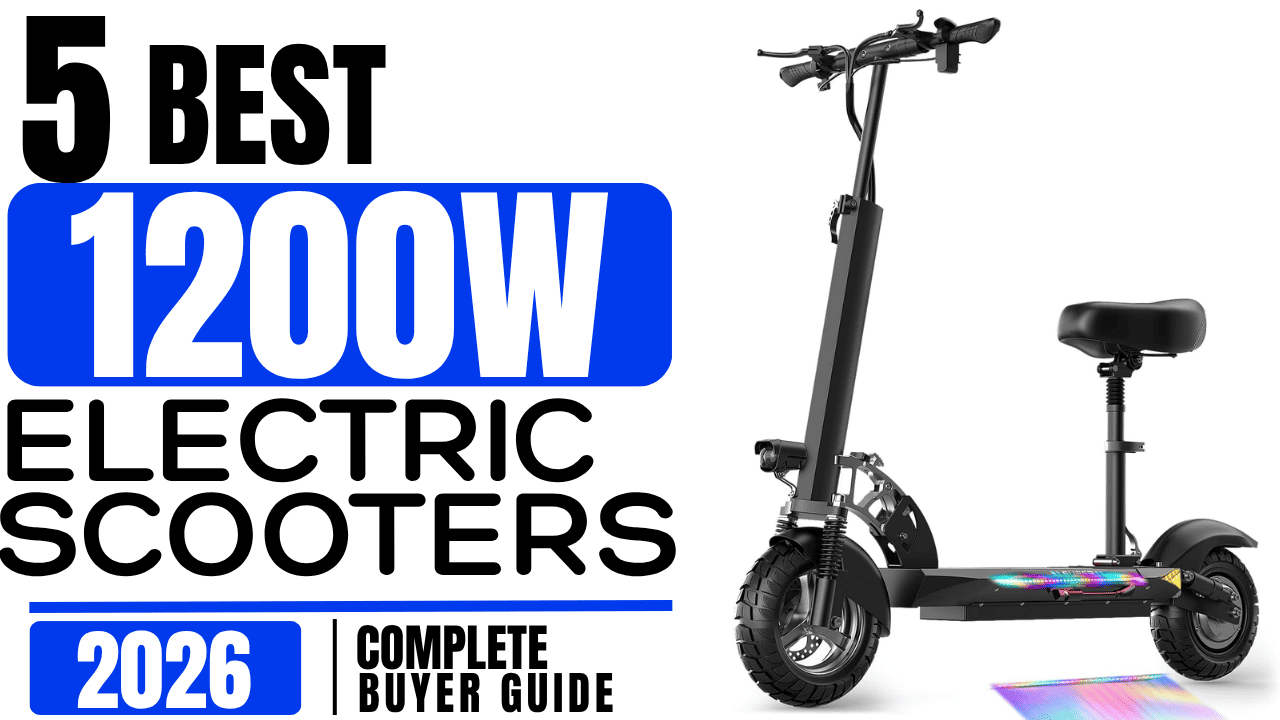
A 1200W electric scooter is middle-to-high-powered power scooter which typically has a speed of 20 to 28 miles per hour (top models with multi-modes can reach speeds of up to 32 mph in the single mode of boosting) it travels for 15-30 miles on a single charge and can climb a 15 to 20 percentage gradecapable of handling hilly rides and riders of more than 200 pounds, but is not one of the most popular performance machines. It’s a step up from ordinary commuters with 800-1000W, but lower than those that have the 2000W and above top-performing scooters.
Be aware that some models that advertise with “1200W” are actually marketed under the “1200W” label, but actually use two motors of 1200W (2,400Wplus combined) and are more efficient than the 2000W+ category. These are flagged in the following paragraphs so that you can’t evaluate them against genuine single-motor 1200W Electric Scooters.
What 1200W Electric Scooter model is the best? There’s no definitive “best” — it is dependent on the needs of your user:
- The best all-terrain option: Hapali A16
- The best commuter and off-road mix selection: ASKGO Q2
- The best budget/family-friendly pick: Caroma Peak P4
- The most basic stand-up scooter that has good reach: Super Turbo 1200W Elite
- Bonus — the best raw performance (technically in a different class of power): InMotion RS Jet
A complete side-by-side review of the five models- speeds, range, capacity for weight, cost, as well as who each will actually suit is below.
If you’ve been scrutinizing electric scooters for more than a short time, you’ve observed how much weight is assigned to a single figure called Wattage. An electric vehicle with 1200W is within an intriguing middle ground, strong enough to withstand real hill climbs and larger riders, yet not too frenzied so that it becomes an exclusive performance vehicle. Most people’s question, in fact, isn’t “what is 1200W”; it’s “is this the right amount of power for my commute, my weight, and my budget?”
The guide has been created to help answer.
What a 1200W Electric Scooter Actually Is
An electric scooter with 1200W uses an engine (or the combination of two motors) that is rated at 1200 watts. This puts it in the mid-to-high power range that is above the simple commuter scooters of 250-500W and lower than 2000W+ performance scooters.
The power source is often an individual hub motor. Other times, it’s spread across two 600W motors, one on each wheel. In either case, it’s the point where scooters no longer feel like toys and begin to feel like real transport. As the torque grows, climbing becomes less of a challenge, and the vehicle can easily carry the weight of a larger rider without becoming a burden.
People who tend to be in this group:
- Commuters traversing hilly areas.
- Over 200-pound riders who’ve noticed that scooters with low power sag beneath their mass
- People who travel 5-15 miles and need a buffer beyond the minimum
- Anyone who’s had the experience of using an affordable scooter previously and was disappointed when it came to steep slopes
If you commute for a short time and it’s flat, 1200W may exceed the amount you’ll need. If distance, hills, or the weight of your body are factors in the equation, the equation starts to make much more sense.
Why Wattage Alone Doesn’t Tell the Whole Story
Wattage is a measure of power draw, not necessarily distance or speed — two scooters with the same label “1200W” can perform very differently based on the battery’s size, voltage, and the method by which the amount is determined.
Nominal or. peak wattage can be the most common reason for confusion. It is the wattage that the motor can sustain for a long time. The peak wattage can be described as a brief period of time that is ideal for a quick swell to the top of a hill; however, it is not something that you can keep over a prolonged period. The scooter that advertises “1200W” often actually means 1200W at its peak, with the continuous rating being lower beneath. It’s a common occurrence within the mid-priced-to-budget segment. It’s recommended to verify instead of assuming.
It’s also a matter of voltage. A 1200W motor in a system that runs at 48V is different from one that runs at 36V, despite having similar wattage. A higher voltage usually means more power and performance. The size of the wheel, the type of tire, the control tuning, and the weight of the user all influence the experience of riding.
What’s the takeaway? Wattage is an important starting point; however, it is not the sole factor. One 1200W Electric Scooter is not 100% guaranteed to work identically; in fact, as you’ll discover in the next section, at least one model that is advertised by the name “1200W” is actually built on two motors, which push the vehicle into a stronger power category.
How the Motor System Actually Works
The 1200W battery of a scooter feeds an electronic controller that regulates the power supply to the motor in response to throttle input. Regenerative braking recovers a little energy in the process.
- The battery, usually a lithium-ion 36V to 52V pack, supplies electricity to the controller.
- The controller detects throttle inputs and determines the amount of current that reaches the motor.
- The motor, which is typically located within the hub of a wheel, transforms the electric energy into torque for rotation.
- Some 1200W-class scooters come with a regenerative brake, which recuperates some energy generated during the braking process and returns it to the battery.
An example from a real-world scenario of this is: when you are on a 15% grade of a hill, one 1200W motor operating near its maximum continuous speed can typically hold between 8 and 12 miles per hour. A motor of 350W on the same hill can slow down to a crawl or stop completely. This is precisely why commuters who live in hilly areas tend to choose this class of power.
Speed, Range, and Hill-Climb: What to Actually Expect
The majority of single-motor 1200W Electric Scooters can reach 20-28 mph. They travel between 15 and 30 miles on a single charge and are able to handle a 15-20 percent grade, though high-end multi-mode models may push more, while real-world figures generally are lower than the stated figures.
| Metric | Typical Range |
| Top Speed (standard models) | 20-28 mph |
| Top Speed (top models with multiple modes, boosted mode only) | up to 32 mph |
| Range per Charge | 15-30 miles |
| Hill Climb | 15% to 20% grade |
| Charging Time | 5-9 hours |
| Rider Weight Capacity | 220-330 lbs |
| Scooter Weight (single-motor models) | 30-45 lbs |
A simple note to remember: the range figures advertised generally reflect the best-case scenario. The real-world average is typically between 20 and 30% less when you consider the weight of riders and wind resistance, stop-and-go riding, and the colder temperature. If the listing states 30 miles, aiming for 20-24 miles is the best choice.
How 1200W Compares to Other Power Classes
Standard 1200W single-motor scooters are above commuter scooters of 800-1000W and are below those with 2000W+ or more performance, which makes it the perfect fit for a hilly commute and heavier riders.
| Wattage Class | Typical Top Speed | Typical Range | Best Fit |
| 250-350W | 15-18 mph | 10 to 15 miles | Casual, light and flat-terrain application |
| 500-600W | 18-20 mph | 15 to 20 miles | The standard commute, mainly plain |
| 800-1000W | 20-24 mph | 18-25 miles | The commute is easy with hills of moderate elevation |
| 1200W | 20 to 28 miles per hour (up to 32 mph with the top models with multi-mode) | 15-30 miles | Heavy riders, hilly commutes |
| 2000W+ (dual motor) | 30-40+ mph | 25-40plus miles | Off-road performance, Performance, Heavy load |
It is important to note that top 1200W Electric Scooter models that have multi-mode technology (like those in the Hapali A16 or Super Turbo below) could reach 31-32 miles per hour in the fastest single mode. This is the maximum speed within a single mode and not a general number. Scooters that have two motors of 1200W (like the InMotion RS Jet, covered next) outdo this row and are in the 2000W+ class regardless of being labeled with the “1200W” label — We consider it a “bonus” option, and it’s not a standard option.
If you’re commuting mostly on flat roads with less than 5 miles between you or so, an 800W or 500W scooter can save cash and weight, without costing your performance much. If you’re frequently taking on hills, lugging around extra weight, or logging at least 10 miles every day, 1200W begins to make a profit. For those who require extreme speed or off-road capabilities, dual-motorized scooters of 2000W+ come in.
Types and Variants Worth Knowing
1200W Electric Scooters can be found in single-motor commuter, dual-motor seating, and all-terrain models that are each designed for specific riding styles.
- Single motor 1200W- smaller and lighter, typically mounted on the front or rear hubs.
- Dual motor (600W divided into 2): Better control and a more even power distribution, but at the expense of some weight. (Note that this differs from dual 1200W motors, which are a higher-power setup. See below for the RS Jet bonus pick.)
- Compact models for the commuter — foldable frames, road tires, integrated lighting, and fenders.
- All-terrain hybrids – knobby pneumatic tires with reinforced suspension and higher clearance to the ground.
- Seated versions — some models have a detachable or folding seat that is crucial for long commutes.
4 Best True 1200W Electric Scooters in 2026 (+ 1 Bonus Performance Pick)
If you’re in need of a short selection, ASKGO Q2 and Hapali A16 are the strongest commuters and all-terrain options. The Caroma Peak P4 is the most affordable option for families, and the Super Turbo 1200W Elite is a good choice for those who are looking for a basic traditional stand-up with solid performance. The four scooters are authentic single-motor 1200W Electric Scooters. They’re the same as each other.
We’ve also added InMotion’s InMotion RS Jet as an additional bonus option for those seeking the highest performance. However, we’d like to state that the RS Jet uses two 1200W motors (2,400W nominally combined), which means it’s an advanced performance scooter with a 2000W+ rating and a “1200W” label, not an ordinary 1200W Electric Scooter. We haven’t ranked it with other scooters for this reason.
Let’s take a close, candid review of each and where each does not meet the criteria, as none of the scooters listed will be suitable for all users.
1. ASKGO Q2 (1200W Off-Road)
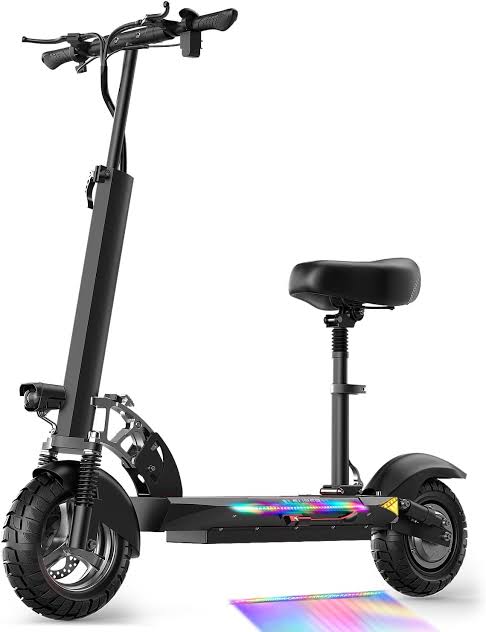
The ASKGO Q2 is a 1200W seated, off-road-oriented scooter that is built around a 48V 15Ah battery, specifically designed for those who commute and want to navigate rough terrain.
The key specifications:
- Top speed: about 27- 28 miles per hour
- The range is roughly 25 to 35 miles.
- Hill climb: rated at more than 35% grade (manufacturer-listed with the designation “20deg+”)
- Tires: 10″ pneumatic, all-terrain
- Additional features include a foldable and detachable seat with dual shock absorption, dual brakes, UL 2272 approved, with a 330-350 pounds capacity.
It’s not perfect:
- The 1200W figure represents a peak rating. The sustained power is less, and the top speed decreases significantly for those who weigh more (some riders who weigh 230 pounds have reported closer to 22 mph in practice)
- In a few reviews, owners mention the wiring for the taillight fraying following bumps.
- More bulky and heavy than the pure commuter scooters, which is not ideal for a primary scooter or as a stair-carrier.
Ideal for: Riders who divide their time between rougher surfaces (gravel or parks, grass) and would like a seating alternative for long rides.
2. Caroma Peak P4
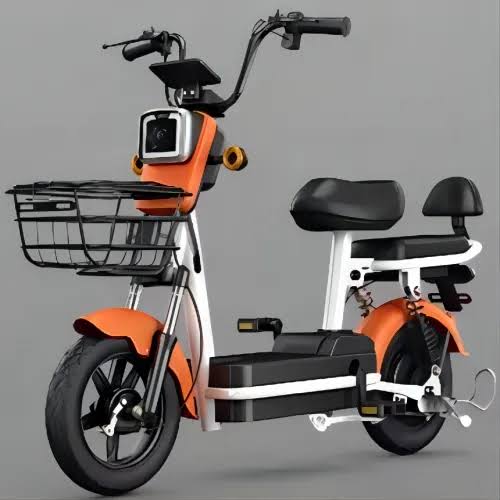
This Caroma Peak line sells a collection of scooters with similar design features across various powers (P1/P4/P5), as well as the 1200W P4 model, which is the mid-tier option. It is important to note that this is a peak rating for a motor with a power output of 750W continuously.
Specifications for key components:
- Top speed: around 20 mph
- The range can be as long as 30 miles.
- Hill climb: graded at around 35 percent gradient (manufacturer-listed in the manufacturer’s catalog as “20deg”)
- The tires are 14 “- 16” depending on the version.
- Other features include a detachable seat with storage basket, UL2272 certified, foldable frame, and about 300 lbs maximum capacity.
It’s not perfect:
- Top speed (20 mph) is on the low end for the 1200W category — this is the most budget/comfort-oriented pick here, not a performance one.
- “1200W” label refers to peak output “1200W” label refers to peak output. The continuous rating is significantly smaller; therefore, don’t expect the highest hill-to-floor torque.
- Not as suited for genuinely long or steep climbs in comparison to other choices
Ideal for budget-conscious commuters or families looking for the comfort of a basket-like scooter that can handle moderate distances and smooth terrain, but not the fastest speed or aggressive hills.
3. Hapali A16
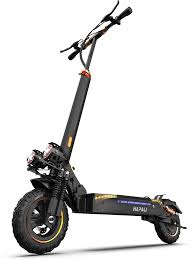
The Hapali A16 is an all-terrain-focused 1200W Electric Scooter that comes with four different speed settings, built on a 48V 15Ah battery with a powerful back hub motor producing 25 Nm.
Specifications for key components:
- Speed limit: up to 31 miles per hour (Sport mode). The modes vary between 6 and 31 mph (Walking) up to 31 mph
- Distance: Up to 31 miles with Eco mode
- Hill climbs: Rated at around 35-58 percent gradient (manufacturer-listed with the designation “20deg-30deg”)
- Tires: 11″ x 4.0″ fat tires. Front and rear twin suspension
- Other features: turn signals, side lighting, dual disc brakes, capacities up to 330lbs
It’s not perfect:
- Similar to most scooters in this price bracket, “1200W” is a peak number, but the actual hill performance is contingent on the user’s weight as well as the terrain.
- The top speed and range are derived in different ways (31 miles in Eco and 31 mph in Sport). It’s not possible to find both speeds in the same vehicle.
- A heavier build (fat tires and dual suspension) sacrifices some mobility in exchange for off-road performance.
Ideal for: Riders looking for true mode flexibility, an incredibly slow and careful setting to avoid crowded areas, as well as a quick setting to open terrain, with better all-terrain ability as compared to the ASKGO or the Caroma.
4. Super Turbo 1200W Elite
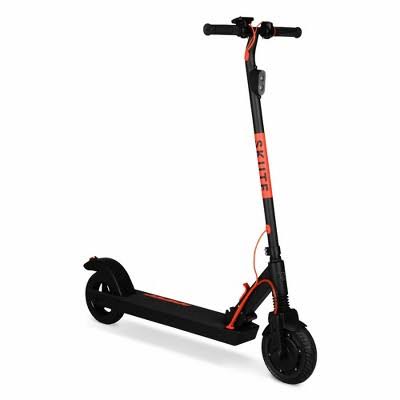
The Super Turbo 1200W Elite (Chrome Lithium model) is a more traditional standing-up 1200W Electric Scooter. There is no app or touchscreen; it’s a simple 36V model that comes with a lithium battery.
Specifications for key components:
- Motor 1200W. 36V with an RPM of around 3,200.
- Battery: Lithium, 36V 30Ah (UL-listed pack). Fast charge time of 4-5 hours. charge
- Speeds up to 32 mph over smooth terrain (varies according to the weight of the rider)
- The range can be as long as 35 miles
- Max rider weight: around 300 lbs
It’s not perfect:
- No seat, touchscreen, or app connectivity — this is a bare-bones performance-per-dollar scooter, not a feature-rich one.
- Range and speed are heavily influenced by the weight of riders as well as the terrain. This is more than scooters that have more advanced controls.
- “Super Turbo, “Super Turbo” branding has produced cheaper products that have been on the marketplace with identical names. Buying from a verified seller is important in this case.
Ideal for riders seeking strong speed and range using a classic, simple scooter, without the expense of touch screens or other features that they don’t need.
Extra: InMotion RS Jet
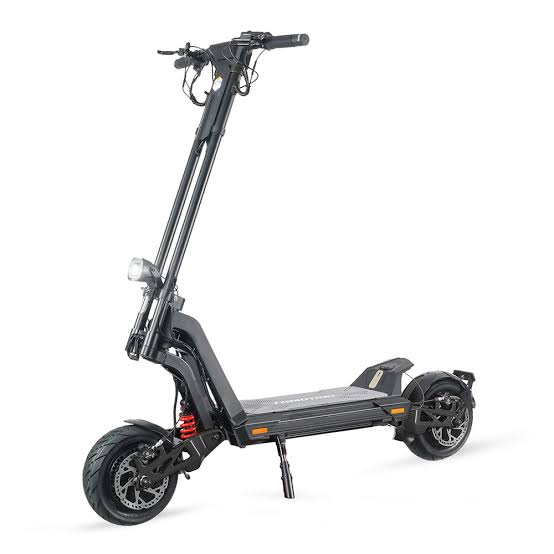
Its RS Jet uses dual 1200W hub motors (2,400W nominal, 4,600W peak) with a 72V 25Ah battery, which is almost double the capacity of a standard one-motor scooter. This is the reason its performance in real life is closer to the 2000W+ range than any other model in this review. It is listed separately as it’s not directly comparable with those four scooters listed previously.
The key specifications:
- Speed: Up to approximately 48-50 miles per hour
- The range is roughly between 56 and 62 miles per charge.
- Hill climb: rated as high as 50 percent grade
- Water resistance: IPX6
- Additional features: 4.3″ touchscreen, adjustable hydraulic suspension, 11″ tubeless tires, and an app-based GPS security lock
It’s not perfect:
- It’s heavy, weighing in at 90lbs (41 kg), which isn’t something you’d want to fold and carry up the stairs.
- The price is significantly higher than normal 1200W commuter scooters (roughly $2300and)
- The top speed of this scooter is far higher than the legal limit of most bike lanes and roads and therefore requires an uncontrolled riding style or a private space in a lot of areas.
- Some owners complain about a finicky folding mechanism.
Recommended for: Experienced drivers who desire genuine performance-scooter capability and do not mind the weight and price. If you’re searching for an “1200W-class” commuter scooter, think of this as being in a distinct category; this is included only due to the fact that it’s often sold under the label 1200W.
1200W Electric Scooter Comparison:
Imagine this as an honest salesperson could describe it. Not “which is best” in the sense of abstracting, but which is the one that best matches the actual situation of your riding.
| Model | Top Speed | Range | Weight Capacity | Seat | Best Suited For |
| ASKGO Q2 | ~27-28 mph | ~25-35 mi | ~330-350 lbs | Yes (detachable) | Mixing pavement and off-road commuting |
| Caroma Peak P4 | ~20 mph | ~30 mi | ~300 lbs | Yes (detachable) | Comfortable terrain, budget/family-friendly commuting |
| Hapali A16 | 31 miles per hour (Sport mode) | 31 miles (Eco mode — a different mode than the top speed) | ~330 lbs | No | All-terrain bikers that want flexibility |
| Super Turbo 1200W Elite | ~32 mph | ~35 mi | ~300 lbs | No | A simple, basic stand-up scooter that has a wide range of features |
| Extra Bonus InMotion RS Jet (dual-motor with 2000W+ class) | ~48-50 mph | ~56-62 mi | High (adult-rated) | No | Experiential riders who want real Power, beyond the standard 1200W weight range and budget. |
How do you read this table to be the buyer, not as a skimmer with spec sheets:
- Are you looking for a scooter with off-road capabilities at an affordable cost? This ASKGO Q2 is a solid option for daily use in mixed terrain.
- A lot of flat roads with light ups and downs, or prefer comfort over speed? Its Caroma Peak P4 is built to do just that. Don’t worry, it won’t be able to climb ASKGO or the Hapali and ASKGO.
- Do you want the most flexible ride modes to ride in both crowds as well as open terrain? The Hapali A16’s four-mode setup is one of the most adaptable in the bunch. Just keep in mind that its top speed as well as the range of its maximum are different across modes, and they’re not the same.
- Do you want speed and range with no additional cost for apps or touchscreens? This Super Turbo 1200W elite offers all that with the added benefit of modern technology.
- Do you want speed but do not mind paying a premium; however, you don’t require it to actually be a “1200W” scooter? InMotion RS Jet is the perfect choice. InMotion RS Jet is in an entirely different category, and you must go with the knowledge that it’s a dual-motor high-performance machine and not your regular 1200W commuter.
There’s no way to say that any of them are “the best” — they’re designed for different types of riders. And the truth is that your travel, along with your terrain and budget, are the main factors that determine which is the winner, not just the number of watts.
Before You Ride: Legal Considerations
A scooter with 1200W might be a legal vehicle, but you are not allowed to drive with full power on public roads, as certain regions limit street-legal wattage or speeds well under what the motors are able to produce.
It’s the section that most guidebooks skip, and this is a crucial aspect. Regulations for electric scooters differ widely, not only in terms of country but also depending on the state, province, or even the city. Some of the most important factors affecting the lawfulness of electric scooters are:
- Maximum legal motor wattage. Some regions limit street-legal scooters between 250 and 500W, regardless of the power output that the motor’s capabilities are in terms of technology of producing.
- Maximum speed allowed by law, usually around 15-25 mph, based on the area.
- The areas where you can ride a bicycle- streets, sidewalks, and roads are all subject to different rules, based on the jurisdiction.
- Age-related requirements, licensing requirements, and helmet rules.
The issue is that a 1200W electric scooter may be legally owned; however, it is not legally permitted for full-power riding within your region. There are some manufacturers who offer their models with firmware that is de-restricted and overrides local speed limits. If you’re planning to ride one, you should search for the specific country or city’s electronic scooter laws and determine if the seller provides a speed-limited or road-legal option.
If you’re considering alternatives locally, it’s important to check if nearby stores have road-legal models, as availability and compliance with the law can be different from country to country, even with the same vehicle.
A Simple Framework for Deciding If 1200W Is Right for You
Begin by examining your local laws and then compare the battery’s capacity with your travel distance, the terrain, and the weight of your body before you compare options.
- What is the law in your community that allows it? This is your first filter and not your final one.
- What’s your real journey? Compare battery capacity with the actual mileage you travel, using an average buffer of 20 percent.
- What’s the terrain you’re in? Frequent hills are a reason to add power, but flat roads might not require it.
- How heavy are you? Heavier riders will benefit from greater constant wattage as well as larger batteries. The power of the battery can be reduced faster with more loads.
- What do you think about mobility? 1200W Electric Scooter models weigh more (30-45 pounds for models with a single motor), and this is crucial when you’re transporting it down the stairs or on public transport regularly.
- Do you plan to ride through the rain? If yes, you should consider a solid IP rating (IPX4 or greater).
- How do you set up the braking system? When you’re traveling at 20+ mph, dual brakes, whether electronic and disc or mechanical braking, provide a significant safety margin.
Features Worth Checking Before You Buy
It is important to prioritize the type of brake, the tire type, the battery’s certification, and suspension, as they impact safety and comfort far more than the number of watts in the headline.
- Braking system: disc brakes and regenerative braking are the most secure combination for higher speeds.
- Type of tire — pneumatic (air-filled) tires travel more easily; solid tires need less attention; however, they transmit higher road vibration.
- Certification of safety for the battery: You should look to find UL 2272 or another equivalent regional standard. It’s an essential indicator of quality that’s often overlooked.
- Suspension — Front and rear suspensions noticeably increase comfort on rough roads.
- App connectivity and display, such as rate, battery percentage, cycling modes, speed, and, in certain instances, GPS or anti-theft functions.
- Mechanism for folding — make sure that the latch seems solid, particularly if you are folding and unfolding every day.
Common Mistakes Buyers Make
The most frequent error is deciding on the basis of wattage and not checking voltage. The actual (not the peak) power and the local laws matter the same way.
- Picking the right scooter is based on the wattage, and not examining battery capacity, voltage, or torque specifications.
- Doing nothing but ignoring local wattage and speed limitations and risking fines or even having your scooter taken away.
- The advertised range is assumed to match the real-world range, which is generally 20-30% less.
- Making sure you choose a good tire to ensure a more comfortable commute, in the event that pneumatic tires provide better comfort.
- Doing a test ride without a proper check or not confirming the policy on returns before making a decision.
- Not paying attention to the wattage of your charger and the amount of time it takes to accommodate a typical routine.
Maintenance and Everyday Safety
A basic monthly routine of brake and tire inspections, cautious battery storage, as well as a safety helmet, are some of the fundamental habits that keep the 1200W electric scooter in good and safe hands.
- Make sure to check tire pressure every month if you’re using pneumatic tires.
- Examine brake pads and discs each month for at least two months when you use them frequently.
- Make sure the firmware is updated when the scooter is connected to the app.
- The battery should be kept at about 40-60% if you aren’t going to be using it over a prolonged period.
- Do not immediately charge after riding in cold or extreme temperatures.
It’s a quick but essential point: a higher wattage equals greater speed that can be achieved; therefore, having a certified helmet, functional lighting for riding in low-visibility conditions, and an inspection of your brakes before you leave aren’t optional additions; they’re essential to use this power class safely.
What About Price?
1200W Electric Scooters usually span the entry, middle, and top tiers. Prices are determined more by the size of the battery, brakes, size, and quality rather than wattage by itself.
- The entry-level models of 1200W typically include an unassuming display, a single motor, and a standard battery.
- Mid-range 1200W Electric Scooter models generally include more suspension, better app connectivity, and larger batteries.
- The best 1200W Electric Scooter models have a dual-brake system, a battery with extended range, and better-quality building materials.
Since prices vary according to region due to import tax, duties, as well as retailer markups, a quick comparison of a couple of recent sales in your market can be more trustworthy instead of relying solely on one given price.
If 1200W Isn’t Quite Right
Suppose your terrain is flatter; think about 800-1000W. If you want extra speed or off-road ability, think about two-motor scooters with 2000W+ or an e-bike.
- 800-1000W scooters are a good choice for moderate hills, and portability is more important than pure power.
- Dual-motor scooters with 2000W+ could be worth considering if you want a faster top speed, steeper hill climbing, or even a greater weight capacity.
- E-bikes generally suit long commutes better — with more seating comfort and usually greater range when it comes to 10+ miles.
- The seated e-scooters are a mix of the two and offer scooter-like maneuverability and more comfort reminiscent of an e-bike.
FAQ
Is a 1200W electric scooter fast?
Most electric scooters can indeed reach 20 to 28 mph. This is fast enough to allow for safe commutes, but it also implies that safety equipment and knowledge of the local speed limits will be more crucial.
What is the maximum distance you can travel with a single charge?
The typical range is 15-30 miles, depending on the size of the battery, the rider’s weight, the terrain, and the riding style.
Can it handle steep hills?
Most of the time, yes, but up to about a 15-20% grade; that is an easy improvement over scooters with less than 500W.
Is it legal to ride on the street?
The answer depends on where you reside. A lot of regions have a limit on the permissible wattage or limit speed to less than the 1200W that a motorcycle could produce. Therefore, confirm your local regulations first.
How heavy is a typical model?
The majority of single-motor 1200W Electric Scooters weigh between 30-45 pounds, which is more than budget commuters because of larger motors and batteries. (Dual-motor models with performance like those of the InMotion RS Jet weigh significantly more — upwards of 90 pounds.)
What’s the difference between 1200W vs 2000W?
2000W+ scooters usually have higher top speeds, better hill climbing, steeper hills, and more weight capacity, but they’re heavier and less mobile. Be aware that some “1200W” scooters actually use two 1200W motors and are better than this 2000W+ level. Check if the specifications are per-motor or combined prior to comparing.
Do these vehicles need a permit?
The license requirements vary by the country and by region. Certain jurisdictions require a driver’s license or a moped-equivalent permit for high-powered scooters.
What is the time required to charge?
It typically takes between 5 and 9 hours for the standard charger. However, certain models provide quicker charging options.
Bringing It All Together
The 1200W electric scooter has earned its status as a real middle ground option, with adequate torque and speed for long, rocky rides and heavy users but without the weight and expense of a performance 2000W or more machine. It all depends on making sure the scooter is compatible with the actual distance you travel, your weight, and local regulations instead of chasing the highest number of watts listed on the webpage.
Before you purchase, verify your local rules first. Also, make sure you match the batteries to the capacity you need for your usage, and compare brakes and tire options across three models and, if you can, try your ride before you commit. Doing some research prior to purchase can save you a lot of hassle as well as an expensive fine later in the future.
About the Author
Huzaifa is the creator of Electric Scooter Analysis, a blog that covers electric scooters of all kinds, including off-road, city, and special circumstances. Data is obtained from manufacturer specs, as well as opinions from riders. Figures are flagged if there’s no proof.
“The information on this website is gathered from industry reports, manufacturer specifications, expert reviews, and trusted sources such as gyroor to provide accurate and valuable insights for our readers