Written by Huzaifa, Electric Scooter Analysis
Quick Answer: An easy answer: A 1000W electric scooter typically has a speed of 25 to 34 mph, climbs 15 to 20 percent of a grade (single motor), and can travel 20 to 50 miles on a single charge. It is the best choice for those who have to commute by tackling hills, long distances, as well as extra weight. It is, however, just a few inches from the limits of wattage that are legal in nations like the US, UK, EU, Canada, and Australia. Make sure to examine local laws before you purchase.
An electric scooter with a power output of 1,000W is at a unique intersection. It’s sturdy enough to withstand real-world roads, hills, and even heavy traffic. However, it’s on the edge of being thought of as “just a scooter.” If you look over the spec sheets, it’s the most important aspect to consider.
This article will explain what the 1000W Electric Scooter figures tell you, what it is compared to other classes of power, as well as where it’s legal across the world, and the things you have to know in order to figure out whether it’s the right choice for your needs, irrespective of whether you’re buying an electric scooter for yourself or are looking to purchase an whole fleet.
Top 5 Best 1000W Electric Scooters in 2026
Quick Pick Guide: Best range — KuKirin G2 Max. It is the most durable, tried-and-tested commuter: Joyor S10-Z (Single Motor Mode). The most intelligent, connected commuter: isinwheel S Nova Pro. The best value for money: Yume S10. Ideal for off-road or heavy users — iScooter iX5S.
If you’ve concluded that a scooter powered by 1000W would be the ideal choice to meet your requirements, your next concern is what kind of model can deliver the power but doesn’t sacrifice other features. The following are the top 5 choices available today, and each one is a good fit for specific types of users.
KuKirin G2 Max
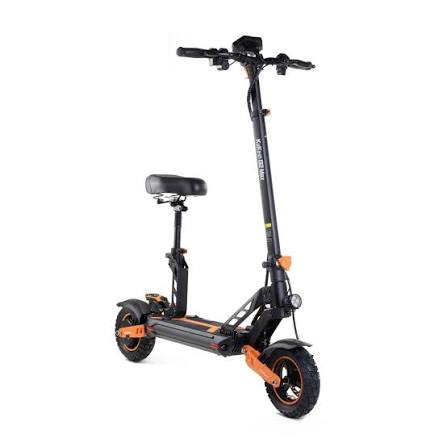
Ideal for: A perfect arrangement for those who commute long distances, or people who like hills and would like the most range possible from a single motor.
The G2 Max is built for people who are more concerned about the ability to climb and range than the absolute portability. The motor’s power of 1000W and the 48V 20.8Ah battery can push it to 34 miles per hour (55 kilometers per hour) and provide as much as 50 miles (80 kilometers) of range on a single battery charge, sufficient for a lengthy journey without the need for a daily recharge. The climb rate is 22%, and pneumatic tires that measure 10 inches and dual suspension make it the ideal choice for roads that are steep or with mixed surfaces. The IP54 water resistance provides an extra layer of security even in rainy conditions.
Joyor S10-Z (Single Motor Mode)
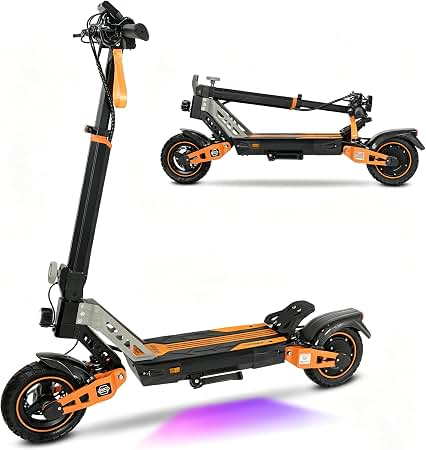
The ideal choice for: those who want a tried and well-rounded daily commuter that has impressive braking, stability, and traction but without the huge performance of a dual-motor.
The S10-Z is equipped with two 1000W motors. But changing to a single-motor mode activates only one motor -yet it’s enough to achieve speeds of 34 mph and get around 38 miles of runtime using the 60V 18Ah battery; likewise, it extends runtime when using both motors in tandem. The thing that sets this model apart is the dual hydraulic braking system that is designed to cut the stopping distance about half during wet conditions, as well as a four-level suspension configuration (front as well as rear suspension) and 10-inch off-road tires, which smooth out bumps in the pavement and potholes. The cruise control, as well as three different speed settings, complete it as a reliable daily driver.
isinwheel S-Nova Pro
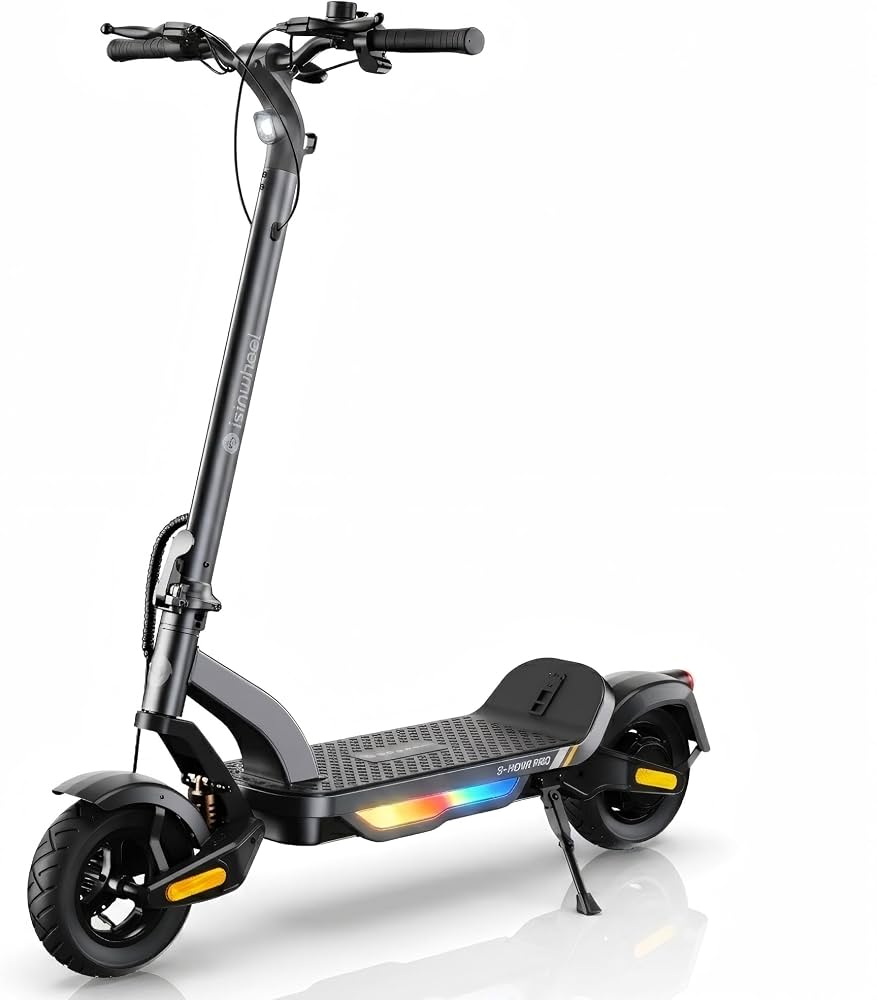
The ideal choice for: commuters who want everyday-ride ease and connectivity that is smart -an app-based cruise controller, remote locking, and a customizable light — all without having to upgrade to an extra-heavy off-road model.
Its S-Nova Pro runs a 1000W maximum (600W rating) rear motor with an average speed of 28 mph and 20 percent elevation climbs. It is powered by an 48V, 13AH (624Wh) battery with approximately 38 miles of range. The front swingarm, along with the suspension setup with rear springs and dual suspension on the rear, as well as pneumatic tires of 10 inches, make your ride in good shape in cities, and the Isinwheel Club app includes cruise control, deck lighting, as well as an electronic motor lock. The 264-pound (120 kg) load capacity and two disc brakes make it an efficient, modern choice for commuters who use it daily and would like more control on their commute.
YUME S10
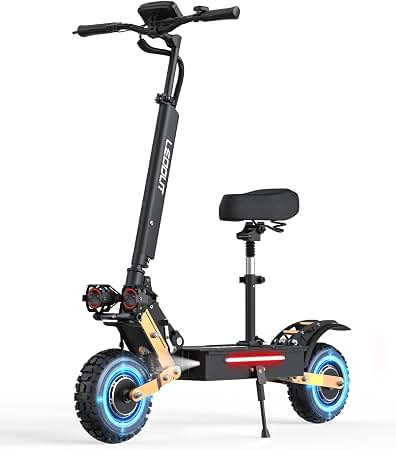
Perfect for: Designed for riders with a tight budget who desire real 1000W single-motor performance, without the cost of off-road equipment or dual-motor speed.
Its YUME S10 keeps things straightforward by using a single hub with a 1000W motor and a battery with a capacity of 48V 21AH and a top speed of 30 mph, with around 30 miles of range- decent numbers given the cost range it is in. Air-fork suspension on the front, coupled with a rear-mounted spring shock, is able to handle the most common bumps, as well as 10-inch off-road tires that provide a variety of options beyond the road. It comes with a load capacity of 120 kg and a simple three-mode display;
it’s a good choice for people looking for a real 1000W of torque and a wide range of performance without the cost of additional features like hydraulic brakes or app connectivity.
IScooter IX5S
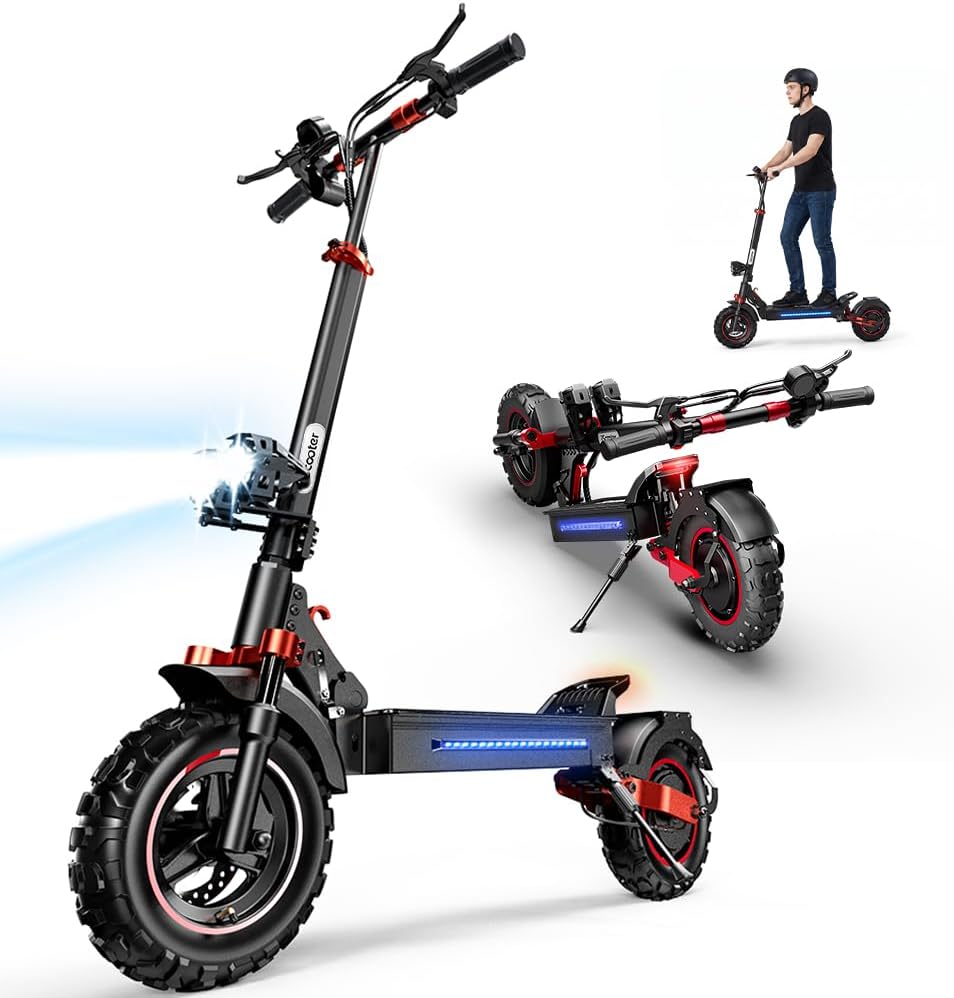
The best choice is for: riders who spend their time between urban roads and rough terrain, or who require more weight capacity than the majority of scooters that fall in this category.
The iX5S is an excellent off-roader due to its 11-inch pneumatic tires, two suspensions (front hydraulic fork as well as the rear spring), as well as a 1000W motor capable of speeds up to 28 mph. It’s also designed to handle 20% climbing and 40 miles of range, depending on the conditions. The 150 kg (330 lb) load capacity puts it among the top choices available, making it an excellent option for those who are heavier or those who ride with a mixture of asphalt as well as rougher trails.
Quick Comparison
| Model | Motor | Top Speed | Range | Best For |
| KuKirin G2 Max | 1000W | ~34 mph | A 50-mile distance | Long-range, hilly commutes and a few hills |
| Joyor S10-Z (Single Motor Mode) | 1000W (single motor) | ~34 mph | 38 miles | A commuter that was tested all over the place with good brakes |
| isinwheel S-Nova Pro | 1,000W peak (600W rating) | ~28 mph | 38 miles | Smart and app-connected city transportation |
| YUME S10 | 1000W | ~30 mph | 30 miles | Affordable 1000W power |
| IScooter IX5S | 1000W | ~28 mph | up to 40 miles | Off-road and heavy riders |
These specifications come from the manufacturer and include independent test results, which may change because of firmware updates as well as battery age and various other factors. Check for the most current specifications prior to purchasing.
What Does “1000W” Actually Mean on a Scooter?
Simple Answer: “1000W” usually refers to either the nominal (continuous) power or the high (burst) power, as they behave in different ways. A true 1000W continuous motor is much more powerful than a 400 or 500W motor with a peak 1000W rating, in spite of the fact that they are both advertised as “1000W Electric Scooter.”
A majority of scooters sell wattage using one or more of the following methods:
- Nominal (continuous) power is how many watts of power the motor is able to maintain over a long duration.
- Peak power is the short burst of energy available to accelerate or for hill starts. Typically, it is 1.5-2x the amount stated as nominal.
The model that is advertised using the slogan “1000W” might have a nominal motor of 450W, with an output of around 1000W. Or, it could be a continuous motor that has a maximum near 2000W. Both models behave in a different way in everyday use, particularly in the hills and with heavy riders. It is therefore important to determine which number the advert is using prior to comparing two models against one another.
Why Riders Choose 1000W Over Lower-Power Options
Direct Answer: More power results in better performance and acceleration, not only top speed. This translates into faster climbs as well as faster start-ups at traffic and lower loss of performance when you carry more weight.
The power of a motor is a good proxy for torque and acceleration, not only for top speed. The power of a motor can alter the way that the scooter functions when it comes to conditions in which lower-powered models fail:
- Hills — the majority of 1000W models can handle 15 to 20 percent slopes with ease. Two motor configurations can push you into the 25-30% area.
- Stop-and-go traffic -faster acceleration at a stop makes crossing intersections and merging easier. difficult.
- The heavier riders: A 1000W motor will lose speed and range less with heavy loads compared to a 250-500W motor.
- For rough terrain or headwinds, reserve power is a must for less performance drop.
To provide a sense of the magnitude: a 250-350W motor usually reaches about 10-15 miles per hour. 500-750W motors typically reach 18-22 mph, and it takes about 10-12 seconds to get to 20mph. A motor with 750 to 1000W cuts the time down to roughly 5-7 seconds, while achieving 25-30 mph. This is a significant benefit for people who are in the city’s traffic every day.
Who Actually Rides a 1000W Electric Scooter?
Most likely, they are those who work in urban areas with hills and also heavier-weight users (200or more pounds). Another important and lesser-known group is the elderly and disabled people who use force to get up ramps or driveways. They are not there for speed.
Common riders are:
- Daily commuters are especially vulnerable in towns with hills and low-wattage scooters
- The heavier riders (200or more pounds) have more efficiency benefits than smaller motors can provide.
- For weekend and multi-terrain riders that require a more durable build than just asphalt constructions
A neglected but crucial segment is the mobility-impaired and elderly users. The data on usage suggests that a substantial portion of the people who purchase high-wattage scooters are using them as a home mobility alternative, rather than to commute. They utilize the torque for navigating the driveway, ramps, and surfaces that are uneven more than they do for speed. If this sounds like you, choose a lower top-speed setting, a broad and solid deck, and strong low-speed controls that are more robust than raw speed.
Teens and casual users generally prefer the 250-500W power range. A 1000W motor is typically equipped with a higher horsepower (and more legally complex) than they require.
How 1000W Compares to Other Power Classifications
Simple Answer: flat and fast commutes for less weight? 500-750W is enough. Are you worried about distance, hills, or additional weight? 1000W is the best starting point. If you want to use it off-road or at maximum speed, you should consider dual-motor 2000W options instead.
| Power Class | Best For | Typical Top Speed | Typical Legal Status |
| 250-350W | Children, light-hearted casual riders | 10-15 mph | All are welcome, and there are no restrictions |
| 500-750W | Adult light commuters on plain terrain | 18-22 mph | The majority of them fall within the standard e-bike/scooter levels |
| 1000W | Adults who commute for work, up hills, bigger riders | 25-34 mph | Borderline -it is heavily dependent on country and state |
| Dual 1000W (2000W combined) | Steep hills, off-road, heavier loads | 30-40 mph | Often, it is reclassified as a moped |
Is a 1000W Electric Scooter Legal? A Country-by-Country Look
Direct Answer: It’s based completely on the location you reside in. The majority of countries have legal limits between 750W and 1000W, meaning that a 1,000W scooter can quickly enter “moped” territory, requiring registration and insurance or a licence. Be sure to consult your local transportation authorities before riding in public areas.
United States: Depends on the state. It is usually required to register at a higher level than the nominal 750W.
The laws governing scooters and e-bikes are made by the state and not at a federal level. The standard most often cited is 750W nominal, which is the 20-28 mph speed limit for scooters and e-bikes; over this, it can move the vehicle into motor-vehicle or moped-related territory. This may include registration, insurance, or licensing requirements. In 2026, a majority of US states will allow some street-legal moped and e-scooter operation; however, the specifics of sidewalk and bicycle lane accessibility, as well as helmet regulations, are different for each state. Make sure you check with the state’s transportation department prior to riding on public streets.
United Kingdom: Not permitted on public roadways or on pavements regardless of the wattage.
E-scooters owned by private parties, regardless of whether they are 1000W or not, are generally not allowed on UK pavements, streets, or cycling roads. Only cars that operate under approved government rental trial plans are legal. Private 1000W Electric Scooters are usually restricted to private property without the permission of the owner, an important and frequently misunderstood issue to consider for UK customers.
European Union: 250W continuous base, and 1000W that can be tolerated for a small power spike.
EU guidelines for pedelecs establish the power limit for continuous use at 250W, with the cutoff for assistance at 25 km/h. Unknown is that some frameworks for pedelecs allow brief surges of power that can reach 1000W (for approximately 30 seconds) in the course of acceleration. But this is a limited-time allowance; it’s not a green signal to a vehicle that can sustain 1,000W per day. Regulators aren’t uniformly harmonised throughout the EU:
- Italy has rules specific to electronic scooters, which are different from rules for bicycles. Be sure to check the most current rules before making a purchase.
- Germany, France, and Spain all have their own nation-specific frameworks.
- France has increased the enforcement of speed limiter manipulation and has imposed sanctions that include confiscation of the device and fines.
- The Netherlands runs one of the strictest compliance policies across Europe.
Canada has no standard for national use; the standard varies from province to province and often is an undefined area.
The rules are established provincially. Certain provinces operate pilot programs that have wattage and speed caps below 1000W. Other provinces don’t have a scooter-specific structure, leaving private property owners with a skewed view of street use by the public.
Australia: The amount of power available depends on the state. Caps typically vary from 200W up to 1000W with 25 km/h.
Regulation is carried out at the local and territorial levels, and at the local level, limits for road use generally range from 20-25 km/h to 200-1000W. However, there are some substantial differences between the rental scheme rules as well as private-ownership laws.
In general, think of an electric 1000W vehicle as a “verify before you ride” purchase, not as a “read the box and go” one. The rules change frequently; therefore, make sure you check your local transportation authority’s latest instructions rather than going with the marketing materials of a retailer.
What to Check Before You Buy
Straight Answer: The simple answer is to match the battery’s voltage to the motor. Verify that your weight falls within the maximum capacity of the battery; verify dual brakes as well as the type of tire; check that the IP rating is appropriate in the event of weather; verify the weight of your load, as well as verifying the battery’s cycle life claims.
- The battery should be matched to the motor. If a motor is 1000W and 36V, the battery performs differently than a similar motor operating on 52V or 48V voltages. Amp-hours (Ah) and voltage give you more insight into the actual distance than simply wattage.
- Verify your weight in relation to the recommended capacity. Excess weight can reduce the distance of braking and add stress on your motor.
- Make sure the tires are in good condition. The pneumatic (air-filled) tires have more stability and can take bumps more easily; solid tires last longer, but are rougher.
- Make sure the brakes are checked at a speed of 25- 30 mph. Dual brakes (electronic and drums or discs) can be a significant security upgrade over a traditional mechanical brake. Certain models with higher power have electronic ABS, which can effectively reduce stopping distances.
- Be sure to verify your IP rating. IP54 is more suitable if you’re riding through moderate rain.
- Examine the fold and weight mechanism. Anything greater than 40lbs is evidently more difficult to carry on stairs or to the bus.
- Make sure to verify the claims for battery longevity. Good lithium-ion batteries will last for several hundred fully charged cycles. That’s a couple of years of regular use. The degradation can be influenced by the way you ride, your temperature, and charging practices.
A Note on Pricing
The current market is that most electric scooters with a power output of 1000W (whether nominal or maximum) typically fall between mid-hundreds to low-thousands prices, with dual-motor or dual-suspension models priced much higher. Consider any price as a rough estimate. Always check for current prices before making a purchase based upon the last price because this segment of the market is a fast-moving segment.
Buying for a Fleet or Rental Business
Straight Answer: Prioritize the durability of your parts and their availability over the speed of your top. Consider how the power output impacts your liability insurance class.
- Durability and duty cycle are much more important than speed when it comes to fleets. Pick models designed to last for a long time and can be used by many users, not just for single-owner trips.
- Access to spare parts can be an issue. Make sure the manufacturer or distributor stocks tires, batteries, and controllers prior to committing to the specific version.
- The risk of exposure to insurance and the scale through power. The fleet that is in “moped” territory in your operational area may be subject to distinct insurance requirements than typical e-scooter fleets.
- The terms of a warranty for bulk orders are usually flexible. Make sure you have this written before purchasing in bulk.
Common Mistakes to Avoid
- Exceeding the weight limit decreases brake power and wears motors more quickly than most people expect.
- Disregarding local laws and statutes: having a scooter doesn’t mean it’s permitted to use public streets.
- The lack of safety equipment at speeds of 25-30 mph poses the same risk of injury as cycling at the same speed.
- Utilizing a charger that is not OEM can cause a fire or battery danger, as well as end the warranty.
- The speed limiter’s usage could be dangerous, and several nations (notably France and Italy) have a policy of imposing penalties on those who violate it.
- The inability to recognize pneumatic tire pressure; the under-inflation process quietly decreases distance and resistance to punctures.
FAQ
How fast does a 1000W electric scooter go?
25-34 miles per hour (40-55 km/h); however, there are models that have software limits that are based on local laws.
Is a 1000W electric scooter street legal?
The answer depends on the country you live in, as well as, in countries such as the US and Canada, on the state or province. A lot of jurisdictions limit legal e-scooters between 750 and 1000W. So, make sure you check the local regulations before buying.
How far can a 1000W electric scooter go on one charge?
The typical range is between 20 and 50 miles, depending on the size of the battery, the weight of the rider, as well as the surface and temperature.
What age is a 1000W electric scooter for
Adults and teens -because the acceleration, weight, and controls are not suitable for a kids’ scooter.
Do you need a license for a 1000W electric scooter?
In most cases, it’s not. If 1000W is over the wattage limit in your region and your scooter is classed as a moped, you may have to comply with registration, licencing, and the insurance requirements.
What’s the difference between a 750W and a 1000W Electric Scooter?
The 1000W motor has more power, speed, as well as hill-climbing capability; however, it will likely fall out of what is known as the “standard e-scooter” legal bracket.
What happens if you exceed the weight limit on a scooter?
As the distance of your brakes increases, the motor gets worn out quicker, and the warranty from the manufacturer may be canceled.
How long do 1000W Electric Scooter batteries last?
A few hundred fully charged cycles, typically translating into just a couple of years of uninterrupted usage before the capacity starts to fall.
Making the Decision
A scooter that has 1,000W of power can be an excellent choice for people who travel with high elevations, lengthy distances, or have extra weight. The same force that allows it to be powerful can push it towards the limits of local laws all over the globe.
Before making comparisons, make sure you know the legality of where you’ll be riding. Make sure you match the voltage of your battery with your needs for performance, as well as check your body weight against the recommended capacity; consider the tire type and braking force as strongly as you can with the speed rating of headlines. If you can master these basic skills, then a 1000W electric scooter can last for many years.