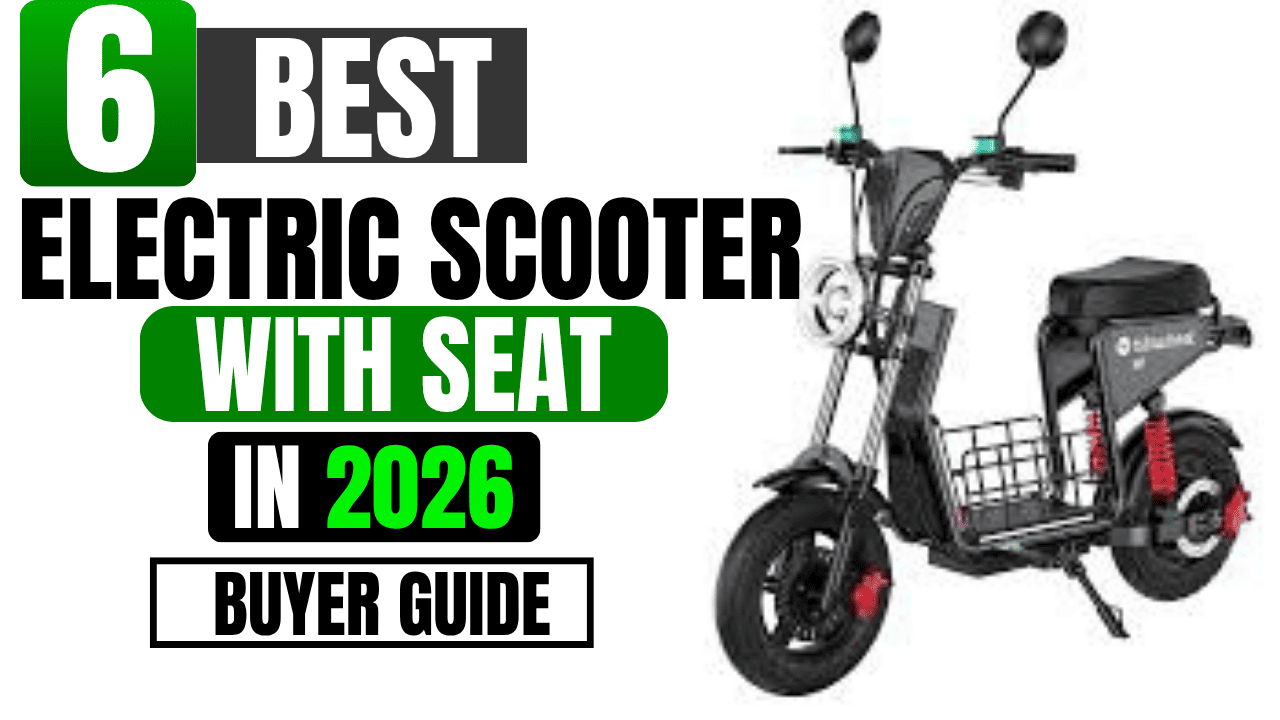
A standing electric scooter for 12 miles seems manageable, but you’ve never completed it. Your calves get tighter, your knees take on every bump until the moment you get there; it has worn you out. That’s the issue that standing scooters don’t address, which is exactly the reason electric scooter with seat are no longer a niche item but an increasingly popular choice in places like Los Angeles, London, and Sydney.
An electric scooter equipped with a seat is an electric vehicle that has a cushioned seat, and the saddle can usually be adjusted, which lets riders sit down instead of standing. It may seem like it’s a minor change. When you actually use it, it alters the amount of time you’ll be riding and how frequently you’ll utilize it, as well as how it will feel when you arrive.
This guide will help you understand what to do, which brands will be worth the money, what is required by law according to the location you reside in, and what you should avoid when buying a electric scooter with seat, which can result in the loss of many hundreds.
Why a Seat Changes the Experience
Biomechanics is a simple concept. When you drive on a smooth surface, you’re constantly making small adjustments. The position of sitting lowers your centre of gravity and spreads your weight over the seats instead of placing it on the ankles or knees. When you’re taking short trips under 2 miles, it’s not a big deal. When it comes to a commute of 10 miles or an evening outing or delivery shift that lasts longer than two hours, that’s the distinction between being comfortable and giving up in the initial month.
They also have less aerodynamic drag than standing versions, and so effectiveness is generally 10-15% higher on the same battery when both types of scooters use the same motors and battery characteristics.
Who Actually Rides These
A daily commuter who covers 5 to 15 miles per way constitutes the majority of them. The comfort and battery life that can withstand real situations (not laboratory conditions) are the main concerns for these people.
Delivery drivers who work 6- to 10-hour shifts require something else with swappable batteries (for practically endless reach) and cargo capacity, as well as a frame designed to be used for everyday wear, not the occasional weekend ride.
Mobility-impaired and elderly riders typically have electric scooter with seat that provide independent, local transport that standing models don’t. Stability, low-speed modes, and a comfortable sitting position are crucial here, and not features that are merely for comfort.
Real Range Vs. Advertised Range
Manufacturers’ test range is tested under ideal conditions – gentle riders, a smooth surface with moderate speeds, and comfortable temperatures. It’s not the kind of test typical of daily usage.
A good rule of thumb is to consider the range advertised and then multiply the advertised range by 0.70-0.75. A vehicle advertised as 40 miles can realistically provide 28-30 miles. A 60-mile model is expected to deliver 42-45 miles.
When purchasing your scooter, keep this information in mind to make sure that you purchase an appropriate model. Say, for instance, your travel distance was 24 miles; getting something that could travel up to 32-34 miles instead will provide enough distance so you don’t have to take a chance and get stuck.
This would be important in the case of a problem; it will provide enough distance so you don’t have to take a chance and get stuck or risk riding dangerously to try to go back the 24 miles home.
Types of electric scooter with seat
Fixed-seat models feature the seat integrated permanently into the frame. These models are more similar in style to a moped; the weight distribution and the geometry are based on seating. Its EMOVE Roadrunner Pro is the clearest example of the top end of performance, while the Gyroor C1 Plus is a model that represents the more practical and everyday use side of this class.
The models that fold down or remove the seat allow you to attach or take off the seat at any time, which is ideal for those who prefer to stand up occasionally, although they’re not as comfortable as fixed-seat models.
Moped-style scooters look like old-fashioned mopeds powered by gas, but with bigger tires (10-14 inches), full suspension, and larger frames. They’re often considered vehicles that need registration. Check the local laws prior to purchasing.
The three-wheeled scooters have become among the most popular mobility solutions. They can reach speeds of up to 15-20mph in order to reduce the risk of falling due to loss of coordination or balance.
Key Features That Actually Matter
Motor Power
Specification sheets often list only maximum wattages of motors; that is, their maximum output in short bursts, not continuous running wattages, which tend to be 40-60% lower and should always be checked instead of peak figures when making purchasing decisions — look for the continuous rating, not the peak number.
- Urban commuting that is flat, riders under 180 lbs: 500W continuous should suffice.
- Hills, cargo, or the weight of passengers: 1000-500W
- Extreme terrain or high-performance riding: two motors are available in the 2000-6000W band.
Battery
The capacity of batteries is measured in Watt-hours (Wh) (Wh) — more capacity is more efficient; however, the cell’s quality is equally important. Cells from reputable producers (LG, Samsung, Panasonic) tend to degrade more slowly over time and will last much longer than lesser batteries with the same capacity.
Each quality scooter must have a Battery Management System (BMS) to protect batteries from overcharging, over-discharging, short circuits, as well as thermal runaway. An inexpensive scooter that doesn’t or fails to implement the BMS isn’t just a safety issue; it’s a fire hazard. Check for UL 2272 accreditation, which is an independently tested lab standard for personal mobility device batteries.
To prolong battery life, refrain from charging the battery to 100 percent. Charging it up to 80 or 90 percent is better in order to maintain it. Refrain from keeping your battery at the highest or lowest percentage and avoid extreme temperatures as much as possible.
Suspension
- There is no suspension, which is fine for city streets that are smooth. Every bump is transferred directly onto the driver.
- Front fork alone — blocks most impact from the front and is sufficient for streets in cities.
- Two suspensions (front as well as rear) are the absolute minimum to ensure comfort on trips of over 10 miles.
- Hydraulic suspension is essential for speeds of more than 30 mph, or on difficult terrain.
IP Rating and Weather Resistance
IP (Ingress Protection) rating is a measure of the resistance of electronics to the effects of water and dust.
- IP54 -handles minor splashes but does not handle real rain.
- IP55-IP56 can withstand moderate rainfall with confidence
- IP67 — resists submersion, which is helpful in zones prone to flooding or on rough terrain
If you are in an area that receives regular rainfall such as Seattle, London, Amsterdam, Melbourne — IP55 is the minimum you should have. An IP54 scooter can eventually lead to difficulties in areas with heavy rainfall, regardless of whether it appears good initially.
Weight Capacity
Most electric scooter with seat can support between 220-330lbs (100-150 kilograms); when exceeding this weight limit, battery consumption increases, and brake performance diminishes substantially. To maximize results for heavier riders, weight capacities that exceed their weight by 20-30lbs may provide better results. They should also pair it with at minimum 1000W power to allow for sufficient acceleration and climbing with complete load.
Top Models Worth Knowing in 2026
EMOVE Roadrunner Pro: Top Performer
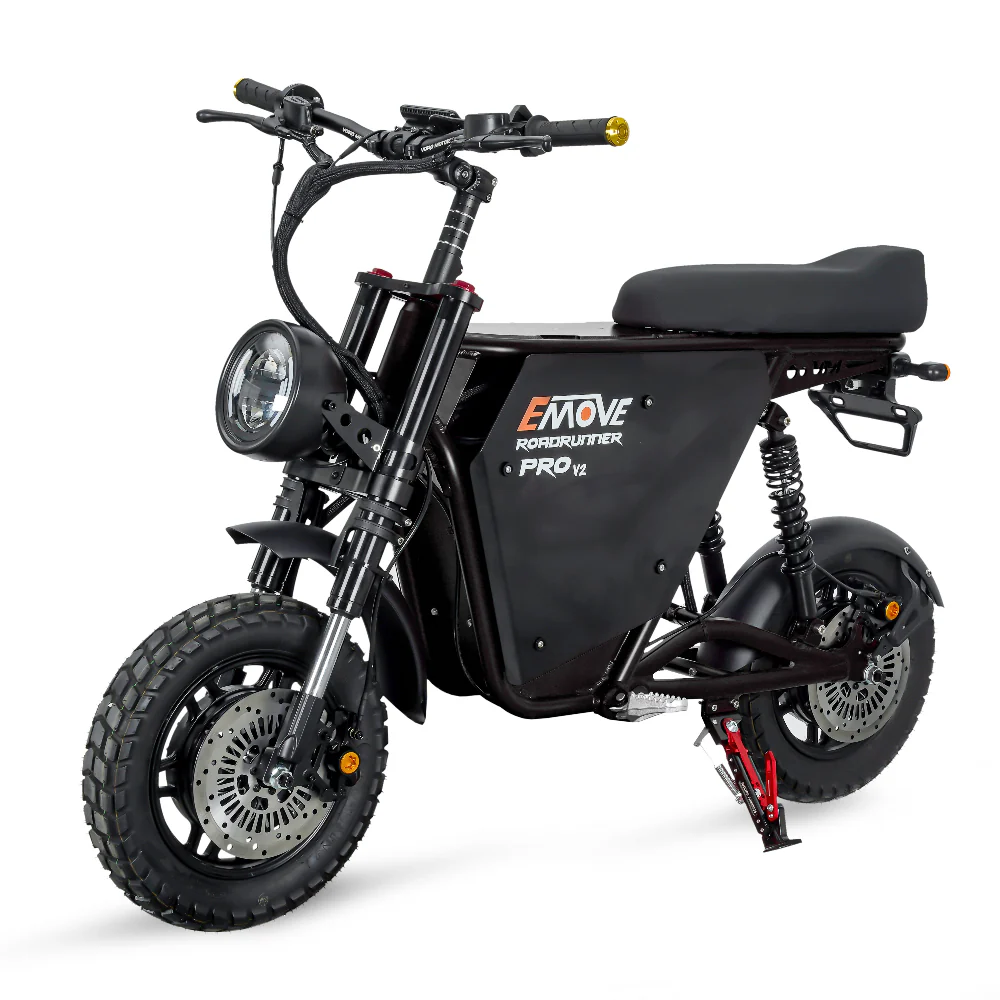
Dual 2000W motors driving 14″ pneumatic tires; adjustable memory foam seat, 1800Wh battery, and hydraulic disc brakes for real-world range between 32-50 miles depending on speed setting and hydraulic disc brakes for hydraulic disc breaks; real world range 32-50 miles depending on setting; estimated street-legal cost $2299. It provides commuters and delivery professionals who require moped-like speeds without registration, needing something street legal like this EV vehicle to use regularly as transport. Ideal for long-distance commutes or delivery companies needing moped-like speeds without registration costs associated with mopeds! It makes life much simpler!
The EMOVE Roadrunner SE — best value.
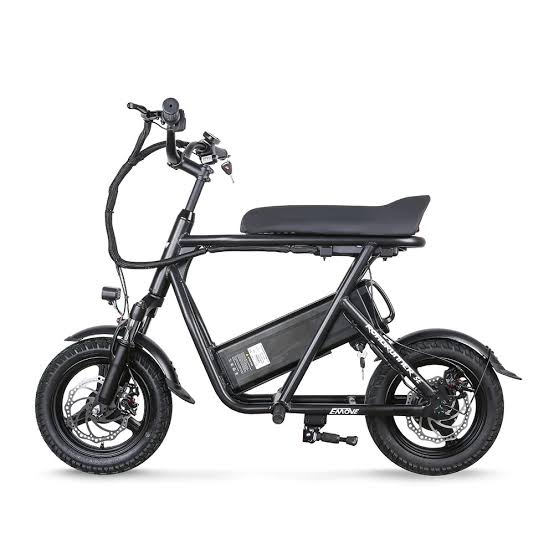
500W motor (750W peak) with a 48V battery, switchable pack, front suspension, and disc brakes. Actual range is 35-50 miles when in eco mode. ~$1,095. The highest dollar-per-mile rate in the seated category. Perfect for daily 10-20 mile commutes.
The H7 Pro — best mid-range performance.
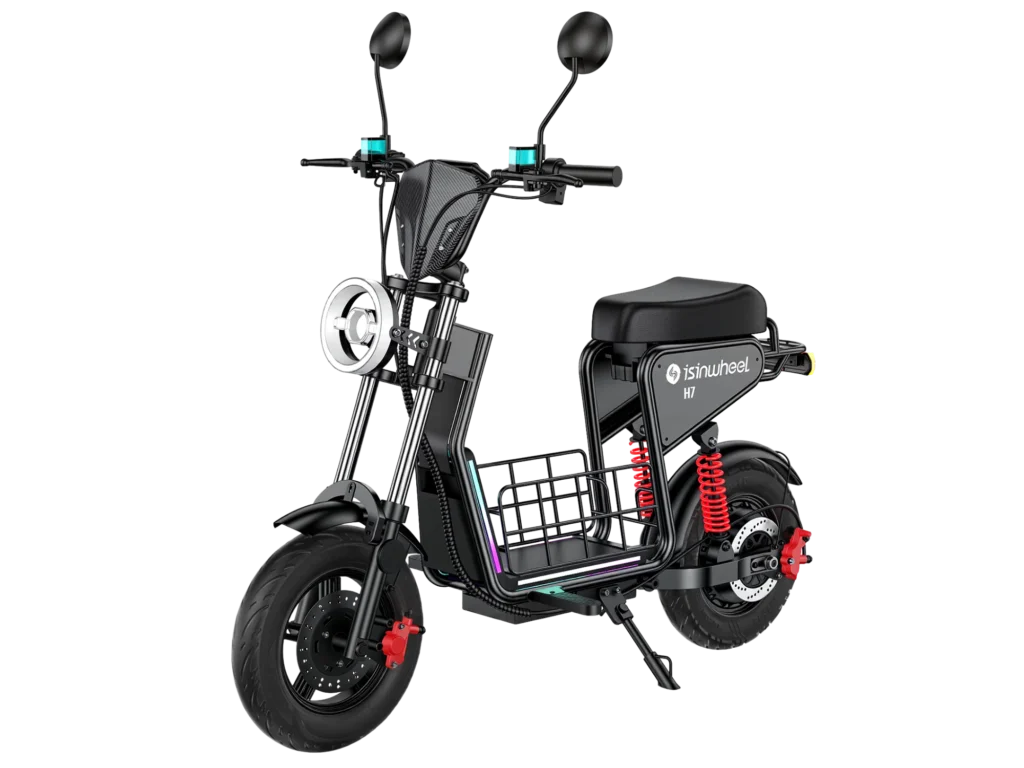
1200W rear hub motor, with fat tires 16×4 inches and dual suspension. The top speed was tested at 38 mph. Real performance range: 30 to 35 miles. ~$1,299. The best for those who perform or for heavier adults. Also suitable for rough or mixed terrain.
Gyroor C1 Plus — ideal for the utility rider.
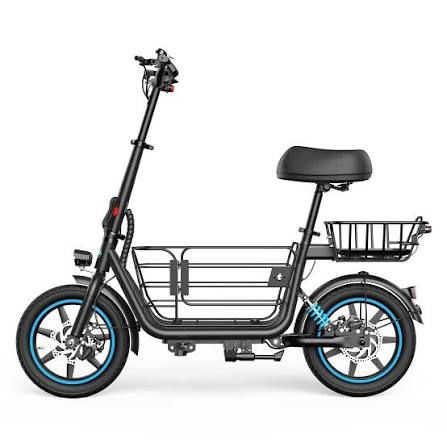
It has a 650W motor (1000W maximum), three speed settings, and a front basket that can be removed. 300 lbs capacity. ~$667. It is designed to provide real value instead of speed, great for grocery trips.
GoTrax Flex / MIHOVER 450W — top cheap entry.
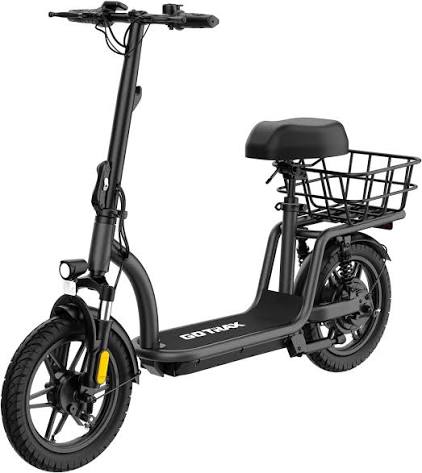
No suspension, simple components. Real-world range of 15-22 miles. Top speed of 15-18 miles per hour. $245-$349. Ideal for trips of less than 8 miles, new customers, as well as campus use.
Comparison at a Glance
| Model | Motor | Real Range | Top Speed | Price | Best For |
| EMOVE Roadrunner Pro | 2x2000W | 32-50 mi | 55 mph | ~$2,299 | Performer commuters |
| EMOVE Roadrunner SE | 500W | 35-50 mi | 30 mph | ~$1,095 | Value commuters |
| H7 Pro | 1200W | 30-35 mi | 38 mph | ~$1,299 | Performance/hills |
| Gyroor C1 Plus | 650W | 25-30 mi | 18.6 mph | ~$667 | Utility/cargo riders |
| GoTrax Flex | 350W | 18-22 mi | 18 mph | ~$349 | Budget/campus |
| MIHOVER 450W | 450W | 15-21 mi | 16 mph | ~$245 | Entry-level |
Prices are estimated as of the middle of 2026. Check with the retailer prior to making a purchase.
Pricing Guide by Budget Tier
Under 350 dollars (Starter) Motors: basic and suspensions with minimal to no 15-22 miles of real range. Ideal for short, flat journeys but not for high elevations or humid climates.
$350-$700 (Mid-Budget): Better construction quality, lighter suspension. 20-30 miles actual distance.
$700-$1,400 (Sweet Spot): Genuine suspension, disc brakes, and 30-40+ miles of range- the place that commuters of all kinds need to consider.
$1,400 to $2,500 (Premium): Swappable batteries and hydraulic brakes. Full suspension and moped-level build quality.
Professional/Enthusiast) The high-end models that cost over $2,500 have the best motors and parts, with which you can achieve a speed of 50mph and a range of 50- 80+ miles, with the option to swap batteries. This will be useful for professional delivery services or long-distance delivery jobs.
How to Choose: A Five-Step Guide
- Establish your daily mileage. Calculate this with the help of a multiplier of 0.70-0.75 and choose a model with enough range to cover round trips while leaving 15-20 percent extra capacity as buffer space.
- Examine the terrain. The flat city ride of 500W suffices. Moderate hills (5-8 percent gradient) require 500 to 1000 W. Hard or steep terrain: two motors, or 1200W+.
- The weight rating should be matched to your own body weight. Pick a model that’s rated around 20-30lbs higher than your weight. Heavy riders require stronger motors as well.
- Choose for portability. If you’re planning to carry it in the subway, on stairs, or to the office, it must weigh less than 55 pounds, and foldable is not a consideration. If you keep it in your garage, don’t trade performance in favor of portability, which you don’t need.
- Make a plan for your budget. Make sure you match the price levels above with the ones you’ll need — don’t spend too much; however, don’t overbuy or have to replace the scooter in the next 18 months.
Legal Status by Region
United States
Most states allow electric scooters without registration or licensing to be operated within their borders if the motor output falls under 700W and top speeds do not surpass 20mph.. Anything over that speed limit can be considered a moped, which requires registration. Sometimes, it’s an endorsement for a motorcycle or moped. The laws regarding helmets vary; they are compulsory for children in almost all states and are not required for adults in most states.
Walking on sidewalks isn’t legal all over the world. Cities such as Austin, Denver, Portland, Los Angeles, and Chicago with comprehensive scooter programs often have local rules that go above and beyond state legislation relating to scooter use – for more details, contact your city transport department directly.
United Kingdom
From 2026 onwards, electric scooters owned by private owners are categorized as “Powered Light Vehicles” under the Road Traffic Act 1988, which requires insurance, taxes, and a license to be used on public roads. These are requirements that private scooters aren’t able to fulfill. Practically, this means the private electric scooter with seat are only able to be operated on private property.
The approved rental trial programs are the only exception that are legal in certain regions. The legislation to amend these regulations is currently in the process of being developed; however, there is no timeframe for when it will be implemented. The seats themselves don’t have restrictions -they are only restricted to the private owner and to public road usage at all times.
European Union
There’s not a single rule for the entire EU. A majority of nations limit the lightest scooter class at 25 km/h and 25kg; those that go over any threshold will be classed as motor vehicles, requiring registration and insurance. The rules vary from country to country. The rules vary by country – Germany needs the ABE insurance document; Spain requires DGT type-approval. Paris has restricted rental scooters on its streets since 2023, though privately owned scooters aren’t affected. Barcelona enforces fines up to €500 for riding on restricted streets.
Australia
State regulations vary significantly across Australia’s 6 states and the ACT; Victoria, Queensland and ACT allow electric scooters on bike trails while their speed on roads generally cannot exceed 25km/h. New South Wales and Western Australia have stricter rules, and higher-powered models are categorized as mopeds in certain states, making Australia one of the most legal and complex markets for purchasers of electric scooter with seat with powerful engines.
Canada
The use of e-scooters is controlled provincially. Ontario, British Columbia, and Alberta are among the provinces with the most permissive guidelines for low-powered scooters. The majority of provinces limit speed to 32 km/h and also require helmets. Models sitting are usually subject to the same regulations as standing models, within the same speed/power class.
A Note for Delivery Riders and Fleet Buyers
In the case of delivery drivers, and even smaller fleets, some aspects are important beyond the normal consumer feedback:
- The ability to swap batteries is more important than capacity. The 8-hour workday shouldn’t require an extended charging time of 6 hours; models like those in the EMOVE Roadrunner series can switch batteries in less than two minutes, allowing you to have the entire day’s power.
- Cargo capacity must be assessed in terms of a payload rating rather than just the weight of the passenger capacity. Front and back racks can add up.
- Durability of a frame in constant use is different from the durability of a motorbike that is used all day; all-day use will wear out up to 6-8x more quickly than a vehicle which is primarily used for a daily 30-minute commute. Make a plan for more regular brake pad and tire replacement.
- When it comes to fleet purchases (5or more units), most major manufacturers offer commercial prices. Brands with well-established U.S. service networks -such as EMOVE (via Voro Motors), Segway Ninebot, and Apollo typically provide better support and reliability than lesser importers.
Common Buying Mistakes
- Don’t believe in advertised ranges at face value. Each claim of a range that is optimistic comes from testing conditions that do not reflect actual riding.
- The wattage of a motor should be determined by the peak output, not sustained output. For example, a “1000W” scooter that only lasts for 500W is not identical to one that can sustain 900W at 1000W of peak power. Always be sure to look for the continuous/rated number.
- Ignore the IP rating in wet climates. In major cities like London, Vancouver, or Melbourne, the IP54 scooter could cause a lot of trouble -invest the cash in IP55 or greater.
- Don’t check stem diameter before purchasing an aftermarket chair. The majority of standard seat posts will fit 32mm or 33.5mm stems. Make sure you know the diameter of the model first.
- Purchase without assistance from a local service center. A vehicle that a U.S. or regional service center does not support implies that you’ll have to pay for shipping for every warranty claim — which is a high hidden cost that can be incurred over three to four years of ownership.
Maintenance in Practice
A well-maintained, seated motorbike typically lasts for 3-7 years when it’s in constant use.
Every week: Test your tire’s tension (most pneumatic tires have a range of 40 to 65 PSI; check your tire’s sidewall specs). Examine the brake’s response. Make sure to clean the frame and seat, particularly after rain.
Each month: tighten the bolts on the stem, seat post, and the handlebar bolts. Examine the thickness of your brake pads and replace them if they are worn substantially. Examine tire treads for any cracks or other dirt.
Every 3 months: check the connections to joints near them for any slippage. Check suspension for noises that are unusual or reduced range. Check the current range against the scooter’s original range. A large drop signals that the battery cells are degrading.
Every year: Have a professional examination of the controller, motor, and battery, and any brake work that is deferred.
Seated Scooter Vs. the alternative
| Vehicle | Pros | Cons | Price Range |
| Seated e-scooter | Comfortable, often license-free, portable | Complexity of the law in certain areas | $250-$4,500 |
| Electric bicycle | A pedal assist increases range, typically legal | Larger footprint, higher base cost | $500-$5,000+ |
| Electric moped | Fully road-legal and weatherproof, more speed | It requires registration or a license | $2,000-$8,000 |
| Standing e-scooter | Lightest, most portable, cheapest entry | Uncomfortable after 15 mins | $200-$3,000 |
| Mobility scooter (3-wheel) | Maximum stability, accessibility-focused | Big, slow, restricted to private use and low traffic | $500-$3,000 |
Adult commuters traveling up to 20 miles daily who want the convenience of speed and comfort without needing an official motorcycle registration or license will find this e-scooter an ideal match in this listing.
Where to Buy
- Direct-to-consumer sites (EMOVE/Voro Motors GoTrax, Hiboy, Kaabo) generally provide the most robust warranty support as well as the most extensive accessory options.
- Online retailers that specialize in e-scooter products often offer the best advice for multi-brand options based on the actual needs of your business instead of which brand offers the highest profit.
- Amazon and Walmart can be used for low-cost models, but warranties are generally less reliable, and assistance after the sale is only available from the initial seller.
- Local bike and e-mobility shops can be a great option to try out rides as well as regular maintenance locally. Search “e-mobility store [your city]” to locate options in proximity to the location you want to visit.
- eBay or Facebook Marketplace are common for used scooters. Always be sure to check the battery’s health (charge cycles) and schedule an appointment to have a look before purchasing.
FAQ
Are electric scooters that have seats allowed to be used in the streets?
U.S. states typically permit scooters with power ratings below 750W (20mph), in bike lanes or roads without needing permits from authorities; more robust models could even qualify as mopeds. Conversely, private ownership of electric scooters on public roads in Britain is forbidden, while EU regulations vary country to country but often permit speeds below 25 km/h without additional license requirements – always check local rules first when making your purchasing decisions!
What is the actual range of an electric scooter with seat?
Average electric bike ranges usually fall somewhere within 70%-75% of their advertised distance; so an e-bike with an advertised 40-mile range would actually cover 28-30 miles; budget models often travel 15-22 miles while mid-range bikes might cover 25-40 miles daily, and may have interchangeable batteries that extend that reach even further up to 50+.
What is the best way to add a seat on a stand-up electric motorbike?
There are many aftermarket seating options that are attached to the stem post as long as the size matches (commonly 32mm or 33.5mm) and that the frame is able to handle the additional load. Scooters designed specifically to suit user requirements typically provide more stability and comfort; before purchasing off-the-shelf seating units, always check their compatibility first to avoid disappointment.
What is the weight limit recommended on seated scooters?
Most of them can carry up to 220-330 lbs (100-150 kg) of weight. If you weigh more than 250 pounds, you should choose a bike with a higher rating than your weight and at least 1000 watts of power to achieve a good balance between speed and climbing capability.
Do I require a permit to use a sitting electric scooter?
Most U.S. states don’t require licenses for scooters that travel under 20 mph; those that travel faster must be classified as mopeds and obtain either an ordinary driver’s license with moped endorsement, or special registration and endorsement as mopeds. Meanwhile, in Europe, there may be restrictions placed upon public use of privately-owned scooters. Make sure you contact your local transport authorities directly.
Is a seated electric scooter identical to one that is powered by electricity?
No. An electric moped is a legal motor vehicle with insurance, taxes, as well as a permit. The majority of e-scooters that are seated, and even the more powerful models, are below the minimum registration requirements within the U.S., though some can be legally registered as mopeds within the UK, as well as certain parts of Europe, as well as select Australian states. It’s the same experience; the official classification generally doesn’t apply.
How long will the battery last until it is time to replace?
Lithium-ion batteries are generally capable of undergoing 500 recharge cycles before their capacity decreases to about 80 percent of the initial capability. This means that a commuter who uses his lithium battery frequently on a day-to-day basis throughout 2 to 4 years may observe a significant drop in the range that the battery can provide. Charging your battery to 80 or 90 percent is more optimal than 100 percent because it reduces large discharges and keeps the battery’s temperature under control.
Conclusion
The electric scooter with seat is now an essential tool for commuting; it is not a compromise between an upright scooter and a moped. It is a separate segment with its own advantages and a growing array of reliable brands and stores.
The best choice comes from a thorough review of your miles, mileage, terrain, the body’s weight, your portability requirements, as well as your budget. Follow the five steps that you have read above, then apply the real-range multiplier and check local regulations before purchasing.
Most adult commuters will find the Roadrunner SE EMOVE is the most practical combination of convenience and price. People who are looking for more performance need to look into more powerful models like the H7 Pro or Roadrunner Pro. If you’re on a budget, it is possible to get the GoTrax Flex or MIHOVER 450W, which are reliable and safe transportation options without a large expenditure.
Whatever you decide to choose, the bike you use is worth more as opposed to the one that’s more well-equipped and sitting at home, unused due to the fact that it’s uncomfortable. The comfort isn’t an added benefit; it’s the seat that’s the thing that makes it authentic.
About the author
Huzaifa Naeem of Electric Scooter Analysis writes about electric scooters, electric scooter moped, and the regulations governing when these can legally be ridden. He assembled this guide using both primary regulatory sources (see Sources above), hands-on riding time with select models in this category, and publicly available manufacturer specifications at their last update date at the top of this page.
“The information on this website is gathered from industry reports, manufacturer specifications, expert reviews, and trusted sources such as Electroheads to provide accurate and valuable insights for our readers