Written by Huzaifa, Electric Scooter Analysis
An UL Certified Electric Scooter is one whose battery, charger, and drivetrain have passed independent safety tests by a third party, typically in accordance with UL 2272 (electrical system) as well as UL 2271 (battery pack). The certification doesn’t test ride quality, speed, or longevity — it’s specifically designed to detect electrical faults (overcharging, short circuits, damaged cells) that can cause a lithium battery to catch fire or explode.
It is legal to market e-scooters in New York City only with this certification, and it is required by major marketplaces such as Amazon and Walmart.
Check that you have the correct SKU as well as the current certification status in UL’s database prior to buying — certifications can change between hardware versions.
5 Best UL Certified Electric Scooter in 2026
Segway Ninebot MAX G2 — UL Certified Electric Scooter
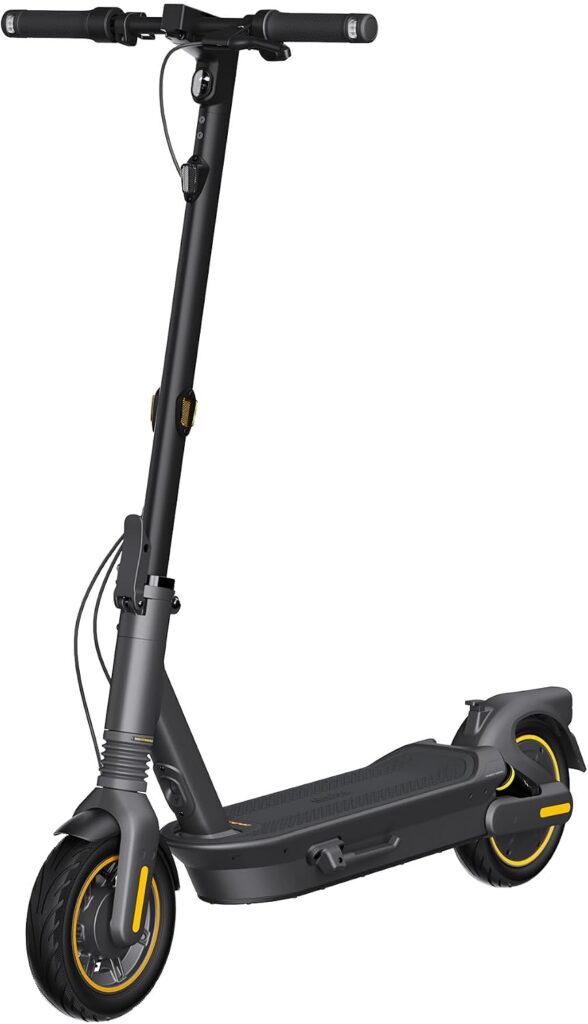
Segway’s top commuter scooter, with a nominal 450W motor that peaks near 900–1000W, and a 551Wh battery giving a claimed range of up to 43 miles, equipped with dual suspension front and rear, as well as self-healing tubeless tires. IPX5 water resistant and UL 2272-certified by TÜV Rheinland, with user-friendly documentation from Segway. Real-world testing tends to land closer to the mid-30-mile mark rather than the full claimed figure, which is typical for eco-mode ratings. The ideal choice for long-distance daily commuters who want flexibility and security over lightweight mobility; at roughly 54 lbs, it isn’t the scooter to carry up several flights of stairs.
Segway ZT3 Pro — UL Certified Electric Scooter
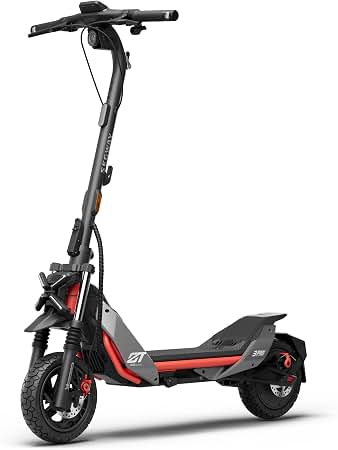
Segway’s first off-road-capable scooter, built around a 650W motor that peaks at 1600W and a 597Wh battery for a claimed range of up to 43.5 miles, with a top speed of up to 24.9 mph. Dual front telescopic and rear spring suspension, 11-inch off-road tubeless tires, and a traction control system let it handle gravel, packed dirt, and rough pavement without trouble, and it climbs inclines of up to 25%.
It’s UL 2272 and UL 2271 certified (verified by TÜV Rheinland), rated IPX5, and recharges in about 4 hours thanks to Segway’s Flash Charge tech. At roughly 65.5 lbs it’s the heaviest scooter on this list, so portability takes a back seat to power. Ideal for riders who want stronger acceleration, hill-climbing muscle, or occasional light off-road use without stepping up to a dual-motor scooter.
Segway Ninebot E2 Pro — UL Certified Electric Scooter
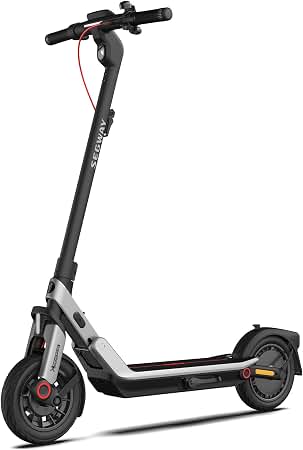
A mid-range commuter scooter with a 350W motor (750W peak) and a claimed range of up to 24.9 miles in Eco mode, with a top speed of up to 18.6 mph. It’s UL 2272-certified, includes dual braking (front drum plus rear electronic) and a traction control system, though it doesn’t come with suspension and carries a more modest IPX4 rating. At around 41 lbs it’s noticeably easier to carry than the MAX G2 or ZT3 Pro. Ideal for everyday commuters who want a documented safety history, dependable Segway build quality, and a lower price point than the flagship models.
Hiboy S2 Pro — UL Certified Electric Scooter
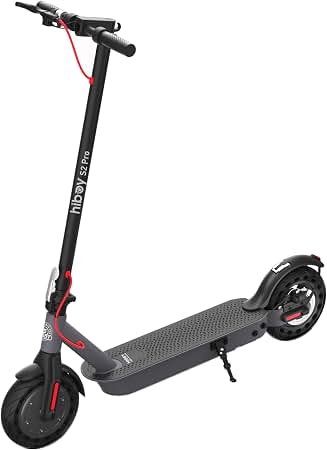
A budget-friendly scooter built around a hub motor rated at 500W, paired with a 36V/11.6Ah battery for a claimed range of up to 25 miles and a top speed of 19 mph. UL 2272 certified, with 10-inch solid honeycomb tires that remove flats as a maintenance concern, dual rear suspension, and a dual braking system combining disc brakes with regenerative eABS. Weight capacity tops out at 220 lbs — worth checking against your own weight, since it’s on the lower end for this list. The best choice for budget-conscious buyers or commuters with shorter trips who want documented UL certification without paying a premium.
Segway Ninebot E2 Plus II — UL Certified Electric Scooter
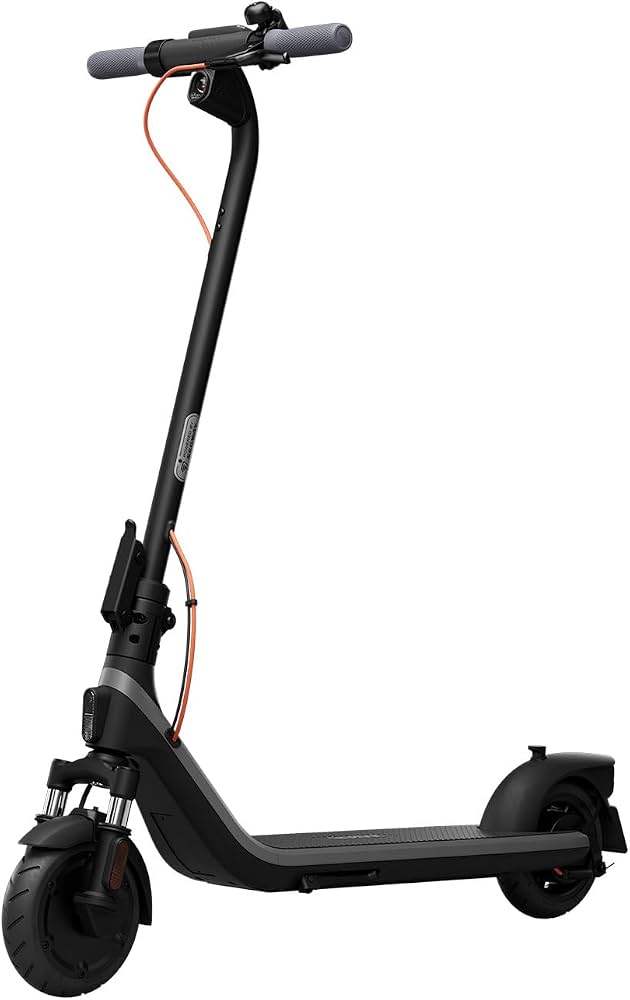
Segway’s entry-level scooter, with a 300W motor, a 220Wh battery, a claimed range of up to 16 miles, and a top speed of 15.5 mph. It carries both UL 2272 and UL 2271 certification and adds front suspension over the base E2 Plus for a noticeably smoother ride on rough pavement. Weight capacity is capped around 198 lbs — the lowest on this list — and charging takes roughly 7.5 hours. It is ideal for first-time buyers, students, or anyone looking for a short-distance rider with an affordable, well-documented entry point into UL-certified scooters.
| Model | Motor | Range (claimed) | Top Speed | Certification | Best For |
| Segway Ninebot MAX G2 | 450W (900–1000W peak) | Up to 43 mi | 22 mph | UL 2272 | Long-distance commuters |
| Segway ZT3 Pro | 650W (1600W peak) | Up to 43.5 mi | 24.9 mph | UL 2272 + UL 2271 | Power and hill-climbing, light off-road |
| Segway Ninebot E2 Pro | 350W (750W peak) | Up to 24.9 mi (Eco mode) | Up to 18.6 mph | UL 2272 | All-day, mid-range daily commutes |
| Hiboy S2 Pro | 500W | Up to 25 mi | 19 mph | UL 2272 | Budget-friendly commutes, puncture-proof tires |
| Segway Ninebot E2 Plus II | 300W | Up to 16 mi | 15.5 mph | UL 2272 + UL 2271 | First-time buyers, short trips |
What Does “UL Certified” Mean for an Electric Scooter?
“UL Certified Electric Scooter” means the scooter’s battery, charger, and electrical drivetrain have passed independent laboratory testing to the UL 2272 standard (and typically UL 2271 for the battery pack). The standard says nothing about ride quality, speed, or build. UL 2272 — officially the Standard for Electrical Systems for Personal E-Mobility Devices — is a joint U.S./Canada standard (ANSI/CAN/UL 2272) developed with UL Solutions.
The test evaluates the battery, electrical drivetrain, charger, and system for shock and energy hazards in both normal and fault conditions (a malfunctioning cell, a faulty circuit, or an overcharging battery).
It does not cover braking efficiency, frame strength, water resistance, or general ride quality. A UL 2272-certified scooter can still be a mediocre ride; the certification is a safety floor, not a quality benchmark.
The companion standard, UL 2271, certifies the battery pack as an independent component — important because batteries are sometimes sold or replaced separately. A fully certified product carries both labels. (For e-bikes, the equivalent standard is UL 2849.)
Why Does UL Certification Exist?
UL certification exists because uncertified lithium-ion chargers and batteries were linked to a rise in electric scooter fires, prompting both regulators and marketplaces to require independent safety testing.
Lithium-ion fires can spread through thermal runaway, where one cell ignites the cells around it and a spark can become a full-room fire within minutes.
- Late 2022: The U.S. Consumer Product Safety Commission urged manufacturers and retailers of micromobility products to comply with UL safety standards.
- March 2, 2023: The New York City Council passed Initiative 663-A, requiring independent certification of e-bikes, e-scooters, and their batteries before sale, lease, or distribution — UL 2849 for e-bikes, UL 2272 for e-scooters, and UL 2271 for batteries. Mayor Eric Adams signed it into law on March 20, 2023, with a compliance deadline of September 16, 2023.
- Marketplace policies: Amazon and Walmart both require a UL 2272 test report before an e-scooter or hoverboard listing can go live.
Is UL 2272 the Same as CE Certification?
No. UL 2272 and the CE mark are separate certifications from different regions, evaluated under different frameworks. A CE mark does not confirm UL 2272 compliance, and vice versa. CE (EU), RoHS, and FCC are legitimate certifications/markings, and IEC is an international standards body whose standards support global harmonization — but none of them substitute for UL 2272 where UL is the required or expected standard. Intertek’s ETL mark is the closest North American equivalent and is generally treated as comparable to UL.
How Is a Scooter UL Tested?
Testing a UL Certified Electric Scooter involves physical, destructive lab testing of actual production units — not just a document review. It falls into two categories:
Electrical safety tests:
- Overcharge and over-discharge simulations
- Short-circuit testing
- Insulation resistance and voltage testing
- Battery management system (BMS) performance under fault conditions
Environmental and mechanical tests:
- Drop test (roughly 1 meter, multiple drops to simulate rough handling)
- Crush testing
- Vibration testing (simulating transport and riding)
- Extended heat, humidity, and environmental exposure
Certification also requires ongoing factory follow-up inspections to confirm production units still match the originally tested design — guarding against manufacturers swapping in cheaper, untested cells after approval.
How Do I Verify a Scooter’s UL Certification Is Real?
Check the specific brand and model in UL’s official Product IQ database (ul.com or spec.ul.com) rather than trusting a logo on the box or listing page.
Checklist:
- Look for a physical certification label on the scooter or battery.
- Search the model in UL Product IQ using the brand name plus model number.
- Confirm the manufacturer name on the certificate matches the brand’s official name.
- Don’t rely on printed QR codes alone — they can be copied onto any packaging.
- For bulk purchases or resale, request the test report directly from the testing lab.
- Check the specific SKU — certification can differ between hardware versions of the same model.
- If a model doesn’t appear in the database, treat any “certified” claim as unverified.
Certified vs. Non-Certified Scooters
| Factor | UL Certified | Non-Certified |
| Fire/shock risk testing | Independently verified | Self-declared or unverified |
| Legal for sale in NYC and similar jurisdictions | Yes | Often no |
| Marketplace eligibility (Amazon, Walmart) | Generally required | Risk of delisting |
| Relative risk of charging indoors overnight | Lower | Higher |
| Average cost | Slight premium | Often cheaper upfront |
| Insurance/liability documentation | Easier to substantiate | Can complicate a claim |
Who Needs to Prioritize UL Certification?
Anyone buying a UL Certified Electric Scooter for indoor storage, a teenager, commuting, deliveries, or commercial use should treat certification as a requirement, not a nice-to-have:
- Daily commuters who charge indoors overnight, when fire risk during sleep is highest
- Parents buying for teenagers, since drop and mishandling scenarios are part of the test
- Apartment dwellers, as newer buildings restrict storage/charging of uncertified devices
- Delivery riders, whose batteries see more frequent, heavier charge cycles
- Importers and retailers, for whom certification is a market-access requirement, not optional
Does the Charger Need to Be Certified Too?
Yes. A certified scooter paired with an uncertified charger reintroduces the exact fire risk the certification was meant to reduce, since the charger is one of the components UL 2272 tests. When replacing a charger, confirm it’s UL- or ETL-listed for that specific model rather than just “compatible.”
Is UL 2272 Required Outside the United States?
Outside North America, UL 2272 is widely recognized but not the only accepted standard. In the EU, CE marking (with relevant EN standards) serves a similar purpose; IEC standards support international harmonization; ETL is the North American alternative. Most scooters sold globally carry at least two of these certifications.
FAQ
Is UL 2272 identical to CE certification?
No. They’re separate standards for different regions, tested under different frameworks. CE certification doesn’t imply UL 2272 compliance, or vice versa.
How can I tell if a scooter is UL certified?
Look for a certification mark on the scooter, then verify the model in UL’s official certification database rather than relying on the seller’s description.
Do all electric scooters require UL certification?
Not everywhere. It’s legally required in places like New York City, and required by major marketplaces such as Amazon and Walmart regardless of location.
Why does New York City require UL certification?
In response to a rise in fires and battery incidents, the City Council passed Initiative 663-A in March 2023, which was signed into law later that month. It requires third-party certification — UL 2272 for e-scooters, UL 2271 for batteries, UL 2849 for e-bikes — for any such device sold, leased, or distributed in the city.
Can a UL 2272-certified scooter still catch fire?
Certification greatly reduces common failure points, but it doesn’t guarantee fire can never happen. Physical damage, water intrusion, or an incompatible aftermarket charger can still create risk even on a certified device.
What can void UL 2272 certification?
Swapping in a non-certified battery or charger, unapproved changes to the electrical system, or manufacturing changes not covered by the original certified design can all invalidate certification in real-world use.
Is UL 2272 mandatory in my country?
It depends on local law. The U.S. has both federal guidance and city-specific mandates like NYC’s. Other countries generally rely on their own regional standards (CE, IEC) rather than mandating UL specifically, though UL remains widely recognized worldwide.
The Bottom Line
A UL Certified Electric Scooter has passed real, physical testing specifically designed to catch the electrical faults — overcharging, cell damage, unstable chargers — that cause fires. The certification says nothing about performance, comfort, or durability; it only speaks to the safety of charging near where you sleep. Before buying, verify the certification directly in UL’s database, confirm the charger and battery (not just the frame) are UL-certified, and treat certification as a requirement wherever local law makes it one.
About the Author
Huzaifa is the creator of Electric Scooter Analysis, a blog that covers electric scooters of all kinds, including off-road, city, and special circumstances. Data is obtained from manufacturer specs, as well as opinions from riders. Figures are flagged if there’s no proof.
“The information on this website is gathered from industry reports, manufacturer specifications, expert reviews, and trusted sources such as gyroor to provide accurate and valuable insights for our readers