An effective electric scooter for college students should have a range of 15-25 miles and a weight of no greater than 30 pounds; additionally, it should fall between $300-$700 in price range. Additionally, it has to be tiny enough so that it is able to collapse for storage within the room of their dorm. Additionally, it should be equipped with the UL 2272 battery safety rating and should be certified according to the specific policies of your institution regarding mobility.
That last point trips up more students than any spec sheet ever will. Most buying guides rank scooters by top speed and range, then leave you to discover — usually the hard way — that your campus confiscates anything over 15 mph in pedestrian zones, or that your dorm won’t let you charge a lithium-ion battery in your room at all.
This guide is built differently. Instead of a ranked top-10 list, it walks through the actual decision path a student should follow: distance, terrain, storage, safety, and rules, in that order, followed by the real cost of ownership and the situations where a scooter isn’t even the right call.
Why an Electric Scooter Makes Sense for Campus Life
Campuses are a funny place in that they are not close enough to walk between classes for comfort, but not big enough or without restriction on personal vehicles to make driving a practical option. Micromobility – a term which covers a multitude of things, including e-scooters, e-bikes, and shared scooters – fits into that niche in that it is larger than walking, and much cheaper and easier to use than a personal vehicle.
A few reasons students gravitate toward ownership specifically:
- Time savings. A 20-minute walk across a large campus often becomes a 6–8 minute ride.
- Lower cost than daily rideshare use. Uber and Lyft trips can be a lot over the course of a semester. A scooter can pay for itself for any rideshare user who uses it at least a couple of times every week.
- No parking permit or gas. Campus parking passes frequently run several hundred dollars a year before you’ve bought a drop of gas.
- Independence from shuttle schedules. You’re not waiting on a fixed route timetable.
None of this makes a scooter automatically “worth it” for every student — that depends heavily on your actual daily distance and your campus’s tolerance for them, both of which are covered below.
Who This Applies To
This guide is aimed at students commuting within a campus, or making a short last-mile trip between off-campus housing and a transit stop or classroom building — generally under five miles one-way. If your commute is longer than that, an e-bike is usually the better tool, and that comparison is covered in the alternatives section further down.
The Factors That Actually Matter (Not Just Spec Sheets)
Most comparison articles lead with top speed and battery range. In practice, for a electric scooter for college students, portability and compliance matter just as much — arguably more, since you’ll carry the thing into buildings daily and you’ll be the one dealing with campus security if it’s parked wrong.
| Factor | Why It Matters | Student-Friendly Range |
| Weight | Determines how easily it’s carried up stairs or into lecture halls | 26–35 lbs |
| Folded footprint | Determines whether it fits in a dorm closet or under a desk | Compact, one-motion fold |
| Range | Needs to cover a full day’s round trips without daily charging | 15–25 miles |
| Motor wattage | Affects hill-climbing ability | 250–500W |
| Top speed | Should match your campus’s actual posted limits | 15–20 mph |
| Tire type | Comfort and grip on cracked sidewalks or cobblestone | Pneumatic or solid honeycomb |
| Water resistance | Relevant for rain-prone regions | IP54 or higher |
| Braking | Safety on downhill paths | Dual (electronic + mechanical) |
| Certification | Battery/electrical safety | UL 2272 |
That last line needs more unpacking. UL 2272 is a battery/power-system safety certification, which became crucial in the wake of lithium-ion battery fires in dorms and apartments from 2023 to 2025. A growing number of universities now either require it or have restricted uncertified devices from residence halls entirely. Checking for this certification before buying is no longer optional — it’s one of the few specs that can determine whether you’re allowed to keep the scooter in your room at all.
Types of electric scooter for college students
- Entry-level commuters — 24–28 lbs, 10–15 mile range, $250–$400. Suited to small, flat campuses.
- Mid-range all-rounders — 28–33 lbs, 15–25 mile range, better tires and suspension, $400–$700. The right fit for most students.
- Performance/long-range models — 35+ lbs, 25-40 miles, $700-$1,200. Ideal for longer off-campus commutes; however, they are heavier to haul upstairs every single day.
- Seated/hybrid scooters — Include a fold-out seat, less portable, aimed at longer or less physically demanding rides.
- Shared/rental scooters — App-based options like Lime, Bird, or Spin, common on many campuses as a pay-per-ride alternative to ownership.
How to Choose: A Step-by-Step Decision Path
Rather than picking from a ranked list, work through this in order:
- Measure your actual daily commute distance using a maps app — dorm to lecture hall, dorm to library, and back.
- Check out your institution’s official policy on mobility, usually published by Transportation & Parking Services or Campus Safety, which will provide legal speed limits as well as no-ride zones in addition to the extent to which charging scooters in the residence halls is permitted.
- Set a total budget that includes a helmet and lock, not just the scooter price.
- Match your terrain to a motor size — 250W is fine for flat campuses; hilly campuses need 350–500W.
- Choose two or three models in the same category to match the distance you have chosen and your terrain.
- Confirm UL 2272 certification and check warranty/local repair support.
- Test ride if possible, then buy and complete a basic safety check before first use.
If the distance you travel on a daily basis is less than 3 miles, a basic scooter should suffice. Between 3 and 8 miles, a model in the middle is more sensible. Beyond 8 miles a day, it’s worth seriously comparing an e-bike instead — the extra range and stability outweigh the loss in portability at that distance.
What It Actually Costs
Sticker price is only part of the picture, and it’s the part most comparison articles stop at. A more complete first-year estimate looks like this:
| Cost Item | Typical Range | Frequency |
| Scooter (entry-level) | $250–$400 | One-time |
| Scooter (mid-range) | $400–$700 | One-time |
| Helmet | $30–$80 | One-time |
| Lock (cable or U-lock) | $25–$60 | One-time |
| Replacement tires | $20–$50 | As needed |
| Battery replacement | $80–$200 | Every 2–4 years |
| Charging electricity | ~$1–$3/month | Ongoing |
Put together, a student typically spends $350–$850 in the first year, usually less than a semester’s worth of regular rideshare use or a campus parking permit plus gas. (Cost figures reflect general industry ranges and should be checked against current retailer pricing before relying on them for budgeting.)
Regionally, entry- and mid-tier pricing is fairly consistent across the US, EU, UK, and Asia-Pacific in USD-equivalent terms, though import duties in some regions can push prices 10–25% higher than the US baseline.
Campus Rules and Regional Legal Differences
This is easily the most overlooked section in most scooter guides, and the one that dictates whether you actually get your investment back. As rules vary across different countries and institutions, please consider this to be an approximate guideline rather than an absolute rule, and be sure to consult your institution.
Common campus-level restrictions:
- Speed caps in pedestrian zones, often 8–15 mph, regardless of what the scooter is capable of
- No-ride zones inside buildings or through crowded quads during class changes
- Designated parking/locking areas, with confiscation a real risk for scooters left in doorways or stairwells
- The rules for charging within residence halls have been tied to fire codes. Due to the numerous battery fires that occurred all over the United States between 2023 and 2025, some schools may be permitted to limit or discontinue charging lithium-ion batteries that aren’t approved for use in dormitories.
Regional legal variation (relevant for international and out-of-state students):
- United States: Classifying scooters as electric vehicles that are low-speed (LSEV) will depend on the laws of the state. Some states do not require registration for scooters below a certain threshold of horsepower or speed; however, others do.
- European Union: Public road use is generally more restricted than campus or private-land use, and helmet requirements differ by country.
- United Kingdom: It is usually illegal to ride an e-scooter privately within the public roadways of the United Kingdom; the only area where people are allowed to utilize their e-scooters is within private property. It could include campuses as well as private land. However, this is an important distinction from the rules in the United States.
- Asia-Pacific: Regulations vary widely, and some nations require registration of scooters with low power.
The key point is to verify both the campus’s internal policy as well as your state or local law prior to purchasing. Don’t buy later. A scooter that’s perfectly legal to ride two states or one border over may not be legal where you actually live.
Safety: Gear, Habits, and the Mistakes That Cause Problems
Gear worth treating as non-negotiable:
- Helmet, every ride, regardless of distance
- Lights or reflective clothing for night riding
- Closed-toe shoes
Mistakes that show up repeatedly:
- Riding at night with no lights
- Charging the battery unattended overnight, particularly in a shared residence hall
- Skipping tire pressure checks, which quietly reduces braking control
- Riding through crowded pedestrian paths during passing periods
- Assuming advertised range holds up in real conditions — manufacturer range figures are typically tested on flat ground with a rider under 165 lbs in mild weather, and real-world range often comes in 20–30% lower, with cold weather cutting it further.
Storage and Battery Care in a Dorm Room
An unwieldy scooter that isn’t stored easily can become a scooter that isn’t used. Find a folding mechanism that collapses in one movement, and ideally stands upright once folded to ensure that it does not eat up floor space in a tiny room.
For the battery itself:
- Avoid letting it fully drain to 0% on a regular basis.
- Store at roughly 40–60% charge during long breaks like winter or summer recess.
- Use only the charger that came with the scooter.
- Expect gradual capacity loss over time — most lithium-ion batteries hold 70–80% of original capacity after 300–500 charge cycles, roughly two to four years of typical daily use.
A secondary cable lock through the frame, in addition to any built-in lock, is worth the extra ten minutes of setup — open campuses are common theft targets.
When a Scooter Isn’t the Right Answer
Ownership of a vehicle isn’t ideal for everybody. On a smaller, more condensed campus where the walk to and from is less than ten minutes, it’s more economically viable to either walk or take a shared, rented scooter from services like Lime, Bird, or Spin. This removes the headache of maintenance and storage at the price of much higher daily costs if you take one every day for an entire semester.
To make longer trips, specifically when they’re a bit hilly, or frequently more than eight miles in total, E-bikes are the ideal choice for a middle-ground. They are able to handle rougher terrain and cover longer distances than a standard bicycle; however, they’re heavy and challenging to fit into dorms. Non-electric bikes that are standard in their design are reasonably priced and simple to maintain. However, their lower top speeds mean they are the slowest-running option for commuters on a daily basis who have the same route every day.
A Quick Pre-Purchase Checklist
- Check your campus mobility policy, including speed limits, no-ride zones, and dorm charging rules, to confirm the local regulations.
- Checked your state, country, or regional e-scooter classification and public-road rules
- Measured your actual daily commute distance and terrain
- Set a total budget including helmet, lock, and eventual battery replacement.
- Verified that the folded size fits your actual storage space
- Confirmed UL 2272 certification and checked warranty/local repair support
7 Best electric scooter for college students
After narrowing down the options you have in terms of distance, terrain, and budget, it’s a good idea to make an initial list of possible options to think about before spending hours looking. They are generally regarded as an excellent start for those looking for an entry-level, lightweight, inexpensive, and convenient option for getting to school.
GoTrax GXL V2 Commuter electric scooter for college students (~$250)
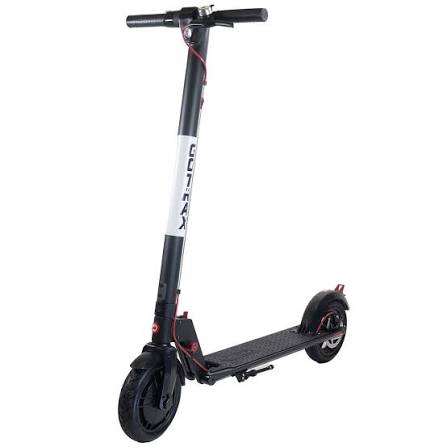
The most affordable option that still offers good value. The 250W motor can provide a range of 12 miles at a speed of 15 mph, which is suitable for a small flat campus.
Turboant M10 Lite electric scooter for college students (under $300)
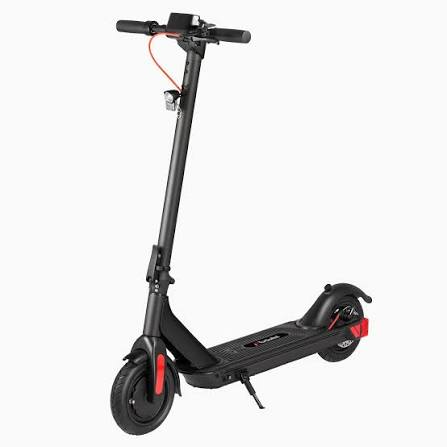
Similarly priced to the GXL V2 but with a slightly more refined build and fold mechanism, making it easy to store in a dorm closet.
Kaabo Urban electric scooter for college students (~$799)
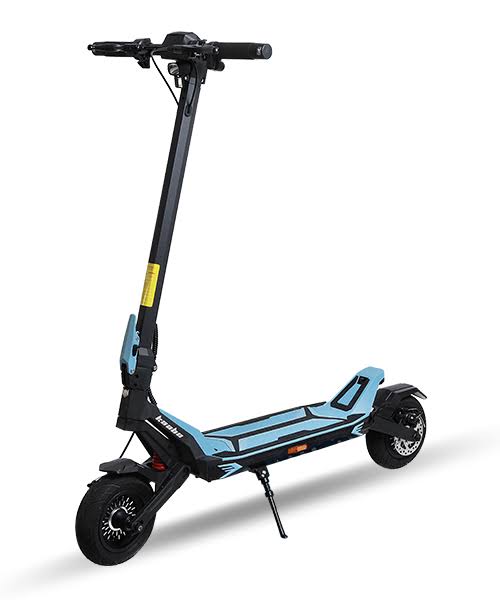
Weighs just 44 lbs, which matters more than it sounds like it should the first time you’re carrying it up three flights. A 500W motor and 25-mile range make for a full day of back-to-back classes.
VOLPAM Q1 electric scooter for college students (mid-range)
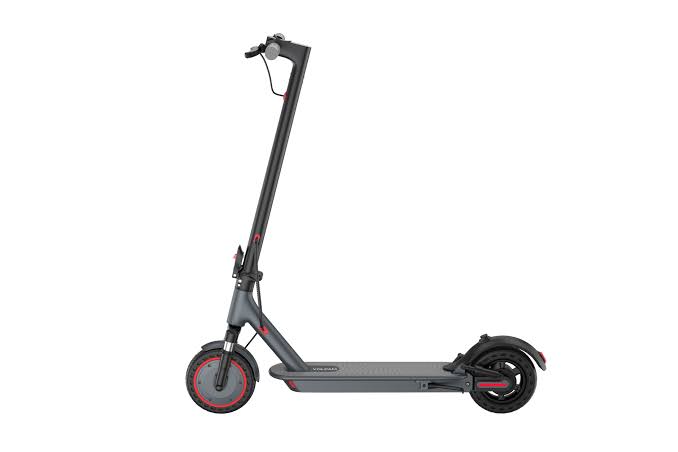
A dependable all-rounder for short-to-medium campus routes, without extra features you won’t use.
NAVEE GT3 Max electric scooter for college students (~$400–$800)
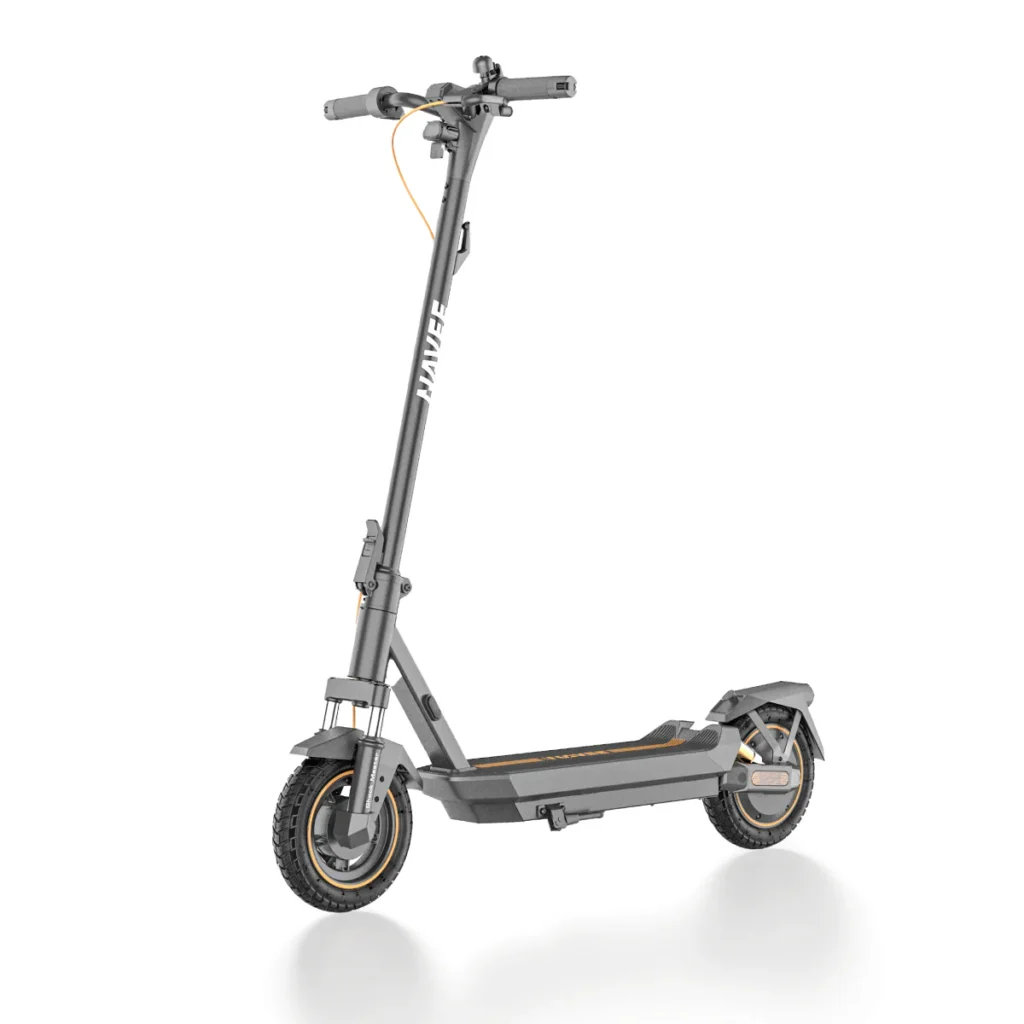
Consistently rated well by students for the balance it strikes between real-world range, safety features, and price.
Segway-Ninebot MAX G30LP electric scooter for college students
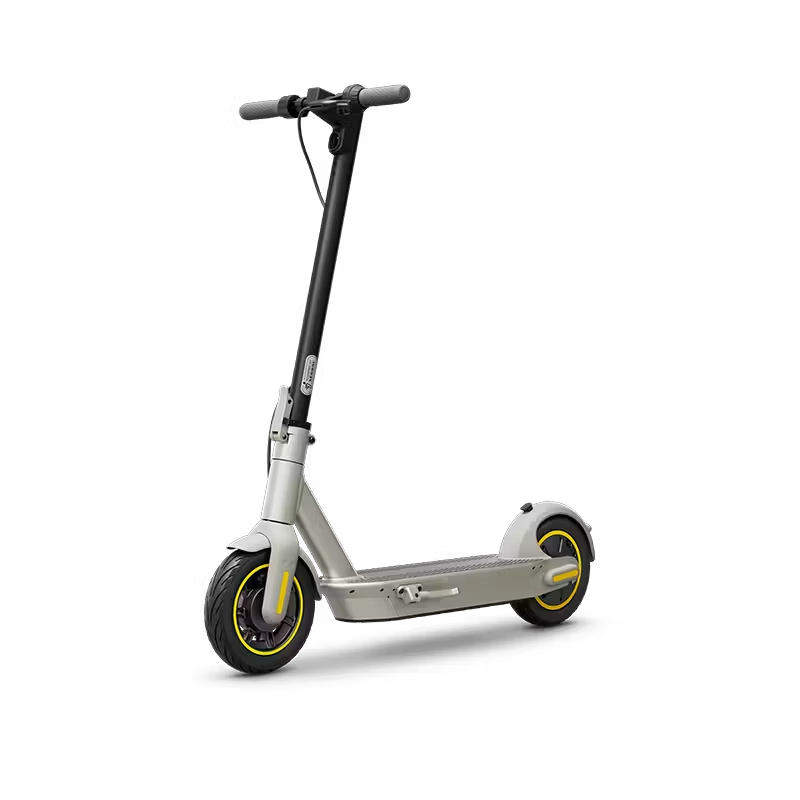
Includes app-based speed and battery tracking plus regenerative braking, though it’s heavier than most on this list, so it suits students who won’t be carrying it upstairs daily.
Apollo City electric scooter for college students
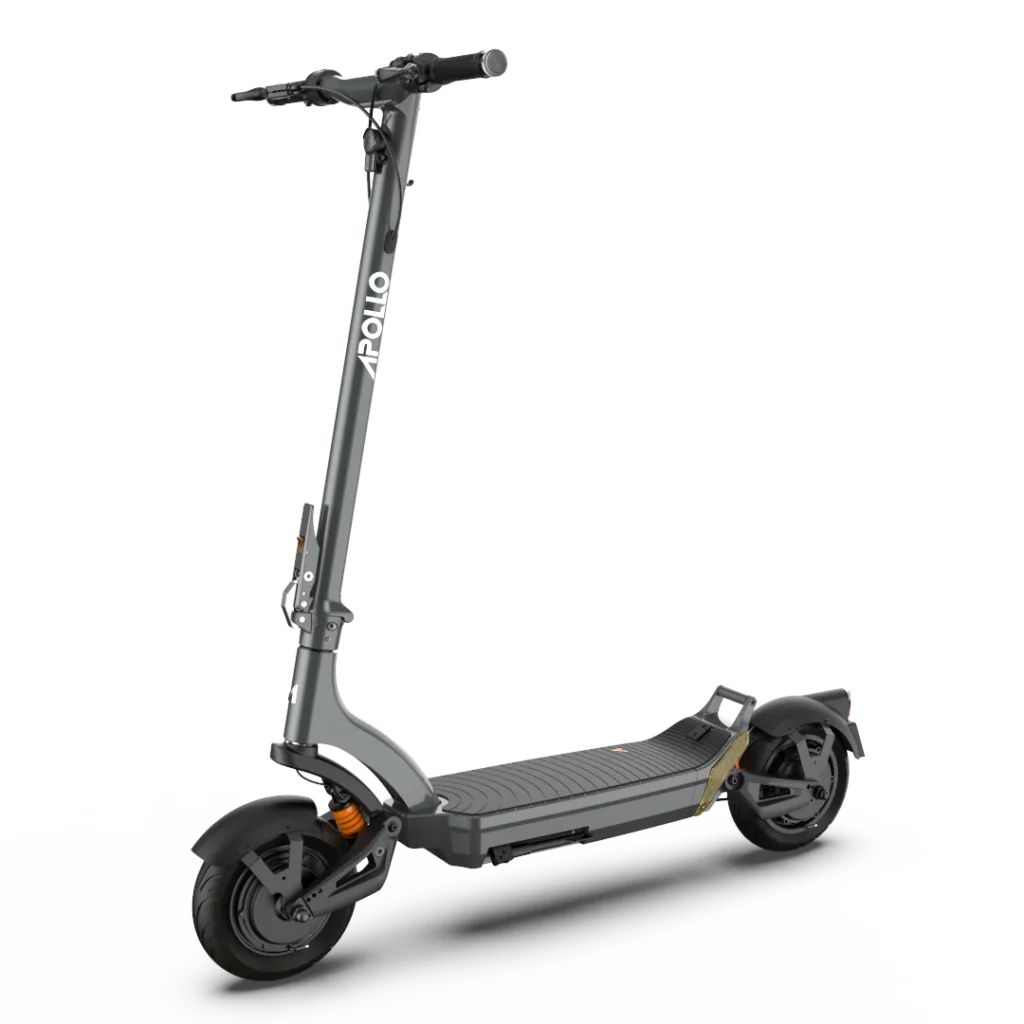
Built for hillier or rougher campuses, with dual shock suspension and pneumatic tires that smooth out cracked pavement and inclines.
As a rough shortcut: the GXL V2 or Turboant M10 Lite covers the tightest budgets, the Kaabo Urban or NAVEE GT3 Max hits the best overall balance electric scooter for college students, and the Apollo City is worth the extra cost if your campus isn’t flat.
No matter which model you decide to go with, make sure to confirm UL 2272 certification and your school’s mobility policy prior to purchasing—these two factors are more crucial to how well the scooter actually works for you than any other spec on this list.
FAQ
Is an electric scooter worth it for college?
electric scooter for college students commuting daily across a mid-to-large campus, yes — it usually pays for itself within a semester compared to regular rideshare use. For very small campuses, walking or a shared rental scooter may make more sense.
Are electric scooters allowed on college campuses?
Some campuses let them; However, they limit speeds or riding zones, as well as occasionally, indoor charging. Go to your school’s transportation website or safety site for campus specifics.
How far can a student scooter go on one charge?
The majority of models designed to be utilized by students span a distance between 10 and 20 miles. It is less than what is claimed after the surface, the rider’s weight, and the frigid temperatures are considered.
Is it safe to charge an electric scooter in a dorm room?
It is based on the certificate of the scooter as well as the school’s policies. Verify if it is certified according to UL standard 2272. Inquire at your residence hall about whether lithium-ion batteries are permitted, since a number of colleges have imposed prohibitions on lithium beginning in 2023.
What’s the difference between a scooter and an e-bike for college use?
Scooters are lighter and more convenient to place in the dorm, while E-bikes can take on long distances and difficult hills; however, they are heavier and are more difficult to move around in.
How much does a good student scooter cost?
Starter models cost between $250-$400. The mid-range model ranges from $400-$700. There’s also around $50-$150 to buy a helmet as well as a lock.
What motor size do I need for a hilly campus?
Aim for 350–500W. Flat campuses can get by comfortably with 250W.
Final Word
The choose best electric scooter for college students isn’t necessarily the one with the most range or fastest speeds — it’s the one that is compatible with your daily commute, can fit into your space for storage, and is in compliance with your school’s regulations, as well as carries a valid security certification for batteries. Confirm your school’s policy first, measure your commute honestly, and let those two answers — not a ranked list — decide the rest.
The information on this website is gathered from industry reports, manufacturer specifications, expert reviews, and trusted sources such as Electroheads to provide accurate and valuable insights for our readers