Written by Huzaifa, who is the co-founder of Electric Scooter Analysis
In the past, “electric scooter” meant an electric vehicle that you could ride towards the station at 15 miles per hour. Nowadays, a tiny but growing group of vehicles could outrun the street at the speed of highways. What people really need to answer isn’t whether getting 65 mph is feasible -but whether it’s actually possible and if you can achieve it.
The short answer is yes, this is real. Testing conducted by independent experts in 2025-2026 has proven that several scooters in production can push well past 60 mph, though the gap between what a manufacturer prints on a spec sheet and what a rider can actually clock on a GPS speedometer can still run five to ten miles an hour. That gap is more important than any other aspect for this particular category.
Table of Contents
- What Counts as a 65 MPH Electric Scooter
- Top 6 65 MPH Electric Scooter (2026)
- Quick Comparison
- How These Scooters Actually Get to Hyperscooter Speeds
- Is a 65 MPH Electric Scooter Legal to Ride?
- Who This Is Actually For
- What Safety Actually Requires at This Speed
- What to Check Before You Buy
- Alternatives Worth Considering
- Common Questions
- Conclusion
What Counts as a 65 MPH Electric Scooter
Within the market, a 65 MPH Electric Scooter is referred to as a hyperscooter. They’re not the fastest version of a commuter scooter; it’s a distinct product constructed around parts that are motorcycle-like: twin high-output motors, batteries operating between 60 and over 100 volts, hydraulic brakes, and multi-stage suspension.
Two numbers are displayed in every model. Understanding them is the entire game.
The claimed top speed of a 65 MPH Electric Scooter is the figure printed by the manufacturer. Usually determined under optimal conditions using an unweighted test rider without wind, as well as the pack fully charged.
The tested top speed of a 65 MPH Electric Scooter is the average speed recorded by an independent reviewer, using the help of a GPS device, on a real road and with a real driver.
Very few brands in this space publish independently verified GPS numbers. Where a manufacturer or reviewer has disclosed a real-world figure below the marketing number, that’s flagged below rather than repeated as fact.
Top 6 65 MPH Electric Scooter (2026)
Quick Comparison
| Model | Claimed/Tested Speed | Motor Setup | Battery | Braking | Current Price / Order |
|---|---|---|---|---|---|
| NANROBOT LS7+ 72V | 74.5 mph claimed / 58–65 mph typical | Dual 3,000W (6,000W) | 72V 35Ah | Dual 4-piston hydraulic NUTT | Order / Check price |
| TOURSOR X13 10000W | 65 mph claimed | Dual 5,000W (10,000W) | 72V 40Ah | Hydraulic/oil disc | Order / Check stock |
| T90 Pro 10000W | 68 mph claimed | Dual 5,000W (10,000W peak) | 72V 45Ah | Front/rear hydraulic disc | Check price / Order |
| YUME M11 | ~58 mph reviewed | Dual motor | Long-range pack | Hydraulic + ABS | Check price / Order |
| AiQite A7PRO | 50 mph claimed | Dual 2,800W (5,600W) | 48V 26Ah | Dual brake system | Check price / Order |
| Segway SuperScooter GT3 Pro | 50 mph claimed / ~48–49 mph tested | Dual 3,500W (7,000W max) | 72V, 2160Wh | Hydraulic + ABS | Order / Check price |
NANROBOT LS7+: Most Honest 65 MPH Electric Scooter
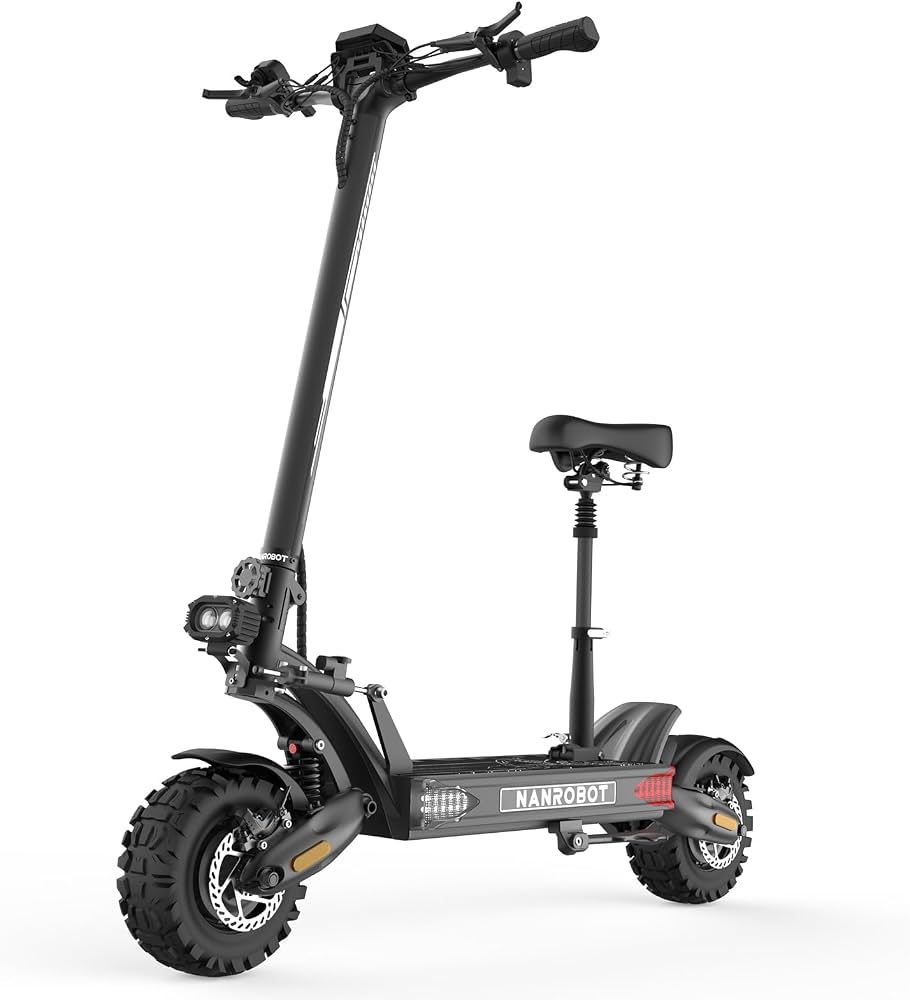
NANROBOT lists the LS7+ 72V’s top speed at 74.5 mph, but the company’s own spec sheet and third-party testing both note that typical riding speeds sit closer to 58-65 mph once real-world conditions like rider weight and wind are factored in. That kind of disclosure is rare in this category, and it’s exactly why the LS7+ earns the top spot here: it’s the model most likely to actually deliver something close to a genuine 65 mph experience rather than a number that only exists on a closed track. Power comes from dual 3,000W motors (6,000W combined, with a claimed 10,000W peak), fed by a 72V 35Ah Samsung battery good for a claimed 81 miles. Stopping power comes from dual four-piston NUTT hydraulic brakes with EBS, paired with adjustable KKE hydraulic suspension and a steering damper — exactly the hardware this class demands at speed. It’s a good fit for experienced riders who want the closest thing to an honest 65 mph number and don’t mind a scooter built for a track or private road rather than daily commuting.
Toursor X13 10000W — Best Value 65 MPH Electric Scooter
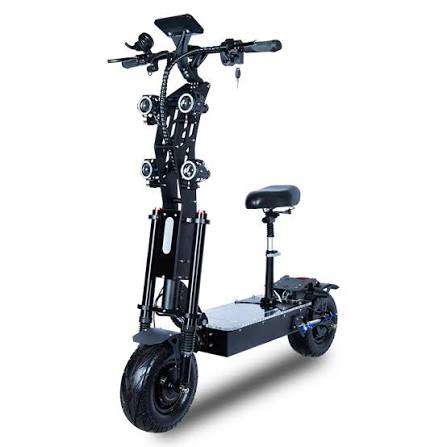
Toursor’s X13 lists a straightforward 65 mph top speed from dual 5,000W motors (10,000W combined), backed by a 72V 40Ah battery rated for up to 75 miles. Like most scooters in this class, that 65 mph figure comes from the manufacturer rather than an independent GPS test, so treat it as a claim rather than a confirmed number. Where the X13 earns its place is value: hydraulic suspension, hydraulic/oil disc brakes, and a 13 to 14-inch tire setup depending on configuration, all at a price point that generally undercuts boutique performance brands. It suits riders who want hyperscooter-class range and claimed speed without paying boutique-brand prices, but who understand they’re buying on a spec sheet rather than a published third-party test.
T90 Pro: Best off road 65 MPH Electric Scooter
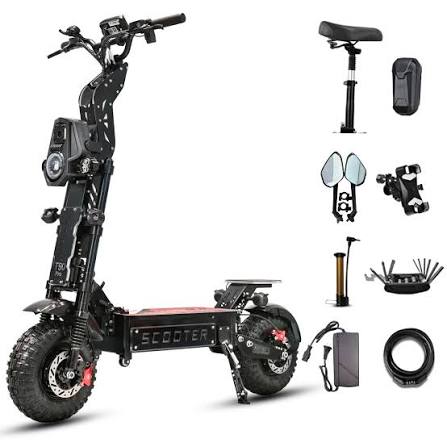
The T90 Pro claims a 68 mph top speed, again a manufacturer figure rather than an independent test result, from dual 5,000W motors (10,000W combined) and a 72V 45Ah removable battery rated for up to 65 miles. What sets it apart in this list is its build: 14-inch off-road tires, front and rear hydraulic suspension, hydraulic disc brakes, and an 800-lb weight capacity, plus a waterproof, dust-resistant electrical system. That combination makes it a better fit for heavier riders or anyone planning to ride on gravel, dirt, or mixed terrain rather than a smooth track, at the cost of being one of the heavier, bulkier machines in this roundup.
YUME M11 — Best Long-Range Pick Just Under the 65 MPH Mark
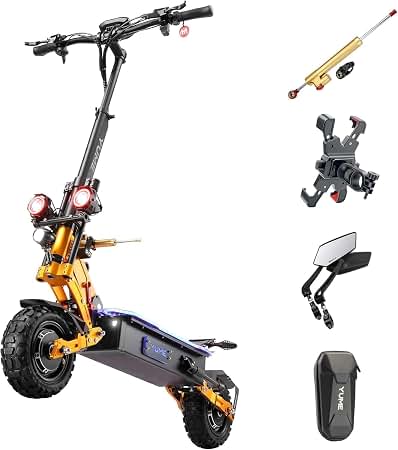
The YUME M11 is reviewed at a 58 mph top speed with a 78-mile range, powered by dual motors paired with hydraulic brakes and an ABS-assisted braking system on 11-inch off-road tires. It doesn’t quite reach 65 mph, so it’s included here as the long-range option in the group rather than a true hyperscooter — riders who care more about going the distance than chasing the last few mph will get more out of the M11’s range than out of a scooter that’s a few mph faster but stops sooner. It’s still built with serious hardware (dual hydraulic suspension, ABS braking) and Yume itself advises against it as a first scooter for anyone without prior experience on a high-power machine.
AiQite A7PRO — Best Budget Entry Point Below the 65 MPH Class
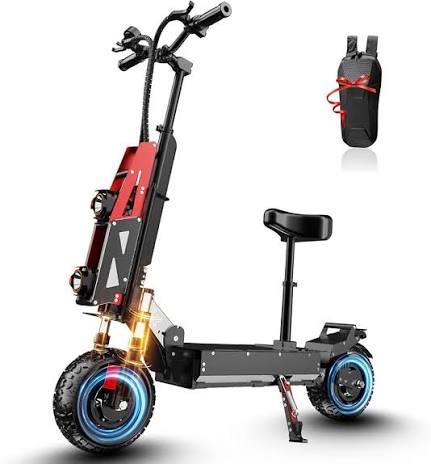
The A7PRO tops out at a claimed 50 mph, powered by dual 2,800W motors (5,600W combined) and a 48V 26Ah battery good for 45-50 miles, and it carries UL 2272 certification. It doesn’t belong in the true 65 mph tier, but it’s worth including as the accessible on-ramp: a rider who wants a taste of dual-motor, high-power performance — oil shock absorbers, dual braking, 11-inch off-road tires, a 500-lb load capacity — without stepping straight into a 65+ mph machine and its price tag or learning curve. Think of it as a stepping stone rather than a destination for someone chasing the top end of this category.
Segway SuperScooter GT3 Pro — Best Alternative for Stability and Tech
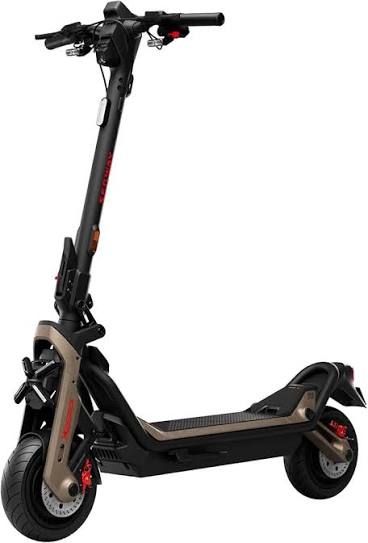
Segway advertises a 50 mph top speed and 86-mile range for the GT3 Pro; independent GPS testing by reviewers has generally clocked it a couple of mph under that claim, in the high 40s. That means it doesn’t compete on outright speed with the rest of this list, but it earns its spot for everything built around that speed: dual 3,500W motors (7,000W combined), front and rear hydraulic suspension, hydraulic disc brakes, UL 2272 and UL 2271 certification, and a color TFT display with real-time stats. It’s the pick for a rider who wants the most refined, well-tested, and well-supported machine in this class and is willing to trade the last 15 mph for confidence-inspiring handling and a brand with a long safety-testing track record.
The thing that binds each of them isn’t the speed at which they’re able to reach it, but the environment around the top speed. Every scooter here uses hydraulic brakes and real suspension. A scooter marketed at hyperscooter speeds that skips both of those things isn’t worth a ride.
How These Scooters Actually Get to Hyperscooter Speeds
The leap between a commuter 20 mph scooter and a 65 MPH Electric Scooter can be attributed to a couple of factors that compound.
Two motors with a rating of 2,000W or greater in each case, compared to the single motor that is 250-500W in an average commuter model.
Batteries with higher voltage (48V-100V+) provide more power into systems without the loss of heat associated with cranking the power up.
Sine-wave or FOC controllers provide power via an even curve, instead of the abrupt switch-on/off experience of the square-wave controllers that are less expensive.
Hydraulic disc brakes are almost required for a 65 MPH Electric Scooter as drum brakes or rim brakes aren’t able to disperse the heat created by stopping from 50-plus speeds.
Multi-stage suspension as well as a steering damper is what makes it possible to reach the highest speed without being terrifying. Many hyperscooters twitch past 55 mph. The exception is those with these components have a lot to be thankful for.
Is a 65 MPH Electric Scooter Legal to Ride?
That’s the question that causes most people to be confused. The truth is that it’s not legal on public streets, and almost everywhere else.
Scooter laws weren’t designed to address this particular category. In the U.S., federal guidance restricts street-legal scooters to 20 mph and 750 watts of motor power. Each model on this list is far above both limits. States usually treat scooters the same way as bicycles, which are limited to roads with speeds of 25 to 35 mph, and riders must follow the speed limit, no matter what their scooters can accomplish. California is an excellent example of just how specific it gets. Even in areas with higher speed limits, scooters are usually restricted to designated bikeways, while the state-defined scooter speed limit for riders is 15 mph, regardless of the technology under the rider.
A few U.S. states classify higher-power scooters as motor-driven bicycles, which can result in a license, permit, or registration requirement. Pennsylvania as well as Delaware prohibit electric scooters completely. Outside of the U.S., the picture is similarly splintered. Provinces in Canada run their own pilot programs, including Ontario and British Columbia, deciding legality city by city. Most restrict speeds between 15 and 20 miles per hour, regardless of the jurisdiction.
This doesn’t mean that owning a scooter capable of high speeds is illegal. It means that using anything close to its top speed on public roads most likely is not. Operating it as an unregistered and uninsured machine could transform an ordinary stop into something more serious than just a ticket. If you’re considering any of these, the most likely legal route for actually using that speed is a private track, closed course, or private property you own — not the street.
Who This Is Actually For
The 65 MPH Electric Scooter class is the best choice when riders already have experience with a 30 to 45 mph personal electric vehicle, have access to tracks or a private road, and have the budget to equip the scooter with the right safety gear. These are not the right choice as a first scooter, as a daily commuter for someone new to PEVs, or for any rider younger than 18.
If one of those describes you, it’s worth having that conversation with yourself before spending anywhere from roughly $1,500 to $6,000 on a machine built for a scenario you don’t already have.
What Safety Actually Requires at This Speed
At 60-plus miles per hour, a 65 MPH Electric Scooter is much more like a motorcycle than a bicycle. The equipment must reflect this fact:
A full-face motorcycle helmet that is DOT/ECE-rated (a bike helmet or skate helmet won’t be rated for this speed of impact).
Motorcycle jackets and pants that are armored at a minimum, abrasion-resistant motorcycle gear.
Motorcycle gloves and boots that provide ankle support.
A back protector for serious high-speed use.
The riding conditions for a 65 MPH Electric Scooter are just as important as the gear. A dry, clear, clean surface, an open course or private road with sightlines well past the stopping distance, and no pedestrians or traffic nearby is the norm rather than the exception. Speed wobble — an extremely fast, self-reinforcing oscillation that starts in a fraction of a second at speeds above 50 mph — is one of the main causes of severe hyperscooter collisions, and it’s extremely hard to recover from once it begins, even on a flat, smooth surface.
The most frequent mistakes in this space are obvious in hindsight: riding at full speed on day one instead of building up gradually, skipping tire pressure checks (a major factor in instability), ignoring battery balance, and assuming that bicycle-grade gear is adequate. It isn’t.
What to Check Before You Buy
Make sure you have a legal place to use it, such as a closed course or private property — not “I’ll be careful on the street.”
Weigh suspension and braking over the raw speed number. Four-piston hydraulic brakes and adjustable suspension matter more than an extra few miles per hour.
Check whether the claimed top speed is manufacturer-only or independently verified. As the comparison table above shows, most of this category’s numbers still come from the manufacturer, and a five-to-ten mph gap between claimed and real-world speed is common.
Factor in weight. Several of these scooters run well over 100 lbs. This isn’t the kind of thing you carry up the stairs every day.
Budget for gear separately. A full motorcycle-grade safety kit can add several hundred dollars or more to the total cost.
Check battery certification. UL 2272 or an equivalent standard significantly reduces fire risk for high-voltage batteries.
Decide honestly whether you need the full 65 mph or not. A lot of riders get more genuine satisfaction from a well-supported 45-55 mph model with lower risk and a shorter learning curve.
Alternatives Worth Considering
If your goal is excitement and speed rather than the specifics of a spec sheet, a handful of options can deliver a similar thrill at lower cost or risk: a 45-55 mph performance scooter (the AiQite A7PRO or Segway GT3 Pro above both fall in this range), an electric unicycle (many experienced riders find the lean-based handling easier to manage at high speed), or a lightweight electric motorcycle with road-legal registration and insurance, which hyperscooters generally lack. Hyperscooter track days are also a good way to experience the top end of the category without owning one.
Common Questions
Are there electric scooters with a claimed speed of 65 miles per hour?
Yes. Several scooters, including the Toursor X13, T90 Pro, and NANROBOT LS7+, list top speeds at or above 65 mph, though most of those figures come from the manufacturer rather than an independent GPS test.
What’s the fastest electric scooter available for purchase today?
Among the models covered here, the T90 Pro claims the highest number at 68 mph, but that’s a manufacturer figure. The NANROBOT LS7+ is worth noting separately because the brand itself discloses that real-world speeds typically land around 58-65 mph, well under its 74.5 mph claimed maximum — arguably the most transparent number in the group.
Do you need a license to operate one?
You don’t need one to buy it. If you want to legally use it at speed on a public road, most places define that as a motorbike or motorcycle, which generally requires licensing — but the lack of a license doesn’t make street-speed riding legal in the first place.
How much will it cost?
Roughly $1,500 to $6,000 for the scooters covered here, depending on the model and configuration, plus several hundred dollars more for appropriate safety gear.
What causes accidents at this speed?
Speed wobble is the most frequently cited cause: a sudden, fast steering oscillation that starts quickly and is difficult to recover from without a steering damper and solid suspension.
The 65 MPH Electric Scooter concept is real, and the technology behind it keeps improving. What’s worth keeping in mind isn’t just the speed you can reach — the whole package has to be right before it’s actually good.
Conclusion
A scooter that claims to reach 65 mph or beyond isn’t a fantasy or a marketing gimmick anymore — it’s a real, if unevenly documented, category, and models like the NANROBOT LS7+, Toursor X13, and T90 Pro show how far the hardware has come. But the number on the box isn’t the whole story, and in this category more than most, that number is usually the manufacturer’s own. What separates a good hyperscooter from an unsafe one is what’s underneath it: hydraulic brakes that can dissipate heat and keep the scooter stable, and a steering damper to stop a wobble before it starts.
If you’re going after this kind of speed, do it on a scooter built for it, in a place designed for it, wearing gear matched to the risk. Do that, and it’s a thrill without a trip to the hospital as part of the package.
About the Author
Huzaifa is the creator of Electric Scooter Analysis, a blog that covers electric scooters of all kinds, including off-road, city, and special circumstances. Data is obtained from manufacturer specs, as well as opinions from riders. Figures are flagged if there’s no proof.
“The information on this website is gathered from industry reports, manufacturer specifications, expert reviews, and trusted sources such as gyroor to provide accurate and valuable insights for our readers