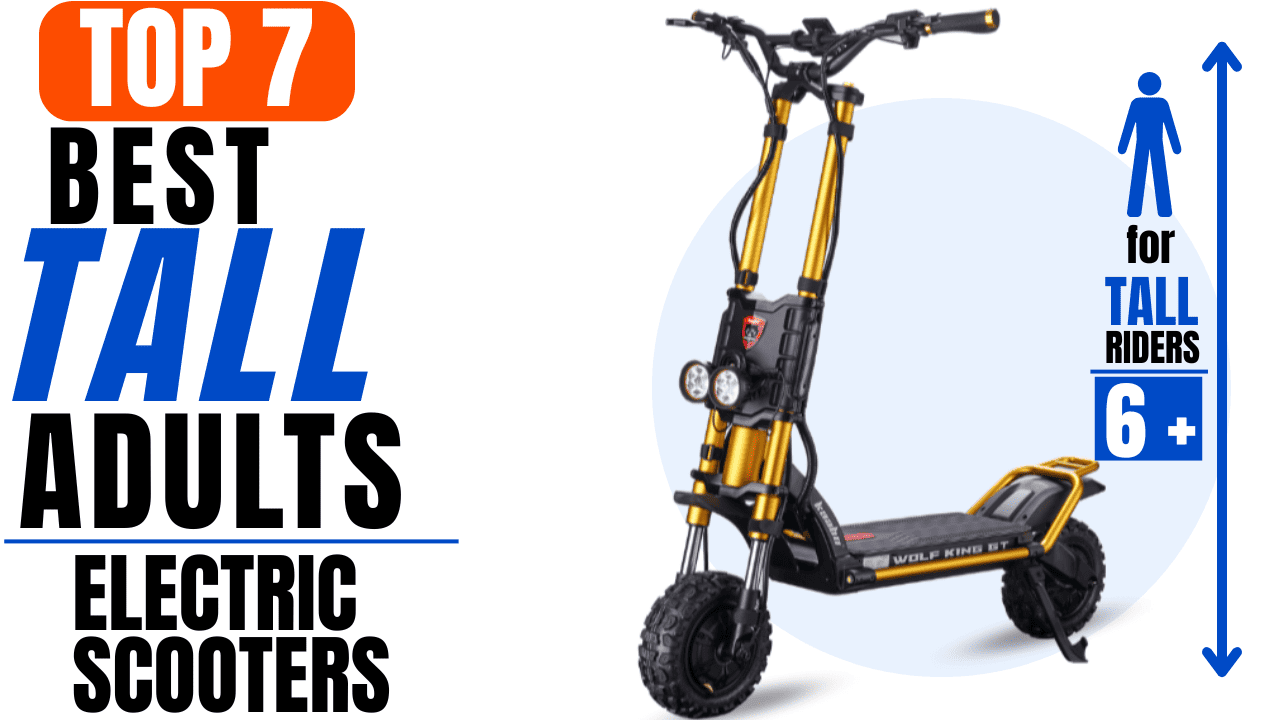
If you’re 5’10” or taller, you’ve probably already lived through this moment: you unbox a new electric scooter, step on, and immediately feel like you’re riding a child’s toy. Knees bent, back hunched, handlebars somewhere around your hip. It’s not you — it’s the scooter. Most models on the market are built around a rider height of roughly 5’6″ to 5’9″, which means anyone taller is working against the design from the first ride.
Quick answer: For tall or bigger adults, the best electric scooters combine a handlebar height of 38″+ (ideally adjustable), a deck of 16″+, and a weight capacity with 30–50 lbs of buffer above your riding weight. Among the picks in this guide, the Segway SuperScooter GT3 is the clear choice if you need real buffer as a heavier rider, and the Segway ZT3 Pro’s factory-adjustable handlebar (rated for riders 5’3″–6’7″) makes it the pick specifically for height flexibility.
Most of the other scooters here land around a 220–265 lb weight cap — if your riding weight is close to that range, read the buffer notes on each one carefully before buying, since several of them will leave you little to no margin.
Top 7 Best electric scooter for tall adults
I’m a big guy myself — six feet tall, 265 pounds — and that combination changes things in ways a spec sheet doesn’t always show. Range, the pressure put on the deck and suspension, how a motor holds up on a hill: all of it shifts once you put real weight and height on a unit. So the seven picks below are all scooters I’ve personally put miles on. (Note: at 6’0″, I’m on the shorter end of the “tall rider” range this guide covers — for taller riders, especially past 6’4″, pay close attention to the handlebar height and deck length figures in each section rather than relying on my own comfort as a benchmark.)
A quick honesty note upfront: I’ve personally ridden all seven of these scooters, but at my own weight of 265 lbs, most of them put me right at the limit rather than above it. Five of the seven — the Segway ZT3 Pro, Segway Ninebot MAX G2, Niu KQi3 Pro, Gotrax G4 Pro, and VMAX VX5 Pro — are manufacturer-rated for around 264–265 lbs, which is a common threshold across this price tier since it roughly corresponds to a 120 kg / UL2272 test benchmark used industry-wide — but it also means essentially zero real buffer for a rider my size. I rode all five right at that cap without issues.
The OKAI Neon Pro is rated even lower, at 220 lbs, so I was riding it above its stated limit. If your riding weight is at or near 265 lbs yourself, sizing up to the Segway SuperScooter GT3 — the one scooter here with real headroom, at 330 lbs, and the only one I rode with genuine buffer under me — rather than treating an exact match as safe is still the more conservative and correct call.
Segway SuperScooter GT3 — Best for hills and heavier riders.
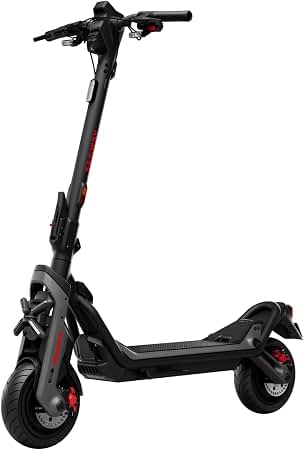
This is the one I reach for when I want real weight buffer under me. The 1,200W rear-drive motor with a 2,400W peak, the 899Wh battery, and dual hydraulic suspension front and rear give it real hill-climbing muscle along with one of the smoothest rides I’ve tested in this category. What stood out to me riding it at my own weight is the 330 lb rated payload — the only scooter on this list with genuine headroom above what most tall/heavy riders weigh. The trade-off is size and weight: at roughly 87 lbs, it’s not something I’d casually carry up a flight of stairs — this is a heavier-duty, premium build compared to the other picks on this list.
Segway ZT3 Pro: Best Adjustable Fit
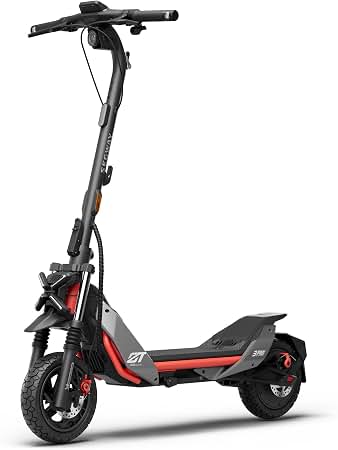
This is one of the more capable off-road-capable scooters Segway currently sells in the US, and riding it made clear why it’s rated for such a wide range of heights — the handlebar is factory-listed as adjustable for riders from 5’3″ to 6’7″ (160–200 cm). At six feet tall myself, I never once felt cramped on it, and the adjustable range extends comfortably well past my own height, which is what makes it a strong pick even for riders taller than me.
It runs a single rear motor rated at 650W nominal, 1,600W peak, paired with a 597Wh battery, dual front telescopic and rear spring suspension, and chunky 11-inch off-road tubeless tires — the ride quality leans more toward stability and comfort than outright power. Rated payload is 265 lbs, so at my own weight I’m riding right at the cap with no real buffer, but the adjustable stem is genuinely the standout feature for anyone tired of hunching over a fixed bar.
Segway Ninebot MAX G2 — Best for long-range commuting.
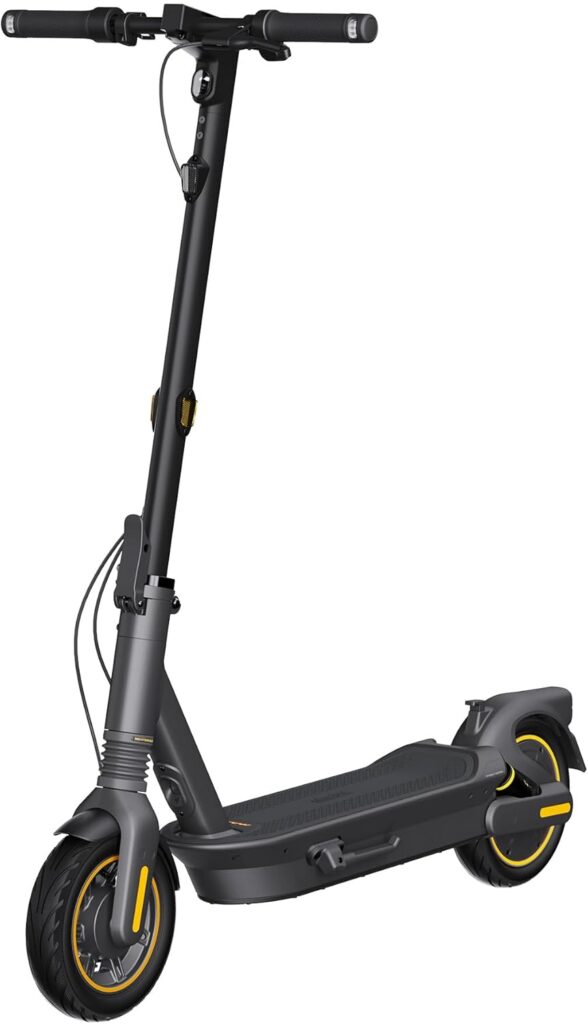
The MAX G2 trades outright hill-climbing power for range and comfort, and that shows on longer rides: a 450W motor (900W peak), a 551Wh battery good for a claimed 43 miles, and dual suspension (hydraulic front, spring rear) that smoothed out cracks and potholes better than I expected. The wider-than-average 22.4-inch handlebar made a real difference for me as a bigger rider. Weight capacity is 265 lbs — no real buffer at my own weight — and at around 53.5 lbs it’s one of the heaviest scooters I tested here to lift or carry, so it suits riders who can charge it where it lives more than anyone hauling it up stairs daily.
Niu KQi3 Pro — Best for flat-terrain daily commuting,
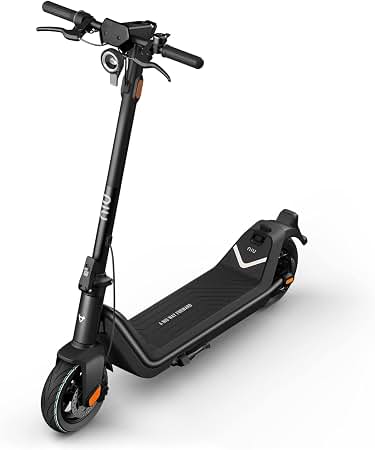
Max weight capacity is 265 lbs. It runs a 350W rear motor, so it’s not going to get you up anything steep, but for flatter commuting it’s a dependable option I’ve ridden with no issues. Battery capacity isn’t officially published by Niu for this model, so if that’s a deciding factor for you, confirm it directly with the retailer before buying. Best suited to riders with some margin below that 265 lb cap rather than right at it, as I am.
Gotrax G4 Pro — Best budget pick,
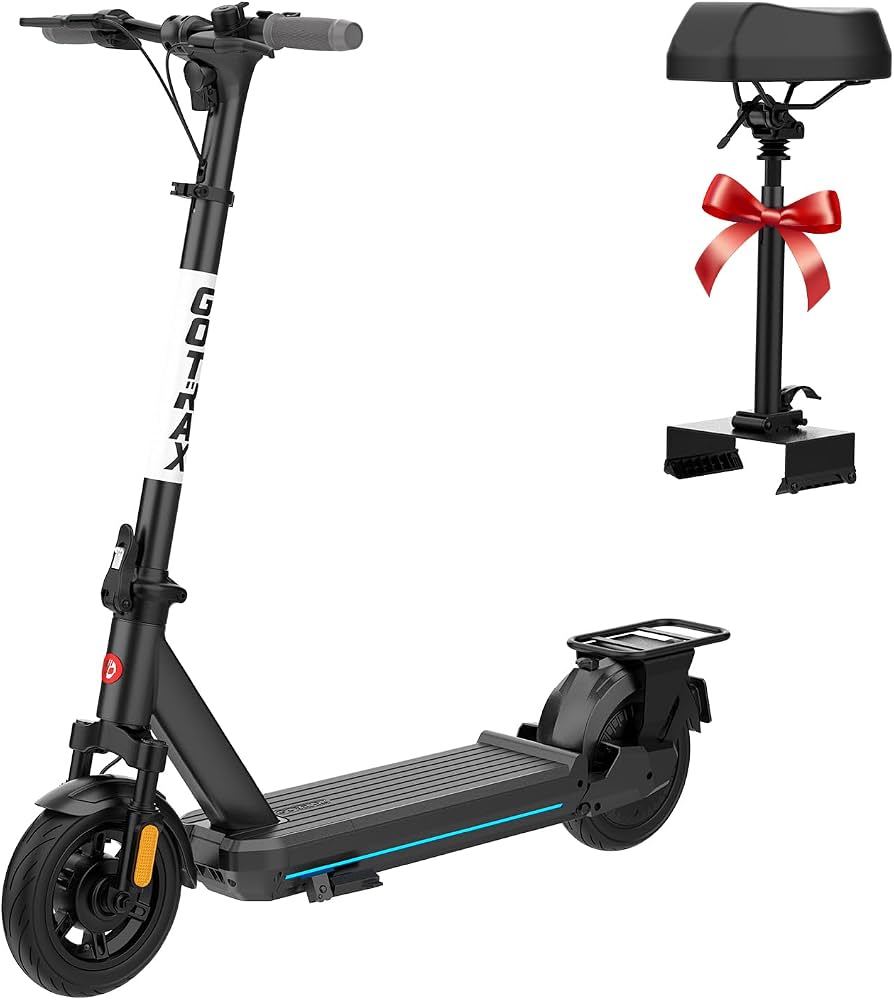
A 500W motor, a 36V 10.4Ah (roughly 374Wh) battery, and front suspension for an entry-level scooter — and it held up well under my own weight despite being one of the more affordable picks on this list. Rated max load is 264 lbs, essentially the same no-buffer situation as the Niu KQi3 Pro above, so it’s a strong budget option if your actual riding weight is comfortably under that number, and one to size up from if you’re riding right at it like I am.
VMAX VX5 Pro — Best lightweight folding option,
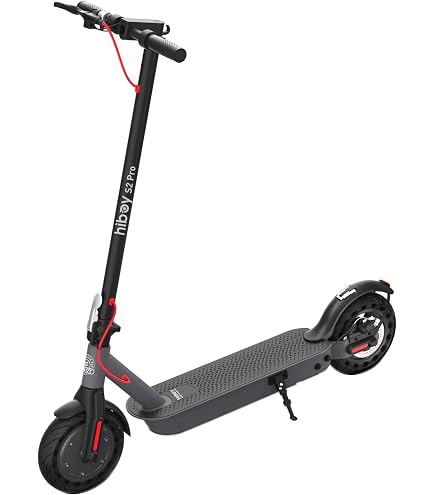
The standout for me here was how light it is: depending on battery configuration it weighs as little as 34–37 lbs, the lightest scooter I rode for this guide, with a one-touch fold that made it genuinely easy to carry for last-mile commuting. It runs a 400W motor (840W peak) and is rated for a 265 lb rider. Exact battery capacity varies by the configuration you buy and isn’t consistently published across versions, so confirm the specific SKU’s battery size before purchase rather than assuming it matches other scooters in this price range.
Like the Niu and the Gotrax above, it’s a fine choice with margin below the 265 lb cap, but not the pick if you’re riding right at your own weight limit. There’s no suspension, so I felt a firmer ride over rough pavement than on the suspension-equipped picks on this list.
OKAI Neon Pro — Best for flat terrain and simplicity.
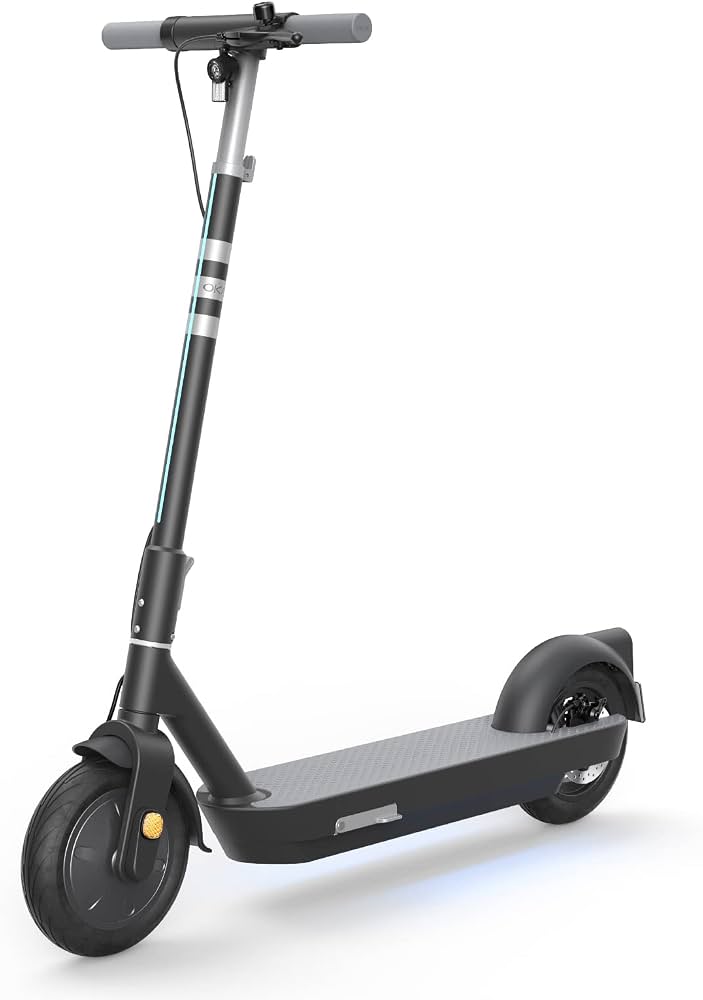
A straightforward, no-suspension commuter I found reliable on flat routes — it runs a 350W motor (700–900W peak) and a 705.6Wh battery, with a claimed 50-mile range that I found closer to 25–27 miles in real-world riding, still solid for a flat-terrain commute. The catch for taller or heavier riders is the weight capacity: at 220 lbs rated, it has the lowest ceiling of any scooter on this list, and I noticed the difference riding it well above that cap — it’s really only a fit if your riding weight is comfortably under 220 lbs, regardless of your height.
Side-by-Side Comparison
| Scooter | Motor | Battery | Weight Capacity | Standout Feature |
| Segway SuperScooter GT3 | 1,200W rear motor (2,400W peak) | 899Wh | 330 lbs | Dual hydraulic suspension; only pick here with real weight buffer |
| Segway ZT3 Pro | 650W rear motor (1,600W peak) | 597Wh | 265 lbs (no buffer at that weight) | Handlebar factory-rated for riders 5’3″–6’7″ |
| Segway Ninebot MAX G2 | 450W motor (900W peak) | 551Wh | 265 lbs (no buffer at that weight) | Long 43-mile range, dual suspension, wide handlebar |
| Niu KQi3 Pro | 350W rear motor | Not officially published | 265 lbs (no buffer at that weight) | Reliable flat-terrain commuter |
| Gotrax G4 Pro | 500W motor | ~374Wh (36V 10.4Ah) | 264 lbs (no buffer at that weight) | Front suspension on an entry-level budget scooter |
| VMAX VX5 Pro | 400W motor (840W peak) | Varies by configuration | 265 lbs (no buffer at that weight) | Ultra-light (34–37 lbs) folding design |
| OKAI Neon Pro | 350W motor (700–900W peak) | 705.6Wh | 220 lbs (lowest cap on this list) | Simple, no-suspension flat-terrain commuter |
Note: several models converge around a 264–265 lb rating — this is common across the industry, tied to standard UL2272 test benchmarks, rather than a coincidence between brands. Weight-capacity and battery figures are listed by each manufacturer at the time of writing and can change between model revisions or by SKU/configuration — always confirm the current spec on the exact model you’re buying.
If you’re tall and comfortably under 265 lbs, the Gotrax G4 Pro, Niu KQi3 Pro, or VMAX VX5 Pro cover daily commuting well without overspending — leave yourself real margin below their weight caps. If your riding weight is at or near 265 lbs, or higher, the Segway SuperScooter GT3 is the one scooter in this list built to handle it, with real capacity to spare. If you’re taller than six feet specifically, the Segway ZT3 Pro’s factory-adjustable handlebar is the one I’d point you toward first — it’s the only scooter here designed around a rider-height range rather than a single fixed fit.
Why Standard Scooters Fail Taller Riders
Handlebar height is the obvious problem, but it is rarely the only one. Deck length matters just as much — a short deck cramps larger feet and limits how much you can shift your stance for balance at speed. And because taller adults are, on average, also heavier, weight capacity becomes a second constraint that most buyers don’t think to check until the scooter already feels underpowered on a hill.
Manufacturers focus on the middle rider since that’s the most popular market segment. It’s a sensible business choice; however, it creates an opening for people who aren’t in that category, and that’s the reason a few companies now build models specifically geared toward larger, taller riders.
How to Measure Yourself Before You Buy
Skip the guesswork. A five-minute measurement session tells you more than any spec sheet marketing copy.
- Measure your height barefoot, standing against a wall.
- Check your arm span relative to your height. Long arms give you flexibility with a slightly lower handlebar; shorter arms mean you’ll want a taller stem.
- Weigh yourself with your typical riding gear — backpack, work bag, delivery equipment — not just your bare body weight.
- Note your shoe size and preferred stance width, since deck length affects both.
- Compare your measurements against the scooter’s maximum handlebar height, not the folded height shown in most marketing photos.
Here’s a rough sizing reference based on common rider proportions:
| Rider Height | Target Handlebar Height | Target Deck Length |
| 5’10″–6’0″ | 38–42 in | 16–17 in |
| 6’1″–6’3″ | 42–46 in | 17–18 in |
| 6’4″–6’6″ | 46–50 in | 18–19 in |
| 6’7″ and up | 50 in+ or a stem extension | 19 in+ |
These are starting points, not hard rules. Someone with a long torso and short arms may need a taller bar than the chart suggests, even at the same height as someone built differently.
The Specs That Actually Matter
Once height is sorted, four other factors decide whether an electric scooter for tall adults will hold up for you long-term:
Stem type. Telescopic stems adjust in seconds, which sounds ideal, but they can develop flex at full extension under a heavier rider — especially at speed or over rough pavement. A fixed stem at the correct height, or a bolted stem extension, tends to hold up better over time.
Weight capacity with real headroom. If your riding weight (body plus gear) is 220 lbs, a scooter rated for 220 lbs isn’t your scooter — it’s the ceiling. As a rule, look for at least 30 to 50 lbs of buffer above your actual weight. Riding right at a scooter’s maximum rating, even occasionally, is where premature wear and frame stress tend to show up first. (Several picks in this guide don’t meet that buffer rule at my own 265 lb weight — that’s flagged deliberately in each entry above so you can judge for your own weight rather than mine.)
Motor output. Taller riders tend to be heavier riders, and a 250–350W motor loses noticeable acceleration and hill-climbing ability as weight increases. 500W and up handle inclines far more comfortably.
Suspension. A taller, more upright stance transmits more road vibration through the frame. Dual (front and rear) suspension meaningfully reduces fatigue on anything longer than a short commute.
One detail competitors rarely explain clearly: weight capacity isn’t just about the number on the spec sheet; it’s about how the frame is built. A single-stem frame rated for 220 lbs can develop stress cracks within months under a 280 lb rider, while a heavier-duty frame built with real load buffer — the approach Segway takes on its SuperScooter GT3 — spreads that same load across a beefier chassis and resists the flex that causes those cracks. If you’re shopping near the top of a weight rating, frame construction matters as much as the printed number.
Already Own a Scooter? Here’s How to Fix the Fit
Replacing an entire scooter isn’t always necessary. If your current model is close but not quite tall enough:
- Stem extension — a spacer bolted between the steering tube and handlebar clamp, typically adding 2 to 4 inches.
- Brand-specific extender kits — some manufacturers sell handlebar extenders that add several extra inches to specific model lines; check what your scooter’s brand offers before buying a full replacement.
- Riser bars — swapping the handlebar itself changes both height and hand position, useful when a spacer alone isn’t enough.
One caution worth taking seriously: don’t exceed the manufacturer’s stated maximum extension, particularly on a telescopic stem. Riding regularly at or beyond that limit is where the flex-and-failure risk actually shows up, not in normal use within the rated range.
Certification and Safety, Wherever You’re Riding
Wherever you’re buying from, the electrical and battery system should carry a recognized safety certification — but which one applies depends on your region:
- United States and Canada: UL2272 (also called ANSI/CAN/UL2272) examines the electrical and battery systems to test for overheating, short circuits, and risk of fire via thermal cycling and overcharge, as well as impact testing. The US Consumer Product Safety Commission has pushed both retailers and manufacturers toward the standard. Some cities, such as New York, add their own sales rules in addition to the standard.
- European Union: scooters sold legally must carry CE marking, confirming compliance with EU health, safety, and environmental requirements — a different framework from UL2272, though addressing similar underlying risks.
- Singapore: the Land Transport Authority requires PMD (Personal Mobility Device) certification under its own UL2272 adoption, with registration rules that have shaped which scooters can legally be used on public paths.
Certification is model-specific, not brand-wide — always confirm the exact SKU or model number is certified, not just that the manufacturer has certified products elsewhere in its lineup. And in every region, certification covers electrical safety only. It doesn’t determine whether you’re legally allowed to ride on a given street or sidewalk.
Where You Can Actually Ride One
Legal rules for e-scooters vary enormously by country, and even by city within the same country:
- In the US, rules differ state by state — helmet requirements often apply only under a certain age, sidewalk riding is allowed in some cities and banned in others, and a handful of states have recently reclassified scooters to raise weight limits or explicitly permit seated operation.
- In the UK, private e-scooters currently sit in a legal gray zone on public roads and pavements outside of specific rental trial schemes — a meaningfully different situation from most of continental Europe.
- In the EU more broadly, road-legal status depends on the individual country’s transport regulations, even when the scooter itself carries CE marking.
- In Singapore, PMD registration is mandatory for public path use, with non-compliant devices facing deregistration.
Don’t take a scooter’s certificate or any blog’s general guidance as the law in the area you reside in. Checking your local transportation authority’s current regulations takes only a couple of minutes and will help you avoid making an expensive mistake, particularly with more powerful models that could exceed local speed or power limits.
Rental fleet operators who purchase scooters to accommodate a wide variety of rider sizes face a related challenge: prioritizing models with an adjustable stem, like the Segway ZT3 Pro, reduces the number of SKUs required to cater to both average and taller riders. This matters more for large-scale operations than for an individual purchaser.
Mistakes Worth Avoiding
- Comparing handlebar height only, while ignoring deck length.
- Buying at your weight limit instead of leaving an actual buffer.
- Assuming a telescopic stem is just as strong as a fixed one at full extension.
- Choosing based on top speed instead of wheelbase, tire size, and suspension — these are the specs that really affect stability for taller riders.
- Skipping a quick legality check before purchasing a more powerful model that might not be street-legal where you live.
FAQ
Which size electric scooter would be ideal for someone who’s 6’4″?
Aim for a handlebar height of at least 46–50 inches (via a fixed stem or an extender), an 18-inch or larger deck, and a weight capacity with room above your own weight.
Can a tall person ride a regular electric scooter?
Yes, but comfort and safety suffer on longer trips. A stem extension or handlebar replacement can fix a near-perfect fit without needing a full replacement.
What’s the maximum weight limit for electric scooters?
Standard consumer models typically have a weight capacity of around 220–265 lbs. Reinforced models designed for heavier riders can support up to around 330 lbs.
Do taller riders need more power?
Generally, yes. Height is usually correlated with body weight, so motors under 500W tend to lose speed and hill performance as rider weight increases.
Is UL2272 certification the same as being street-legal?
No. It only certifies the battery and electrical system. Whether you can legally ride on a particular roadway, pathway, or sidewalk is determined by local and national laws.
How can I raise the handlebar height on a scooter I already own?
A bolted-on stem extension typically adds 2 to 4 inches. Brand-specific extenders can add more, while riser bars change both hand position and bar height for extra flexibility.
Is there a scooter designed for someone seven feet tall?
There are very few off-the-shelf models specifically designed for 7-foot riders. Your best bet is a model with an adjustable stem — like the Segway ZT3 Pro — combined with a stem extension or riser bars if you need extra height beyond its normal adjustable range.
What’s the difference between commuter and off-road models for tall riders?
Commuter models prioritize portability and moderate range at a lower weight. Off-road and performance models trade portability for higher-output motors, bigger tires, and higher weight capacity, typically at a much higher price.
The Bottom Line
It comes down to two factors most people don’t consider until they’ve bought the wrong scooter: maximum handlebar height (not the one shown in the ad) and weight capacity buffer (not just the minimum rating). Measure yourself first, and compare those two numbers against your actual weight and height. Only then compare motor power, range, or top speed. Get those two things right, and finding the right electric scooter for tall adults becomes much more straightforward.