Find “smallest electric scooter,” and you’ll see two entirely diverse answers merged into one page of results. Certain articles refer to the slimmest electric scooter — one you could carry with just one hand. Other articles refer to the one that has the slimmest footprint folded -which is the one that folds into the closet or trunk. This is not the exact scooter, and combining them is the most frequent reason why people are dissatisfied with the purchase.
If you’re shopping to purchase a smallest electric scooter, one of the most effective techniques to be sure that you’re buying the right product is to identify what problems you’re actually solving before even looking through the spec sheets.
Quick answer: The short answer is that the most smallest electric scooter weigh in the region of 20-30 lbs. They fold up to about 30-40 inches. They usually offer between 10 and 20 miles of range. They peak at 15mph. This is a trade-off of pure power for mobility. The combo can prove helpful for shorter journeys, apartment storage, as well as multi-modal transport journeys; however, it’s not the best solution for every person.
The Smallest and the Lightest. The Lightest: Why the Difference Really Matters
A scooter could be light but still difficult to store. It can be small in its folded form but weigh more than you’d anticipate. The manufacturers don’t always explain this difference, and that’s the reason most customers end up buying the wrong model of scooter.
The weight determines how simple the scooter is to transport down stairs, on the train, or in a parking area. The folded footprint — the length, width and height when folded -will determine if it can be placed where you want it to be: on shelves for your closet, trunk for a sedan, or under an office desk.
Independent testing companies have tested the folding of scooters side-by-side and found that only a percentage of them meet the strict criteria for compactness, typically an unfolded length that is under 40 inches, and an unfolded width of less than 16 inches. This is accompanied by bars that fold flat instead of sliding downwards. The weight alone isn’t a guarantee of all of this.
It’s important to know: If you purchase based only on weight, it is possible to be left with a bike that is light to carry; however, it’s too big to be able to accommodate the trunk. If you purchase based only on the folded dimensions, it’s possible to get an item that is too big for the closet, but strains your arms when walking across the platform.
Who Actually Needs a smallest electric scooter
Everyone doesn’t need to have the most smallest electric scooter available on the market, but certain scenarios make smallest electric scooter the decision.
- People living in small spaces and apartments who require storage for their scooter inside, usually inside a closet or behind the door.
- Bus commuters and train users who combine an electric scooter with public transport, where carry-on dimensions and weight limitations are real limitations.
- Regular travelers who require the scooter for transport to fit inside the trunk of their car or other suitcases that are airline-compliant.
- People who have limited lifting strength who find that anything more than 30 pounds is a daily work-related chore, rather than a pleasure.
- Office workers who would like to store their scooter beneath a desk but not block the sidewalk.
- Parents purchasing for children that require a smaller frame, and limited top speed, and not just an adult-sized scooter.
- Seniors looking into mobility assistance options, in which case “compact” means something different (see the note on stability below).
This last category deserves the attention of competitors who rarely speak about the fact that the most smallest electric scooter is not always the safest. Frames that are lighter typically shed their weight when they cut suspension, tire, or wheelbase. The ride may appear a little twitchy, particularly on uneven surfaces. If you’re buying for a veteran, or someone who’s only just beginning, stabilization is the most important factor over the raw ability to transport.
The Real Categories of smallest electric scooter
“Smallest electric scooter” actually includes five different product categories that are each designed to suit a specific type of tiny.
Ultra-Lightweight Commuter Scooters
Designed for short, daily trips and for stair-carrying. The majority of them are single-motor, within the range of 250-350W, and weigh less than 30lbs, featuring an adjustable stem that folds and 10 to 20 miles of range. It is this category that most people think of when searching.
Micro-Fold Travel Scooters
They will choose the most compact folded design over the least burden — ideal in travel on trains, airlines luggage restrictions, as well as tiny trunks for cars and even when the scooter isn’t the lightest in the world.
Kids’ and Youth Electric Scooters
Smaller decks physically, smaller weight limit, and crucially — the built-in speed control which typically limits speed at 10 miles per hour. They’re not just adult-sized scooters that have the throttle lowered; they’re built around small riders by building the frame.
Compact Mobility Scooters
Another distinct but related category that is for those who require assisted mobility, rather than a stand ride. This time, “smallest” is judged using the turning radius and autofold mechanisms, not the top speed or distance.
Performance-Compact Hybrids
A little heavier, typically 35-45 pounds yet still folding, they sacrifice a bit of mobility in exchange for commuter capabilities: more capacity, greater acceleration, and better climbing.
Spec Comparison at a Glance
| Category | Typical Weight | Folded Footprint | Range | Top Speed | Best For |
| Ultra-lightweight commuter | 20-30 lbs | ~38 x 8 x 14 in | 10-20 mi | 15-20 mph | Transit riders, stair-carriers |
| Micro-fold travel | 25-35 lbs | The narrowest fold width | 15-25 mi | 15-19 mph | Train, plane, trunk storage |
| Kids’ and youth electric scooter | 10-20 lbs | Low handlebar, small deck | 3-8 mi | 8-10 mph | Riders under ~12 |
| Compact mobility scooter | 35-60 lbs unrolled | The smallest footprint for turning | 8-15 mi | 4-8 mph | Seniors with assisted mobility |
| Performance-compact hybrid | 35-45 lbs | Folded slightly larger | 25-40 mi | 27-32 mph | Longer commutes, hills |
These are general market prices, but they aren’t guarantees for any specific model. You should always verify the exact numbers by comparing them to the latest specifications sheet, as prices and specifications are subject to change regularly.
How to Choose: A Simple Four-Question Framework
When choosing the smallest electric scooter, sort your priorities in order of importance. Your first “yes” tells you which is the best category to purchase from.
- Are you able to transport it on stairs or the train every day? If so, you should prioritize weight. Aim for less than 30 pounds and above the top speed or distance.
- Do you have enough space in your trunk, or is closet space really your biggest issue? If so, you should prioritize the width and length of your folded space over the amount on the scale.
- Do you know if the person riding is a child or a newbie? If yes, then purchase a real kids’ model equipped with speed control instead of a throttled-down adult scooter.
- Do you want to assist mobility instead of standing for commuting? If yes, then look into small mobility scooters, based on the turning radius and auto-fold as opposed to the speed.
Step-by-Step: Buying the Right smallest electric scooter
- Before buying the smallest electric scooter, determine whether your biggest priority is carrying weight, storage space, or budget.
- Take a physical measurement of your storage area: the depth of the closet shelves and trunk width, as well as under-desk clearance.
- Select the three to five models that fit your criteria from the list above.
- The folded width is the one to be checked -this is the standard that most listings will bury and that determines whether the scooter can be used to open doors on trains and office aisles.
- Make sure the weight limit is in line with the body mass of the user. Compact models typically limit between 220-265 pounds.
- Be sure to look for a recognised security certification for batteries and electrical equipment such as UL 2272 in the US or an equivalent regionally in Europe.
- Make sure you are aware of local transport and other regulations before making a decision (more about this later).
- Please try the fold process in person or by video review. Certain “quick-fold” claims take noticeably longer to use in actual use as opposed to in promotional videos.
What smallest electric scooters Typically Cost
| Category | Typical Price Range (USD) |
| Ultra-light and budget-friendly commuter | $250-$450 |
| Micro-fold travel scooter (mid-range) | $450-$800 |
| Kids electric scooter | $100-$300 |
| Compact mobility scooter | $800-$2,000+ |
| Performance-compact hybrid | $700-$1,300 |
The price of regional services varies based on customs duties, shipping, and demand locally, so consider these to be USD references rather than number ranges that are fixed.
Regulations Vary More Than You’d Expect
The rules for when — as well as whether you are able to use a smallest electric scooter are different for cities and countries, as well as the definition of what “small enough” actually means in actual usage.
In much of the US, local rules typically limit street-legal scooter speeds at 15 to 20 mph. They also require that the scooter fold down in order to get on trains or buses at peak times. Some EU nations take a stricter policy, usually mandating registration, insurance, and a helmet on every powered scooter of any dimensions. Regulations in Asia-Pacific cities vary similarly, and you should check the local regulations on micromobility prior to buying instead of after.
The airline travel layer adds a layer completely. The majority of airlines consider foldable e-scooters as items that are checked or oversized due to the lithium battery’s watt-hour limit, which is typically set at 100Wh, without any special approval from the airline. The size of the fold does not mean that a scooter is airline-compliant, but its Wh rating on the battery is the one that determines this.
Mistakes Worth Avoiding
- A purchase based on weight is not the only way to go. A scooter can be small but still not wide enough for the railing or a turntable.
- Doing nothing to avoid the weight limit for riders. The smaller scooters usually have smaller load capacities than standard models.
- Assuming “foldable” means “flight-safe.” The battery’s watt-hours, not the folded dimensions, are used to determine eligibility for airlines.
- Doing a test fold is not a good idea. Certain folding systems require more hands and time than the videos in promotional ads suggest.
- Picking the lightest option suitable for older or first-time riders without considering stability. A slightly heavier and larger-bodied scooter could be more secure.
- The suspension is often overlooked. Certain ultra-light frames eliminate all suspension, and it shows immediately on cobblestones or pavements that have cracks.
Safety Notes Worth Taking Seriously
Make sure that the scooter you’re looking at has recognized electric and battery security certifications — such as the UL 2272 standard in the US or the equivalent in your region prior to purchasing, not later. Don’t leave your compact bike on charge for too long, and inspect it now and then to ensure there is no damage or swelling. The age and speed limits in your area are applicable regardless of how tiny or toy-like it appears or is, but kids’ scooters in particular are likely to be unsupervised during training.
The smaller wheels can also result in less traction in wet weather compared to standard commuters, so you need to factor this into the way and location you’re planning to ride.
If a Standalone Scooter Isn’t the Right Fit
- Folding e-bikes trade some flexibility for a more stable as well as a more comfortable ride over greater distances.
- Self-balancing boards come with a smaller footprint; however, they have higher learning curves.
- Scooter-share applications eliminate the storage and ownership burden totally — a great alternative for those who ride only occasionally.
- The manual kick scooter bypasses the battery and charging process completely, but at the expense of motor aid.
- A compact e-skateboard offers a similar profile of portability, but with an entirely different riding style and a higher level of skill.
5 Real-World Picks Worth Knowing
Specifications change quickly within this area, and the information below should be considered as a quick snapshot, not an ongoing ranking. Make sure to check the latest numbers from the manufacturer’s website prior to making a purchase.
1. Arma Scooter (Shimizu, Japan)
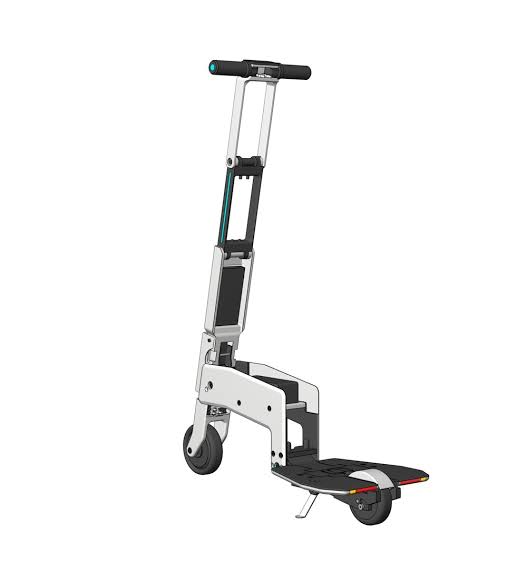
The latest frontier in compactness: around 10lbs (4.5 kg) and folds down to about the dimensions of an A4 piece of paper or an ultra-thin laptop. It has a motor of 250W that has a maximum speed of 15 mph. However, its range is restricted to seven miles on a charge. The prototype is still in the crowdfunding phase rather than having widespread retail distribution, and so it’s more of an example of the direction that an ultra-compact style is headed rather than a guarantee for a same-day purchase.
2. Dynamic Scooter Model B (Canada)
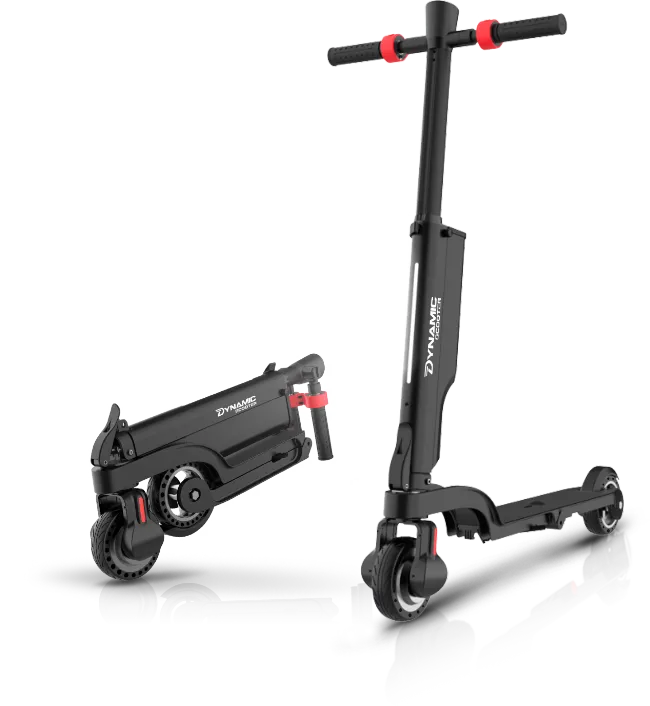
It is a more sensible and current transport option. It weighs around 22 pounds (10 kg). It folds down into a backpack-sized size in around 3 seconds. It has a max speed of around 15 mph. Its range is 12 miles or more. The battery is detachable, as well as dual brakes, but the suspension is not included -Expect a rougher ride on bumpy surfaces. This is an actual product for sale that has independent reviewers behind it.
3. Segway Ninebot Air T15
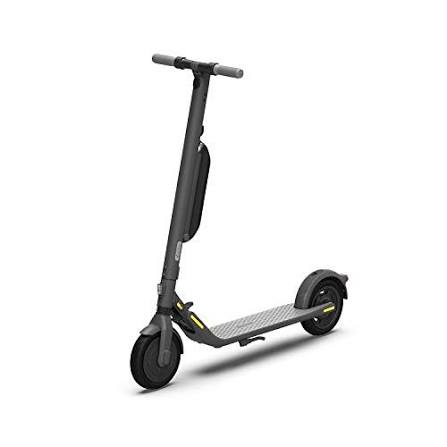
Segway’s solution to ultra-portability is around 23.2 pounds (10.5 kg) and folds down to 40 x 8.7 x 8 inches — tiny enough to carry similar to carry-on bags. The motor’s 250W output tops off at 12.4 miles per hour, with a distance of 4-7.5 miles, depending on the rider’s weight — lower than the general “ultra-lightweight commuter” range noted earlier, so treat those category-wide numbers as a rough guide rather than a guarantee for this specific model. Many reviewers have rated it as one of the lighter adult-sized scooters available, but the downside is only a small amount of hill climbing and a limited distance that is ideal for brief, flat trips.
4. Unagi Model One
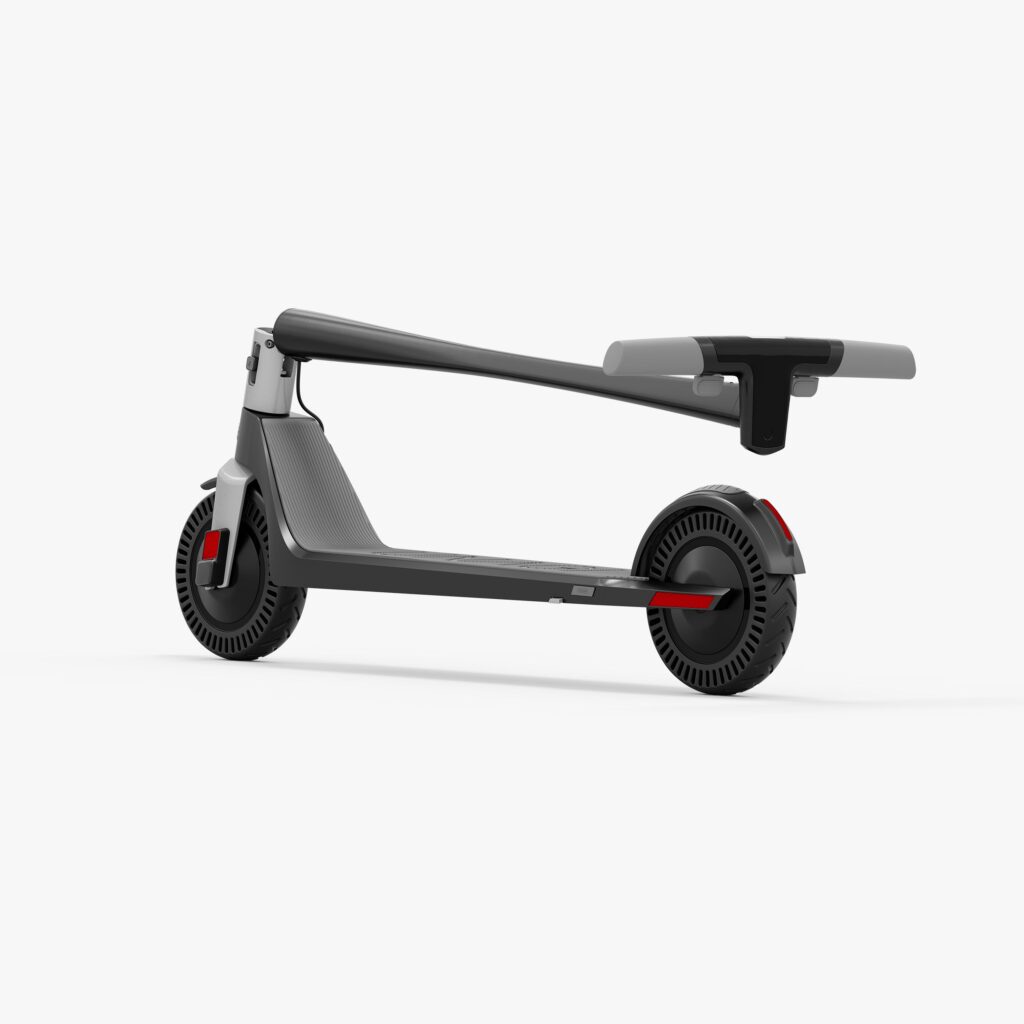
It is a design-forward option that is able to balance weight and usability, approximately 26.5-28.6 pounds, depending on the version, and folds to 37.8 x 16.5 x 15 inches. Dual 250W motors provide it with a top speed of around 15-17 mph. It also has a test area of 8.5-15.5 miles. It’s IPX4 waterproof and comes with an easy-to-fold hinge that can be folded in one click, so it’s a popular choice among commuters looking for portability without losing too much quality of ride.
5. E-TWOW GT SE
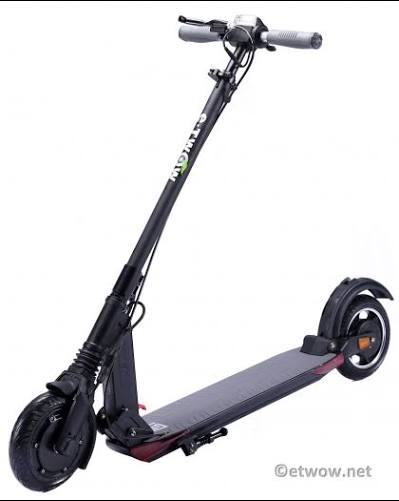
It’s a little more focused on performance but still foldable. It weighs around 30 lbs. Folded dimensions are around 38×8 14 inches, with the top speed close to 25 mph and around 20 miles of travel. It’s more substantial than some of the lighter options above; however, it’s still small enough to fit in the trunk of a car or closet, which makes it an excellent alternative for those who need greater speed and range, but without sacrificing smaller footprints that can be folded completely.
Quick Comparison
| Model | Weight | Folded Size (approx.) | Range | Top Speed | Availability |
| Arma Scooter | ~10 lbs | A4 size paper or laptop-sized | ~7 mi | ~15 mph | Prototypes / crowdfunding |
| Dynamic Scooter Model B | ~22 lbs | Backpack-sized | ~12 mi | ~15 mph | Accessible, independently reviewed |
| Segway Ninebot Air T15 | ~23.2 lbs | 40 x 8.7 x 8 in | ~4-7.5 mi | ~12.4 mph | Accessible in a variety of ways |
| Unagi Model One | ~26.5-28.6 lbs | 37.8 x 16.5 x 15 in | ~8.5-15.5 mi | ~15-17 mph | All are readily available |
| E-TWOW GT SE | ~30 lbs | 38 x 8 x 14 in | ~20 mi | ~25 mph | All are readily available |
The best choice is contingent on the purpose you’re purchasing for. If you’re in search of the slimmest and lightest choice and aren’t afraid to invest in an early-stage product, then the Arma is the latest frontier. If you’re looking for something reliable to purchase and begin your commute in the next week, then this is the one for you. Dynamic Scooter Model B, Segway Ninebot Air T15, and Unagi Model One are all tested, well-known options, and the primary differences between them boil down to riding quality and range as well as pure mobility. If speed and range matter more than having the small footprint, the E-TWOW GT SE is by far the best among the five.
FAQ
Which is the most smallest electric scooter available?
Smallest weight models usually fall in the 20-25 lb category and fold lengths of 30 to 36 inches. They are usually lightweight commuters or micro-folding motorbikes instead of high-performance models.
Are smallest electric scooters slower?
Usually, smaller frames utilize smaller motors that are lighter, usually 250- 350 W, in order to reduce weight, with a maximum speed of 15-20 mph. That’s well below the 25-32 mph speed range of the larger scooters with higher performance.
What does the tiniest electric motorbike weigh?
A majority of compact models for adults weigh between 20-30 lbs (9-14 kg), and kids’ models could only weigh 10-15 pounds.
Do I have to carry a smallest electric scooter on a flight?
The only condition is that the battery is below the airline’s watt-hour limit, typically around 100Wh, without specific approval. A folded size by itself doesn’t mean the battery’s eligibility. Always check directly with the airline prior to taking off.
Are smallest electric scooters more secure?
It’s not necessarily the case. The smaller wheels and frames may cause a decrease in stability on wet or muddy roads, despite the fact that their weight is lighter, which helps the scooter move and maneuver at a slower speed.
What’s the distinction between “smallest” and “lightest” electric scooter?
“Smallest” refers to folded physical dimensions – length, width, and height. “Lightest” refers purely to the weight. An electric scooter may be lightweight, yet it can fold up into a slender, awkward design that’s difficult to carry around.
Can a foldable electric scooter fit inside my trunk?
Take a look at the fold length, width, and height, and compare it with the actual opening and depth; do not rely solely on terms from the marketing, such as “compact,” or on weight on its own.
Making the Final Call
“The ‘smallest electric scooter’ isn’t an individual product; it’s one of a number that’s split into the foldable footprint, weight, as well as the type of rider, and the best solution is dependent on the limitation you’re trying to solve. Begin by determining if the weight capacity or space for storage is the real issue, and then match it with the appropriate category above. Verify safety certifications as well as the weight capacity. Also, make sure you check your local transport or airline regulations for how you’ll be using the device. If you can get these four elements done, the specification sheet will be much easier to understand.
About the Author
Huzaifa is the creator of Electric Scooter Analysis, a blog that covers electric scooters of all kinds, including off-road, city, and special circumstances. Data is obtained from manufacturer specs, as well as opinions from riders. Figures are flagged if there’s no proof.
“The information on this website is gathered from industry reports, manufacturer specifications, expert reviews, and trusted sources such as gyroor to provide accurate and valuable insights for our readers