Written by Huzaifa, who is the co-founder of Electric Scooter Analysis
Hoverboards are fully self-balancing platforms without handlebars that provide short rides over smooth ground at slow speeds. Electric scooters feature throttle and handlebar controls which enable higher speeds and longer journeys, but electric scooters offer stability and distance if that is your focus, while hoverboards offer something smaller yet easier for use.
Both products promise the same idea: easy, powered by batteries, without the need for pedals or walking. However, once you get past the advertising, they address quite different issues. A balance toy is one that is beneficial indoors or in an outdoor driveway. Another is more like the real thing of a transportation device.
This guide explains how each of them operates, how each is successful, and the best way to determine which one is worthy of the money you spend.
What Is a Hoverboard, Exactly?
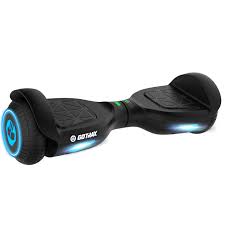
A hoverboard — also known as a self-balancing bike, as well as a swegway– is a two-wheeled, personal transporter that has no handrail whatsoever. It is a foot-mounted device that you stand on pads, one of them over each wheel, and you control the entire thing by using your body.
The more you lean forward, the faster it speeds up. When you back it, you slow down or reverse. You can twist your feet, and it spins. Within, the gyroscope or acceleration sensors continuously monitor your body weight and alter the motors to match; that’s what makes you feel as if it’s balanced instead of it being the reverse.
This balance-first style is attractive and limiting. It’s easy once you’ve got familiar with it; however, it does mean that hoverboards are designed for smooth, flat areas like driveways or a corridor, or a well-paved path. If you ride one on the dirt or on a path that is cracked, sensors will struggle to maintain your balance.
What Is an Electric Scooter?
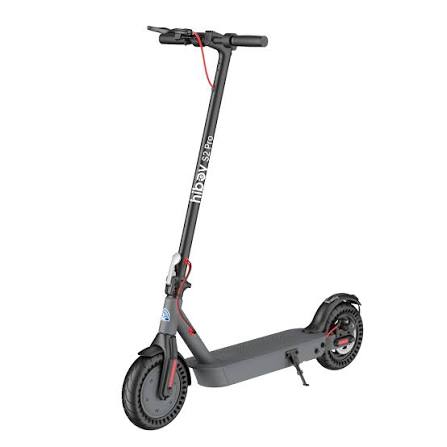
An electric scooter is an electric version of the scooter that you likely rode in your youth. There is a deck for you to stand on, a handbar to steer, a twist or thumb throttle to accelerate, and hand brakes that stop. Certain models include a tiny screen to display the speed and battery level.
Since steering is controlled through the handlebar, not your weight, it is a learning curve that is less arduous for the majority of adults. It feels more like riding a bicycle with no pedals. The motor can be found on the wheel’s hub, or it is driven by belts, while better models have pneumatic (air-filled) tires which absorb bumps better than hoverboards’ smaller wheels.
That’s the reason why electric scooters have evolved to become a true commuter tool, while hoverboards, on the other hand, have remained in the leisure and gift-giving category.
Speed, Range, and Battery Life Compared
That’s the point at which the choice is made. The electric scooters are superior to hoverboards in both areas, but the difference isn’t very small.
| Factor | Hoverboard | Electric Scooter |
| Top speed | 6-9 mph | 25-43 mph (model dependent) |
| Common range | 10-20 km per charge | 30-100 km per charge |
| Top terrain | Flat, smooth, predictable | Streets, bike lanes, light hills |
| Type of battery | Lithium-ion | Lithium-ion |
| Weight | ~10 kg | 25-50 pounds (11-23 kg). It is often folded. |
When comparing Hoverboard vs Electric Scooter options for commuting, an electric scooter is usually the more practical choice for traveling from a bus stop to the office or across a large campus. Electric scooters, particularly the top-of-the-line models, are designed for extended trips. They have more powerful batteries, sturdy frames, and features for stability made for speed instead of simply standing still.
But speed does not necessarily mean it’s superior. A hoverboard’s lower height is a major safety factor which restricts how far the fall could go, which is crucial depending on whether the rider is a child or an aspiring first-time rider.
Safety: Two Very Different Kinds of Risk
In a Hoverboard vs Electric Scooter comparison, both devices involve safety risks, but the type of risk is different for each one.
In a Hoverboard vs Electric Scooter comparison, hoverboards pose a higher risk of falling. Balance is completely controlled by the body, and new riders are much more likely to fall, particularly in the initial couple of sessions. Hoverboards also have an incredibly rough record of safety. Early models had been implicated in batteries that caught fire, which was enough to result in a myriad of recalls, affecting more than one million units over the time since they first were introduced to the market. This is precisely what makes certification in the first place.
In a Hoverboard vs Electric Scooter comparison, electric scooters are more prone to risks of being struck. Due to their speed and mobility, accidents tend to occur at a higher rate, increasing the risk of injury when they occur. It is a good thing that the use of hand brakes as well as handlebar steering provides riders with greater control and helps avoid an accident in the first instance.
The primary safety factor in both devices is to check for UL 2272 accreditation — the security standard that governs the safety of fire and electrical equipment in self-balancing boards. In the wake of the recalls and the recall wave, makers such as Segway as well as Swagtron were among the first to release products that were UL-certified to the market, and UL certification is an essential requirement and not something you should consider as a luxury. Check the package or the description before buying either of the devices and, in particular, for a hoverboard.
A quick Hoverboard vs Electric Scooter safety checklist:
- Check for UL 2272-certified (hoverboards) or any other safety rating equivalent to it.
- Do not charge if you are unsupervised or on a surface with a potential for flammability.
- The weight capacity should be matched with the actual weight of the rider
- For Hoverboard vs Electric Scooter safety, make sure you wear a helmet while riding electric scooters, particularly at speeds of more than 15 mph.
- Practice your hoverboard on grass or carpet prior to taking it to the pavement.
Is It Legal to Ride One on the Street?
This is the section that the majority of review articles miss, which is actually one of the main sources of confusion among buyers.
Hoverboards, due to the fact that they lack handlebars, don’t always easily fit into the existing category of vehicles. Certain cities have traditionally considered them to be unregistered motor vehicles and banned their use on public roads but allowed them to be used within bike lanes and on private properties with certain age limits and speed restrictions. Electric scooters typically follow more clearly defined rules, as the majority of jurisdictions regulate them with respect to mopeds or bikes; however, the requirements regarding minimum age, use of bike lanes, as well as sidewalk limitations differ from location to location.
In reality, examine your regional or local transport regulations before you decide if a gadget is street legal. The rules here change more frequently than we think they would; regulations that existed just a few years ago might have changed.
Portability and Everyday Practicality
If you’re in an area that’s tight in space — like in a tiny apartment, a dorm, or a dormitory room and a common office- it’s a lot more manageable. It doesn’t have a folding mechanism to manage; grab it.
Electric scooters generally fold up in the middle for transportation or storage. However, when folded, they’re heavier and weigh more. The trade-offs are worth it when you’re riding a few miles per day. However, this isn’t the best option if your primary purpose would be “occasionally fun around the house.”
What Does Each One Cost?
The pricing varies for each region and brand, but the overall pattern is consistent throughout the marketplace.
| Cost Factor | Hoverboard | Electric Scooter |
| Entry-level | Budget-friendly | A noticeable increase in the upfront cost |
| Mid-range | Moderate | Costs that are significantly higher |
| Premium | It’s still relatively inexpensive | It can be priced as competitive as an old bicycle, or even more |
| Replacement battery | Lower costs | More expensive |
| Upkeep on a regular basis | Minimal (solid tires, which are the most common) | Wear on tires if pneumatic tires are utilized. |
For buyers comparing Hoverboard vs Electric Scooter costs, a hoverboard is usually the more affordable option and is often purchased as a gift for kids and teenagers. Electric scooters cost more initially; however, if it’s actually replacing the cost of car rides and rideshare fees, as well as parking fees, it will be repaid over time.
Who Should Actually Buy a Hoverboard?
- Parents purchasing a first-time powered car for a kid or teenager (check the minimum age of the manufacturer)
- People choosing a Hoverboard vs Electric Scooter option mainly for driveway, backyard, or indoor fun may find a hoverboard more suitable.
- Buyers of gifts who have a smaller budget
- Any person who believes in pure mobility over distance and speed
Who Should Actually Buy an Electric Scooter?
- In the Hoverboard vs Electric Scooter comparison, electric scooters are better suited for commuters who want to replace shorter bus, car, or rideshare journeys.
- College students crossing large campuses daily
- Riders who require power and agility, not just the latest
- Delivery or gig workers who require regular security
- Anyone looking for a device which is legal to use in bike lanes or streets throughout the world.
A Simple Way to Decide
If you’re still torn about Hoverboard vs Electric Scooter, do this quick:
- What’s the most effective use case: daily transport or just for amusement?
- For Hoverboard vs Electric Scooter, what distance will you need to travel—under one mile or many miles per day?
- The person who is riding the bus — one of the children, a teenager, or an adult?
- For Hoverboard vs Electric Scooter, what do the laws in your area allow? You should check before buying, not afterwards.
- What’s the budget you have that includes a possible battery replacement?
In a Hoverboard vs Electric Scooter comparison, if your answers point toward longer distances, speed, or everyday use, an electric scooter is worth the higher cost. If your answers point to leisurely, low-speed indoor or driveway entertainment, a hoverboard might be an ideal choice.
Worth Considering Instead
In the Hoverboard vs Electric Scooter comparison, there is no one right option. The choice is based on what you require:
- Electric bicycles (e-bikes) are able to handle more lengthy rides and climbs better than any other option.
- As another option beyond Hoverboard vs Electric Scooter, electric skateboards provide more speed and a wider range of terrain than a hoverboard. However, they have higher learning curves
- Self-balancing unicycles are just as small as a hoverboard; however, they have more skill levels and higher speeds.
- Manual kick scooters eliminate the battery danger completely; however, they do so at the expense of motor aid.
FAQ
Is a hoverboard or electric scooter better for kids?
In the Hoverboard vs Electric Scooter comparison, If your child is younger, a hoverboard is usually the best choice for outings; however, electric scooters are believed to be more secure and easy to control, since the handlebar provides extra security. Numerous parents choose to use an electric scooter due to this.
In the Hoverboard vs Electric Scooter comparison, which option is faster?
In the Hoverboard vs Electric Scooter comparison, electric scooters win by an enormous margin. Most hoverboards run under 10mph. Scooters can reach the 30s or 20s, based on the kind of design.
Can you legally ride a hoverboard on the street?
For Hoverboard vs Electric Scooter street use, it depends on the location where you live. Many places restrict hoverboards to private property or trails in lieu of roads that are public; Therefore, it is recommended to verify local rules before using the streets.
Are electric scooters allowed on the sidewalks?
It is different for each area or city. Certain cities permit them at lower speeds. Other cities have bikes allowed on roads or bicycle lanes.
Which is the one that’s the most secure?
There is no guarantee of security; hoverboards can be most at the risk of being thrown over by people who are brand new to them, while electric scooters present more danger of injuries because of their speeds. A good set of equipment, certified and protective gear greatly lower the chance of injury for either.
What is the battery’s lifespan? How long will it last?
It is common for lithium-ion batteries for either device to last for several hundred recharge cycles prior to a decrease in performance, which usually means approximately a couple of years of uninterrupted use.
Which is the one that’s least expensive?
Hoverboards are often the cheapest initial purchase. This is why they’re often given as gifts.
The Bottom Line
An Hoverboard vs Electric Scooter do not have similar tasks. One is a smaller and budget-friendly gadget designed to be used for fun, short trips. It’s a valid vehicle designed for speeds, distances, as well as everyday usage.
When choosing between Hoverboard vs Electric Scooter, consider a hoverboard if you’re shopping for your kid, have a limited budget, or only want entertainment. If you’re looking to substitute actual trips — like an everyday commute, college crossing, or an everyday running errand- this electric scooter is well worth the additional expense. Make sure you check the local laws regardless, verify UL 2272’s certification prior to purchasing, and then ensure that the scooter is compatible with what you’ll be using it for and not only how great it looks on the box.
About the Author
Huzaifa is the creator of Electric Scooter Analysis, a blog that covers electric scooters of all kinds, including off-road, city, and special circumstances. Data is obtained from manufacturer specs, as well as opinions from riders. Figures are flagged if there’s no proof.
“The information on this website is gathered from industry reports, manufacturer specifications, expert reviews, and trusted sources such as gyroor to provide accurate and valuable insights for our readers