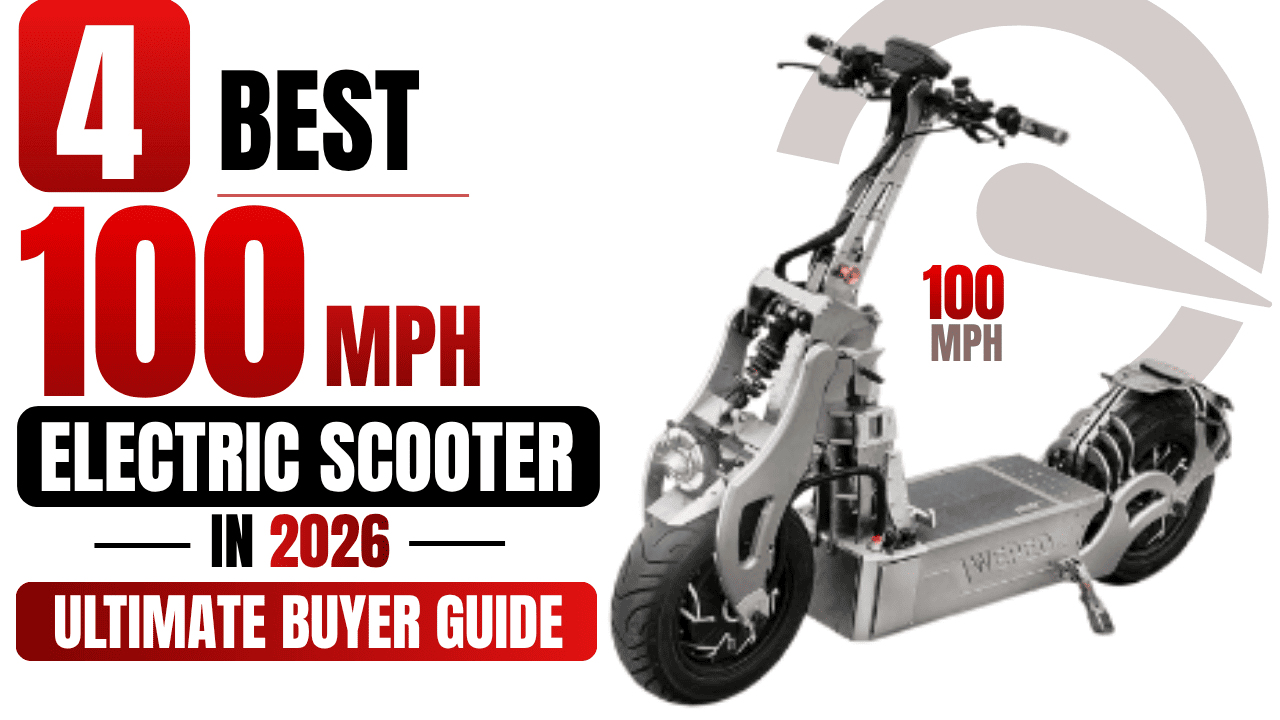
Enter “100 mph electric scooter” in any search engine, and you’ll see a plethora of pages about brands, lists, and speed reports that aren’t all in agreement with each other. A portion of this is actually engineering. Certain of it is just fake marketing disguised as real. This guide will help you determine the difference between them and explain what should be considered when you’re looking at a specific one.
In a nutshell: yes, production vehicles capable of 100mph can be found. However, they’re not street legal anywhere. Also, the difference between the claims of a company and what a third party really measures is the crucial thing you need to know prior to investing real money.
Is a 100 MPH Electric Scooter Actually Real?
This is a legitimate question since it’s true that the “fastest scooter” category has been saturating the market for a while with exaggerated figures. As of 2026, there are a handful of hyper-scooters that are actually at or around 100 mph as per the manufacturer’s specifications.
Four 100 mph electric scooter models define this category currently: Rion RE90 and WEPED Sonic S Dual are the two most discussed production models that claim to be 100 mph, and Bo The Turbo and Zenva DashR make up the rest of the class as flagship or halo models geared towards record-setting and raw acceleration, rather than a regular high-mileage ride.
Its maker claims the RE90 at speeds of between 90 and 100 mph and is widely referred to as the most powerful motor ever built into an industrial scooter. It comes with an 80-mph speed limiter that the factory installs. Riders who wish to enjoy the complete freedom of high-end must remove the limiter themselves. Sonic S Dual, built in Korea, is one of the very few production machines that is still capable of speeds close to 100 speed.
This is the alleged side of the tale. The real-world performance of a 100 mph electric scooter appears slightly different.
Claimed vs. Tested: The Gap Nobody Talks About Enough
This is a part that the majority of people skip in their articles, but it’s perhaps the most valuable information you’ll have prior to making a purchase.
Independent testing of a 100 mph electric scooter by GPS-based platforms tells a different story. such as ERideHero that record actual speed information instead of reproducing spec sheets has proven a new highest level of “hyper-scooter” performance, generally between 60 and 70 mph. For instance, the RoadRunner RX7 has been clocked at 67.4 mph. Its predecessor, the Hyperion RST, built by Solar the company, reached 64.3 miles per hour with two five-kilowatt motors that produce 5,000W and 60A sine-wave controllers. Its predecessor, the Hooga Daytona, reached 65 mph and was said to have more space to offer. Its Fighter Supreme 7260R landed at 61.5 miles per hour, while the Altis Sigma pushed close to 70.
None of the 100 mph electric scooter models exceeded 100 miles per hour in independent testing. It’s not an attack on these scooters; they’re still incredibly fast, but it’s an opportunity to remind that claims from the manufacturer as well as third-party validated results come from two distinct data sets, and treating the two sets as interchangeable could mean customers are left disappointed.
4 Best 100 MPH Electric Scooters in 2026
If you’ve come to this point and are looking at the top of this category, four devices are defining this right now according to the specifications of the manufacturer, not just by the marketing text all by themselves. Each 100 mph electric scooter is built differently and will suit the needs of a different customer.
Bo The Turbo
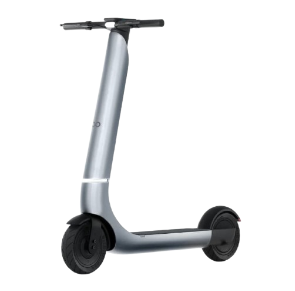
Bo’s Turbo is not an automobile and is more of an experimental rolling prototype, designed by a group with Williams Formula One roots specifically to try and break the Guinness-regulated 100-mph record. It has the same monocoque aluminum chassis as Bo’s road-legal Model-M, which is augmented with a 24,000W dual-motor propulsion system as well as F1 brake-duct-style intakes for ram-air to ensure that the motor stays in good shape at all times. Its 1,800Wh capacity battery is huge even in this class and is designed to provide at least 150 miles of travel regardless of the maximum performance.
This 100 mph electric scooter battery is produced in very small quantities and priced at $29,000, and Bo is clear to say that the battery is not designed to be used for everyday riding. It’s the “halo” model of this category, which is ideal for record attempts as well as closed-course demonstration rides instead of regular usage.
The ideal choice for those who are enthusiasts or looking to own the leading model in the class, not a regular biker.
Zenva DashR
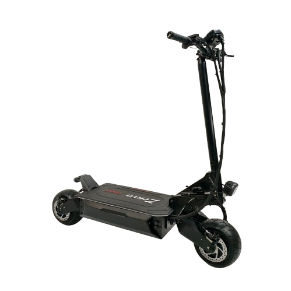
DashR is the best choice for those who chase numbers. Two powerful motors work together to create an impressive 36,288W. The two 180A sine-wave controllers drive to ensure a smooth and stable supply of power even at speeds of triple digits. Zenva boasts a 0-100 kph speed within 4.5 seconds — an impressive figure that places its weight-to-power ratio into hypercar territory. It also comes with an 86.4V 48Ah battery constructed using EVE 21700 cells, and secured by an ANT battery management system.
This 100 mph electric scooter can run for the equivalent of 125 miles on each charge. Zenva comes with 12-inch tires that provide stability. It also comes with the option of a road tire that is 11 inches for those who prefer an even more nimble feel. The deck comes with a unique sandblasting option for an extra bit of polish over the standard document.
Ideal for riders who are adamant about outright acceleration and the highest quality power delivery and also want the reassurance from a more powerful BMS as well as dual high-amp controllers.
WEPED Sonic S (Dual)
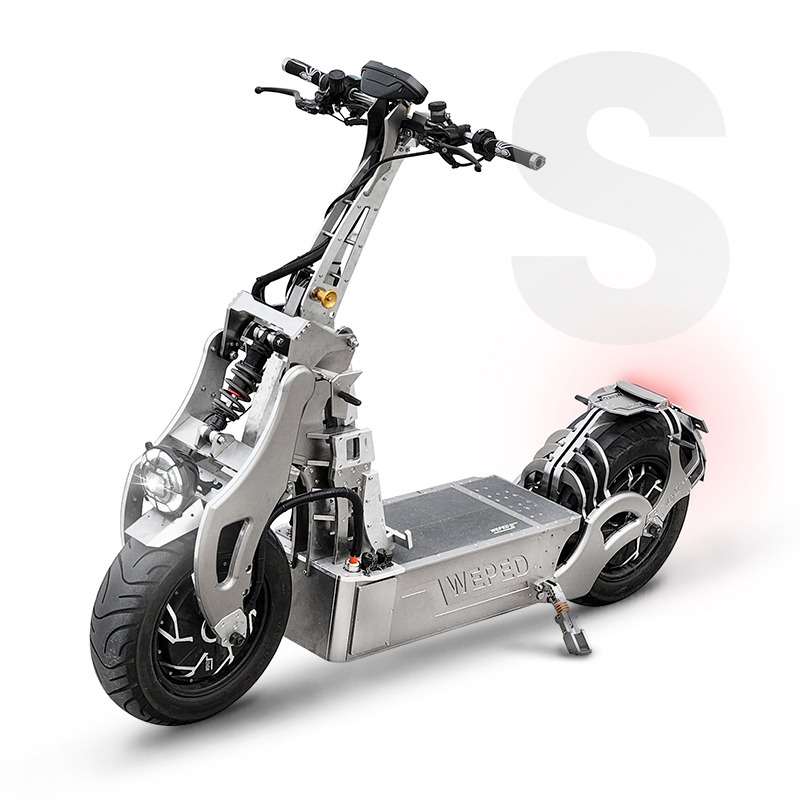
South Korea’s WEPED has been in the segment for as long as almost everyone else has, and its Sonic S Dual is its most sophisticated implementation of the concept. This 100 mph electric scooter uses twin 8kW BLDC hub motors. (16kW total) permit it to achieve 160 km/h (100 mph) and come with an built-in safety limiter which can hold the speed at 140 km/h (87 mph) so that the riders benefit from an additional buffer. The 100.8V 100Ah battery (10,080Wh), made of Samsung SDI 21700 cells, is specifically designed to deal with distance as well as speed.
This 100 mph electric scooter has a total range of approximately 280 kilometers. which is among the longest within its class. WEPED supports it with Brembo rear and front brakes, as well as a CNC-machined 6061 aluminum frame with materials procured from POSCO’s Metals division. This is evident in the quality of its construction and the specifications page.
Recommended for: those seeking the greatest reach in the 100-mph category, along with a safety margin, but without having to sacrifice top-end capabilities.
Rion RE90
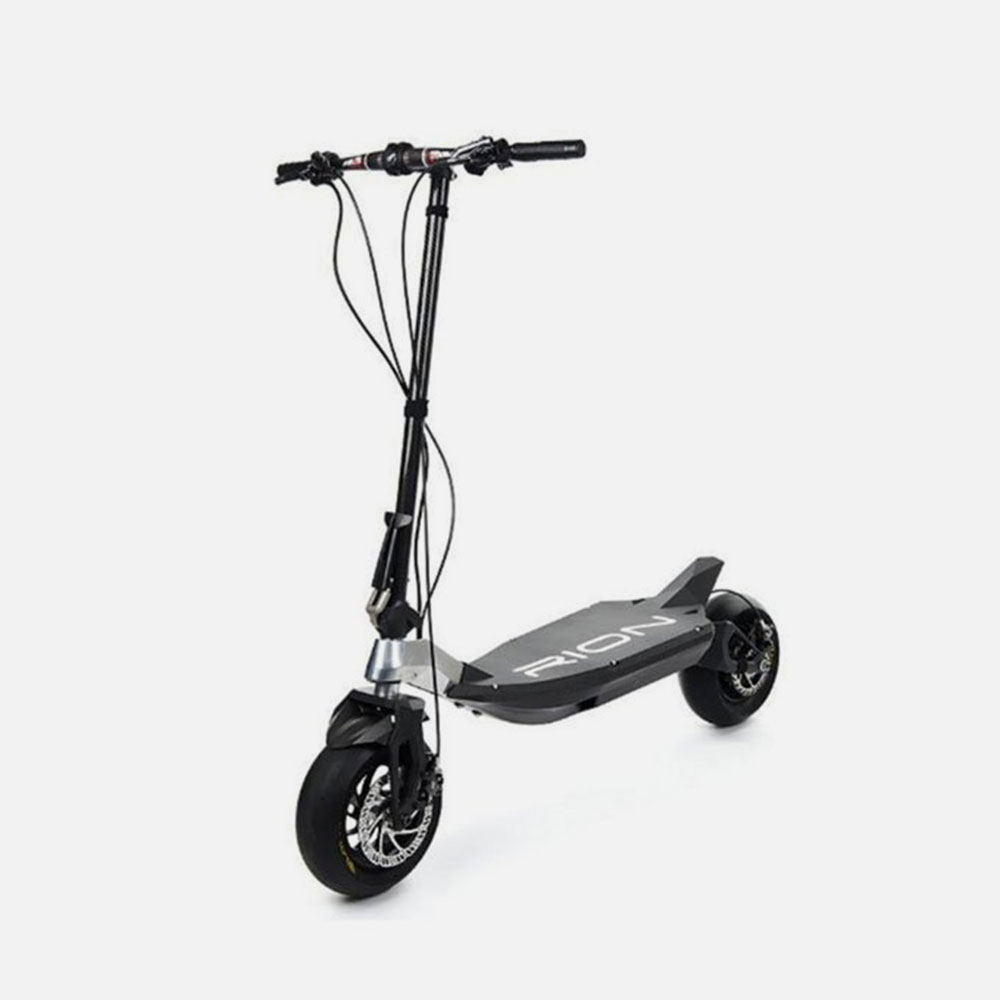
The RE90 is the most regarded benchmark that all of the market compares itself to. Its motor technology is considered to be the strongest ever installed on the production model, and is certified by Rion as high as 100 mph. It also has the limiter set at 80 mph by default as the standard, safest setting. The riders who desire the open high-end version must remove this limiter on their own, which makes the RE90 accessible for those looking to ease into this category, while having the whole number to reserve. It’s one of the most accessible 100 mph electric scooter models among the four.
The ideal choice for those looking for a real starting point for the 100-mph range without the premium price that comes with the Turbo and DashR.
Comparison Table
| Model | Motor Power | Claimed Top Speed | Battery / Range | Notable Feature | Approx. Price |
| Bo The Turbo | 24,000W twin motor | 100+ mph | 1,800Wh / ~150 mi | Monocoque chassis derived from F1 and RAM-air cooling | ~$29,500 |
| Zenva DashR | Peak power of 36,288W (dual) | 100 mph | 86.4V 48Ah / ~125 mi | Dual 180A sine-wave controllers 4.5s 100 km/h – 0 km/h | Premium tier |
| WEPED Sonic S Dual | 16,000W (dual 8kW) BLDC | 100 km/h (87 speed factory limited) | 10,080Wh / ~174 mi | Brembo brakes, aluminum frame via POSCO metals division | ~$19,200 |
| Rion RE90 | The highest-rated motor for production. | 100 km/h (80 factory-limited speed) | Not manufacturer-disclosed | The most accessible cost for the speed tier of 100 mph. | ~$7,100-$7,400 |
Similar to the rest of the members, these are the claims made by the manufacturer and not independently verified GPS information. The same warning which was previously mentioned in this post, and this is the same warning that applies here also. If a hard, third-party-confirmed number matters more to you than a spec sheet, the 60-70 mph tier covered above is still where the independently tested data currently lives.
How These Scooters Physically Reach That Speed
A 100 mph electric scooter is a standing platform that is able to reach triple-digit speeds. isn’t just a technical leap from an ordinary scooter for commuters; it’s more about making a bike on the deck.
Certain things are what allow it to be done:
- Dual motors with a huge maximum output. When a standard commuter scooter operates between 250 and 750W, hyper-scooters use two motors to produce peak outputs that range from 20,000W up to 33,000W.
- High-amperage sine-wave controllers. Dual controllers that are 100A and 200A can deliver the power with jerky bursts essential for keeping the scooter in place once you’ve gotten over 50mph.
- Massive battery packs designed for actual draw and not just the range. Flat-out riding drains batteries more quickly than cruising, which is why these batteries are designed accordingly.
- Multi-stage suspension and steering dampers. The ability to adjust the damping — certain models come with more than 10 stages — can help stop the front-end oscillation, also referred to as speed wobble, which can be a danger at speeds on the highway.
- Race-slick or wide performance tires, typically between 10 and 11 inches, provide a wider contact patch as well as better braking grip.
- Frames reinforced with titanium or aerospace-grade alloys to reduce flex during load.
- A 100 mph electric scooter requires serious braking equipment. Hydraulic discs, and often dual-caliper configurations, since stopping distances of more than 90 mph are substantially higher than 20mph. Also, braking is the main part that reviewers identify as the primary factor that is limiting this particular category.
Simply put, a 100 mph electric scooter uses the same technology that keeps an automobile safe for speed. is now miniaturized and bolted to a standing platform with two wheels. This is truly impressive engineering; that’s what makes the following section important in the same way it does.
Is It Legal to Ride a 100 mph electric scooter?
There is no public roadway or anywhere else.
Many nations and regions that govern electric scooters in a separate vehicle class set the standard lower, typically within the 15-25 km/h to 20 mph range, in order for an electric scooter to be classified as a legally usable “low-speed” scooter without a licence or registration.
For the United States, that threshold is usually 500 watts of motor power with a maximum speed of 20 mph; however, many states limit real-world road usage even lower than that, typically around 15 mph regardless of what the vehicle can mechanically accomplish. Some regions have started to consider scooters as “vehicles” for impaired-driving purposes, and a conviction may place your driver’s license at risk, and not only your rights as a scooter driver.
A hyper-scooter that speeds 100 mph doesn’t fall into any of these. After you have removed the speed limiter and gained all the performance you can, you’ve gotten out of the legally binding “scooter” category entirely, and most of the time, there’s not a clear path to return — it’s not legally registered, insured, or manufactured to motor vehicle safety standards that allow it to use an open road or bicycle or bike lane.
There’s no loophole to find. That’s why the devices are created, advertised extensively, and are used for private or closed-course properties — think of a testing track, private airstrips, or vast enclosed spaces that are not urban streets. Rules vary from country to country and are subject to change frequently, and if you’re near this point, making sure you check your local regulations first is well worth the time it will take.
Who Actually Buys One of These
In reality, it’s not the new scooter, and it doesn’t function as a vehicle for commuters. People who buy are likely to fall into several categories:
- Riders who have already put in a lot of hours on their 40- 60 mph high-performance scooters and are confident when they travel at speeds
- Individuals who have legitimate, regular access to closed courses or private land large enough to allow them to play the highest end of the course in a safe manner
- People who are interested in building or modifying PEVs and who are familiar with the mechanical aspect
- Fans and reviewers who benchmark at the top of this category
If you’re not in any of the above definitions, the truth is that a speedy 100-mph scooter is probably not the best buy at this point, and not just because it’s not impressive; however, the risk-to-benefit proportion only becomes clear after you’ve had the experience as well as the appropriate environment to support it.
What Safety Gear Actually Makes Sense
At this point in the performance range, the bicycle-style gear doesn’t suffice. Consider it in the same way as you consider motorcycle gear. Because practically, it is required in this situation:
- A DOT-or ECE-rated full-face motorcycle helmet, NOT a skate or bicycle helmet.
- An armored motorcycle jacket as well as pants, or a complete motorcycle suit made of leather or textile
- Motorcycle gloves reinforced and ankle-covering boots
- Spine and back protection
- A genuinely closed environment — no cross traffic, no pedestrians, no intersections
- Checking the tires, brakes and damper for steering prior to every session
There are a few errors that show up time and time again within this area: drivers taking off a speed limiter before they’ve gained control at lower speeds, trying to go for the top speed with brand new brake pads or tires before they’ve been smashed in, not estimating the slower stopping distance that will become after you’ve surpassed the speed of 80 miles per hour. All of these aren’t exotic dangers; they’re known ones, which is the reason they’re important to mention clearly.
What It Costs, Beyond the Sticker Price
A 100 mph electric scooter is only one part of the overall cost. In this case, for instance, the Rion RE90 is the most affordable of the four, between $7,100 and $7,400. It is a lot more than the usual price of commuter scooters; however, the higher 60-70 mph super-scooter typically ranges from $3,000 to $6,000. Also, you should consider:
- Complete motorcycle-grade protective gear: approximately $800 to $2,000 plus
- Performance tire replacement: about $150 to $400 for a pair
- An extra or upgraded battery pack costs between $500 and $1500.
- Regular maintenance of brakes, tires, and controller check-ups: about a hundred dollars per year
These are planning ranges, and they aren’t fixed costs and will vary according to the region and by the retailer. The basic principle is that a 100 mph electric scooter is only the ticket to entry and not the total price of owning a vehicle.
If This Isn’t the Right Fit Yet
A lot of people are drawn by the concept of a scooter that can travel 100 miles and don’t really need one. If one or more of the financial, legal, or other factors mentioned above do not meet your expectations, you have a variety of options:
- The tested and independently verified 60-70 mph hyper-scooter is a great choice if you are looking for extreme performance and have verifiable third-party information behind it
- Performance scooters of the mid-tier, 40-50 mph, are within a more liberal gray zone in a few zones (always be sure to check local)
- Regular commuter scooters of 15-20 mph that are legal street-legal in the majority of areas.
- Electric motorbikes, if you really want, are legally licensed, insured, high-speed transportation
- Minibikes with track-day racing or electric motors for those who want close-course speed, without standing platforms’ challenges to stability.
FAQ
Do you really have a 100 mph electric scooter?
Yes, it is true that the Rion RE90 and WEPED Sonic S Dual have been rated by the manufacturer at close to 100 mph in 2026. However, independent testing hasn’t yet provided an official GPS verification of the number.
What’s the fastest electric scooter you can actually buy
Based on the claims of the manufacturer, the RE90. With GPS confirmed, independently tested speeds, current top performers are in the 64-70 mph band.
Are you able to legally use 100 mph electric scooter on the roads?
In virtually all states with laws pertaining to scooters. Scooter speeds that are legal in the state are limited to at or below 100 mph nearly all the time, and an unlocked hyper-scooter is outside the vehicle class completely.
What’s the cost?
The RE90 is priced between $7,100 and $7,400 and is the cheapest among the four model options. Other models are more expensive -The Sonic S Dual is around $19,200, as well as DashR and Turbo, with DashR being at the high-end/flagship price point.
Do you require specialized gear?
Yes. Motorcycle-grade armored suits, helmets, gloves, and boots are the bare minimum requirements given the risks for these speed ranges.
What’s the distinction between the claimed and verified top speeds?
The claimed speed of a 100 mph electric scooter comes from the manufacturer. usually in conditions that are close to ideal. Speeds measured are based on separate, GPS-logged rides under actual riding conditions. The speed is usually lower.
Are these scooters suitable to start with?
No. A 100 mph electric scooter is designed for riders who already have previous experience. who have previous experience with low-speed scooters and have the ability to ride in a locked and controlled area to enjoy their ride.
The Bottom Line
The first 100 mph electric scooter will be available in 2026. The Rion RE90 and WEPED Sonic S Dual are in the top spot of the lineup according to manufacturers’ specs, supported by controllers, motors, and braking equipment that take heavily from motorcycle design. Bo The Turbo, as well as Zenva DashR, round out the top four models as the flagships, which push the design and speed limit even higher. These are closed-course cars and not road vehicles, and the metrics that are most important when making a purchase that are independently verified top speed, actual legality, and the total price including the gear are more reliable than just the headline number.
If you’re thinking about buying a 100 mph electric scooter begin by looking at your experience riding the scooter as well as your ability to access an authorized location to ride it, and the spending plan beyond the actual scooter. It’s a far better choice than any speed limit on its own ever.
About the Author
Huzaifa is the creator of Electric Scooter Analysis, a blog that covers electric scooters of all kinds, including off-road, city, and special circumstances. Data is obtained from manufacturer specs, as well as opinions from riders. Figures are flagged if there’s no proof.
“The information on this website is gathered from industry reports, manufacturer specifications, expert reviews, and trusted sources such as gyroor to provide accurate and valuable insights for our readers