The last update was on August 20, 2026.
Written by Huzaifa, who is the co-founder of Electric Scooter Analysis
Short version: on slippery roads, tires and suspension are more important than the top speed or motor power. It is recommended to choose 10-inch or more pneumatic (air-filled) tires that have two suspensions (front and back). This combination can handle most cracked road surfaces, potholes, as well as gravel. Get larger (11-inch knobby tires and hydraulic dual suspension twin motor) only if riding real dirt trails frequently.
If you’re driving through cracks in asphalt, potholes, cobblestones, or a road with a gravel shoulder, you’ve experienced the frustration of electric scooters not being designed to handle it. They look rough in advertising photos, but then smack your wrists as you go around the first bump in the road.
The good news is that choosing the Best Electric Scooters for Bumpy Roads is not difficult. Two components, like tire types and suspension, take care of most of the tasks for riding smoothly over rough terrain. All other factors, including top speed and motor wattage, are smaller than what most reviews would suggest.
Four models featured in this guide are:
This article explains exactly the things to look out for, what it does in the way it does, and the best way to determine if a bike is suitable for the type of “bumpy” you’re dealing with, whether it’s an urban street with potholes or a cobblestone town or even a casual dirt track that leads to your house.
Why Tires and Suspension Matter More Than Top Speed
When a wheel comes across an obstacle, the impact needs to be absorbed by something. If you ride a bike with sturdy tires and no suspension, it will travel straight across the deck, and then into the knees and wrists of your hands as well as lower to the ground. If you choose a bike designed for rough terrain, the tire and suspension absorb the majority of the impact before the shock reaches your body.
It’s all about mechanics, mechanically speaking. A vehicle that has 15 mph speed and real suspension will be smoother when you’re on a slick street as compared to a bike that travels 25 mph that has solid tires, and no. Speed does not cushion impacts -but suspension and tires will.
The durability angle is also a factor. Scooters with no suspension endure repeated stress on the frame, stem, and welding. Take a ride on a rough surface for months, and you’ll notice loosened bolts and stem play up well, while a model with suspension shows the exact wear.
A good rule of thumb: If you are able to only improve one aspect, put the air-filled tires first, and then suspension travel in the second. Together, they’re more significant than a 5mph increase in the specification sheet.
Regular Commuter Scooter vs. Bumpy-Road Scooter
Many scooters don’t need to be equipped for off-roading. There’s an important gap in the specs between a bike designed for smooth roads and one able to take on a bumpy journey.
| Feature | Standard Commuter Scooter | Bumpy-Road / All-Terrain Scooter |
| Tire size | 8–8.5 inches | 10–11+ inches |
| Tire type | Honeycomb or solid | Pneumatic (air-filled), sometimes knobby |
| Suspension | None, or a single elastomer | Dual spring, hydraulic or dual elastomer |
| Ground clearance | Low | Higher — eliminates potholes and curbs |
| Frame | Lighter, less reinforced | Aluminum alloy reinforced |
| Motor | Single 250–500W | 500–3,200W, either in a single or dual |
There’s no such thing as either or. A lot of scooters that are commuter-class now include pneumatic tires as well as front suspensions specifically designed so that they are able to handle the rough urban streets, but without going completely off-road. It’s a great compromise for the majority of riders.
Match the Scooter to Your Terrain, Not the Other Way Around
Before comparing the Best Electric Scooters for Bumpy Roads, determine what type of “bumpy” terrain you’re actually dealing with. It should be the determinant for your specs prioritization, not the other way around.
- The city commuter who has potholes and cracked pavement: It is recommended to choose 9.5–10 inch pneumatic tires, and at a minimum, front suspension. It’s not necessary to have dual motors or ruthless off-road tires.
- Light trail riders and commuters (sidewalks along with the occasional road or gravel trail): Find 10–11-inch pneumatic tires that have two suspensions, both in the rear and front.
- A dedicated off-road rider or dirt trail rider: consider the dual motor, the 11-inch pneumatic knobby tires, heavy-duty double suspension (spring or hydraulic), as well as a sturdy frame.
- A budget-conscious rider still needs convenience: If you are forced to decide between two options, choose pneumatic tires rather than suspension. An air-filled scooter with no suspension typically rides better than one that has good tires and an Elastomer suspension.
Tire Types Explained: Pneumatic, Honeycomb, and Solid
The pneumatic (air-filled) tires serve as the first layer of suspension that absorbs minor and moderate bumps before they even get to the deck. They’re usually the most comfortable choice for rough roads, but they also carry a small risk when driving on roads with a lot of debris, which is a problem that most current models deal with using self-healing sealants or flat-proofing construction.
Honeycomb (airless) tires utilize an elastomer honeycomb design instead of air. This removes flats completely. It’s a compromise in comfort. They consistently emit more vibration from the road as compared to pneumatic tires since they don’t have air cushions that absorb any impact.
Rubber tires made of solid rubber are the best option for puncture resistance, but they are the most difficult to deal with on rough terrain since they have virtually no give. Certain scooters can combine the two with the use of a hybrid system with a pneumatic front tire to provide shock absorption, and a sturdy rear tire that can be used to prevent flats — and this can be useful for riders who prefer comfort and do not need any pneumatic-related maintenance.
For the Best Electric Scooters for Bumpy Roads, your comfort rating is straightforward: pneumatic beats honeycomb beats solid — even before you factor in suspension.
Suspension Types Explained
Its Elastomer (rubber bumper) suspension is the simplest and least expensive alternative. It’s leak-proof and reliable; however, it’s limited in the amount of impact it is able to absorb, ideal for small cracks in pavement and bumps as opposed to massive potholes.
Coil spring suspension provides greater travel than the elastomer system and can be found on many low-end and off-road bikes and can withstand bumps that last for a long time in dirt and gravel efficiently.
Hydraulic suspensions are fluid-damped and give the best flexibility and travel. This is what usually separates an incredibly luxurious, “car-like” ride from an ordinary ride, and is most often found for off-road and premium models.
The Swingarm suspension employs an arm that is hinged (instead of a slide shock) for letting the wheel rotate vertically. This is typically paired with a spring or a hydraulic damper. The suspension adds weight and complexity, but it tends to keep tires well even on rough terrain at speeds.
Dual (front and rear) suspension spreads the impact on each wheel. It is crucial to consider this in the event that you crash into a curb or pothole; a front-only system can cause a shock through the rear wheel into your spine.
A higher level of suspension means greater convenience; however, it also means more mass and more moving components to keep. When choosing the Best Electric Scooters for Bumpy Roads, make sure that the level of suspension is in line with the roughness of your roads rather than focusing only on the numbers in a specification sheet.
How to Choose: A Step-by-Step Approach
- Before choosing the Best Electric Scooters for Bumpy Roads, check your routes and look for potholes, cracks in asphalt, cobblestone sections, unpaved shoulders, and curb cuts.
- Compare the type of tire to the type of tire you see. A lot of glass or debris: pneumatics with flat sealants or a hybrid pneumatic/solid arrangement. The majority of pavement is smooth, but cracks are present – pneumatics are sufficient.
- Adjust suspension according to the severity of bumps. Minor cracks and seams: an elastomer spring or one front spring is typically sufficient. Potholes, curbs, as well as gravel: dual springs and hydraulic suspension.
- Make sure you check ground clearance as well as the deck’s height. The Best Electric Scooters for Bumpy Roads should have enough ground clearance to avoid bottoming out or scraping on speed bumps and large potholes.
- Check load ratings and frame materials. The aluminum alloy frames reinforced with reinforcement stand up better to repeated stress on rough roads as compared to budget steel frames.
- Take a look at the brake system. In rough terrain, you need greater stopping power. Double disc or drum-and-disc combos beat the single mechanical brake when traveling at greater speeds.
- Set a realistic range expectation. The rough terrain and frequent acceleration and braking make the real-world range less than the claimed number. You should budget for 20–30% less than the advertised number.
- Consider portability when you’ll carry the scooter. Scooters designed for tough-road quality (thicker frames and double suspension) tend to weigh more and are smaller when folded.
Quick Buying Guide (Checklist)
You can use this as a quick list while shopping for the Best Electric Scooters for Bumpy Roads; it combines all the key decisions mentioned above.
Step 1 — Learn about your terrain
- [ ] Cracked pavement or potholes only → 9.5–10″ pneumatic tires and front suspension are enough
- [ ] Mixed sidewalks, some gravel/dirt → pneumatic tires with twin suspension
- [ ] Off-road trails and regular dirt trails → 11″ pneumatic knobby tires, two heavy-duty suspensions, and two motors
Step 2 — Pick the type of tire you want to use
- [ ] For rough roads and comfort, go with pneumatic (air-filled)
- [ ] Glass-heavy or debris routes looking for zero flats → honeycomb, or self-sealing pneumatic
- [ ] Looking for a maintenance-free alternative? → hybrid (pneumatic front and solid rear)
Step 3 — Pick your suspension level
- [ ] Only small cracks or seams → elastomer, or one front spring
- [ ] Potholes and curbs, as well as gravel → dual springs, swingarm, or hydraulic, both rear and front
- [ ] Frequent hard impact when moving → hydraulic, both rear and front
Step 4 — Review the specifications that can be easily overlooked
- [ ] Ground clearance sufficient to remove potholes, curbs, and other deep holes without scraping
- [ ] Load rating — your weight (plus bags or backpacks) is supposed to be well under the maximum
- [ ] Frame material — an aluminum alloy reinforced frame suitable for use on rough roads
- [ ] Brakes — double discs, drum, or drum+disc for anything that is not the speed of a casual commuter
- [ ] Certification — search for UL2272 (or the regional equivalent) for fire and battery safety
- [ ] Real-world range — subtract 20–30% of the number advertised for rough-terrain usage
- [ ] Size/weight when folded — check this out if you’ll need to carry it upstairs, or on the move
Step 5 — Before you buy
- [ ] Look up the current model’s listing on the site owned by the manufacturer — third-party listings and older reviews might not be up to date with the most current specifications and pricing
- [ ] Look at 2–3 models that are within your budget rather than just one
- [ ] Test-ride the Best Electric Scooters for Bumpy Roads if possible, because ride quality on rough terrain is impossible to determine using a specs sheet.
- [ ] Check local regulations for speed or power limits if contemplating a powerful off-road vehicle
5 Best Electric Scooters for Bumpy Roads
How these picks were checked: the below specifications were compared against a variety of current lists of manufacturers and retailers (not just one source) at the time of publication in the month of August, 2026. The guide is based on research rather than real-time review of a ride, so consider these “why it’s best for you” notes as guidance based on spec instead of personal impressions.
Electric scooter models undergo spec revisions, regional versions, as well as price adjustments frequently in the same year, and the exact model’s name (e.g., “S65” vs “S65C,” or “S10-S” vs “S10-S-Z”) may cover a variety of distinct hardware, based on the retailer. When comparing the Best Electric Scooters for Bumpy Roads, consider the following numbers as a reliable base, but confirm the actual specs and prices directly with the vendor or manufacturer before purchasing.
Kaabo Wolf Warrior X Max
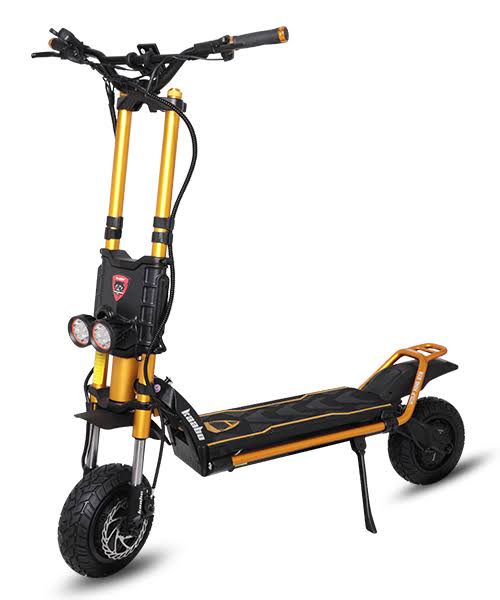
This Wolf Warrior X Max is made for people who need off-road capabilities without having to go to the heaviest Kaabo Wolf models. It has two 1,100W motors (roughly 4,000W peak combined power) with a 60V battery that is paired with a hydraulic front suspension as well as adjustable spring (some websites refer to it as spring hydraulic) rear suspension. It also comes with 10-inch air tires mounted on split rims.
Why it’s best for you: If you’re able to split the time between slick urban streets and weekend trails and are looking for serious forward-facing hydraulic damping, this model is one of the best dual-motor options available in the category. This is a great choice for riders with experience who value the control of portability over speed — around 79 pounds, this isn’t a bike to be carried up stairs regularly.
Yume Raptor 2
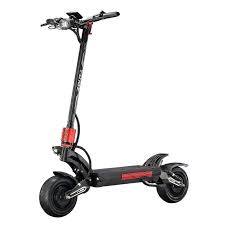
The Raptor 2’s motors (rated approximately 1,750W each and about 6,000W in total maximum) are equipped with two 130mm hydraulic shocks and 11-inch tubeless tires that are available with knobby or street tread. An integrated steering damper as well as a stability control system helps maintain the balance at speed.
Why it’s best for you: the best option for riders who want powerful speed and performance along with true suspension, not merely a scooter with large tires. It is suitable for experienced and confident riders better than commuters who are just starting due to its size, weight, mass, and speed (rated between 50 and 54 mph, depending on the model).
Segway ZT3 Pro
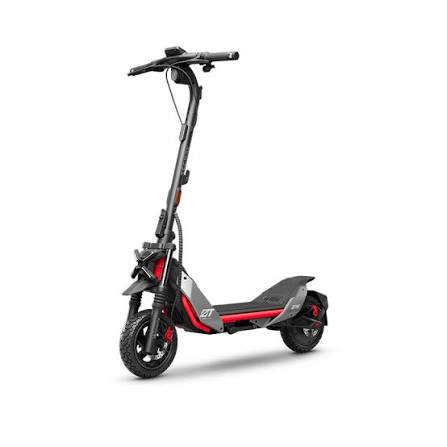
Segway’s first-ever off-road scooter for sale in the United States comes with 11-inch off-road tubeless tires that have dual suspension; the front fork is telescopic, as well as a rear shock, and it has traction/stability control for rough or slippery terrain. The scooter has a single rear motor (650W rated, 1,600W peak) and has UL2272/UL2271 safety certification.
Why it’s best for you: if you’re looking for proven high-end construction and advanced security features (stability control, keyless auto-lock, phone-finder connectivity) with no premium prices for off-road scooters, the ZT3 Pro is one of the top value choices that can be used for mixed commutes and moderate trail usage.
KuKirin G2 Max
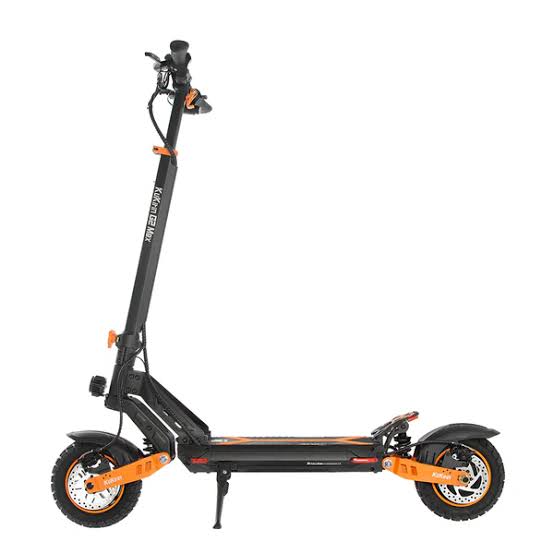
The G2 Max runs a single 1,000W motor, with a 48V battery, 10-inch pneumatic off-road tires, and shock absorbers on the rear and front. KuKirin markets the G2 Max as an upgrade from the original G2 that comes with a larger battery and larger tires to accommodate longer and rougher journeys.
Why it’s best for you: it’s a great choice for people who are looking to get pneumatic and dual suspension tires but without the cost of dual motors. It is ideal for commuters on tough daily roads who don’t require the power of a trail.
Navee S65
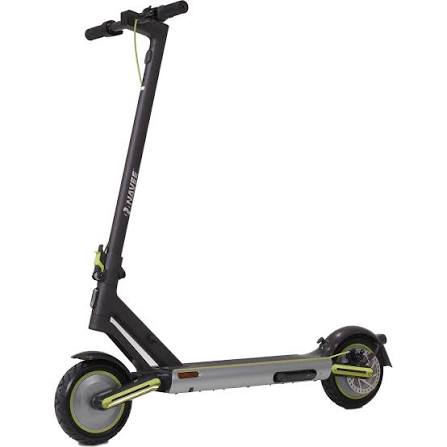
The S65 is a light commuter scooter, sporting a single motor of 500W (peaking at about 1,000W) and 10-inch tubeless self-sealing tires, as well as a dual suspension with the rear and front swing arms, something that isn’t commonplace in its class.
Why it’s best for you: if you’re on “bumpy” cracked street surfaces, rather than dirt trails, the S65 offers real suspension as well as puncture-resistant tires in a smaller, lighter, and more compact version than off-road-oriented models mentioned above. This model is a great fit for commuters looking for convenience without the mass or weight.
Comparison Table
| Model | Motor | Suspension | Tires | Best For |
|---|---|---|---|---|
| Kaabo Wolf Warrior X Max | Dual 1,100W (~4,000W peak combined) | Hydraulic front with adjustable spring rear | 10″ air tires, split rims | Mixed rough streets and trail riding |
| Yume Raptor 2 | Dual motors with ~6,000W max combined | Dual 130mm hydraulic | 11″ tubeless (street or off-road) | Smoothness for high-speed riders who desire speed |
| Segway ZT3 Pro | Single motor, rated 650W, 1,600W maximum | Front telescopic and rear spring | 11″ off-road tubeless | Value-focused mixed commuting and light trail |
| KuKirin G2 Max | Single 1,000W | Shock absorbers, front and rear | 10″ off-road pneumatic | Budget dual-suspension commuting |
| Navee S65 | Single 500W (~1,000W peak) | Dual swing-arm, front and rear | 10″ self-sealing tubeless | Light, mobile daily commuter on slick streets |
(Specs are based on retailer and manufacturer listings as of August 20, 2026. Figures for peak power and total power differ among marketing materials and retailers from third parties. In cases where different sources are used for the figures, the less moderate or frequently repeated figure is shown. Pricing and availability vary according to region and retailer, and can fluctuate frequently — so confirm the current figures before purchasing.)
Does Your Local Terrain Actually Change the Answer?
When choosing the Best Electric Scooters for Bumpy Roads, local terrain is absolutely worth considering before buying.
- The Best Electric Scooters for Bumpy Roads should have pneumatic tires and dual suspension when riding on brick or cobblestone streets., because cobblestone creates a constant small vibration instead of occasional large impacts.
- Areas where winters are frozen-thaw can be prone to seeing potholes develop throughout the year. The riders here enjoy higher levels of ground clearance, as well as the dual suspension of hydraulic or spring for absorbing sudden, deep collisions.
- For the Best Electric Scooters for Bumpy Roads, rural and suburban routes with gravel shoulders require larger 10- to 11-inch pneumatic tires for better traction.
- The dense urban area with uneven pavements and construction zone transitions is ideal for scooters equipped with an adjustable front suspension, which can take on sudden changes in curb height.
If you’re considering local shops for test rides or support for repairs, such as “electric scooter shop near me” or “scooter repair near me,” it is a good second step. A local shop will also guide you on appropriate tire pressures for the climate you live in and the surface.
What You’ll Pay by Segment
| Segment | Typical Price Range | What You Get |
| Entry-level with mild suspension | $300–$600 | Elastomer, or simple front suspension, 9.5–10″ tubeless or pneumatic tires |
| Mid-range commuter | $600–$1,200 | Front suspension, or two springs, pneumatic tires, one motor (350–650W) |
| Value all-terrain, dual motor | $1,000–$1,800 | Dual suspension, 10–11″ pneumatic tires, double motor |
| Premium off-road | $2,000–$5,000+ | Hydraulic dual suspension, huge knobby pneumatic tires, and high-wattage dual motors |
(These are merely general market prices and not specific quotes for the particular models mentioned above. Some of the models included in this list are sold for less or even more than their typical segment’s range, depending on the model’s configuration, sales volume, and location. Make sure to verify the latest listed prices before making comparisons.)
If you’re budget-conscious, you can expect to pay a price; generally, you’ll receive pneumatic tires, but no suspension or motor. Few scooters priced under $600 can offer all three. When you get to the range of $1,000 and up, dual suspension as well as dual motors can be considered realistic rather than merely exceptions.
Common Mistakes Worth Avoiding
- When choosing the Best Electric Scooters for Bumpy Roads, the pursuit of top speed is not the same as ride quality. An extremely fast bike without suspension can be uncomfortable and more dangerous on rocky surfaces — control is crucial, more than just a couple of extra miles.
- Inattention to the pressure of your tires. Tires that are not properly inflated increase the risk of pinch-flats on potholes. Over-inflated tires diminish their shock absorption benefits.
- Suppose we assume that all “suspension” is equal. Elastomer, springs, swingarm, and hydraulic systems have various amounts of travel, and you should know which you’re actually receiving.
- Doing the wrong thing by not checking the weight rating. Riding a vehicle that is over its weight capacity can affect comfort and suspension performance on bumps.
- Beware of relying on advertised ranges at face value. The real-world range on rough terrain is consistently less than claims made in lab tests.
- The view of the floor clearance. Low decks or footpegs could hit curbs or speed bumps, even if the suspension is in good condition.
- The assumption is that a model’s name refers to the same hardware. Manufacturers can reuse the name across regions and trims (e.g., “S65” or “S65C”) with various motors, tires, or suspensions — verify for the exact SKU/listing instead of just the model’s name.
Safety and Maintenance Notes
High-powered off-road motorbikes (dual motors, 1,200W and upwards) are able to reach speeds that are beyond what is legal on sidewalks or roads across the country. So, make sure to check the local rules before you take a ride. Be sure to look for UL2272 certification. This is the industry-standard quality of safety to ensure electrical fire safety on portable electric mobility devices; it is a reliable indicator of the quality of construction that’s usually neglected.
The Best Electric Scooters for Bumpy Roads can experience more wear and tear from rough-terrain riding, and a few maintenance practices can make a difference:
- Monitor the tire pressure of the Best Electric Scooters for Bumpy Roads regularly. Pneumatic tires can lose pressure more quickly when they are subjected to frequent rough-terrain usage.
- Examine tires for scratches or embedded debris following hikes.
- Tighten the deck, stem, and the bolts for the folding mechanism monthly because vibrations loosen the fasteners with time.
- Make sure you check the suspension linkages and mounts for squeaks or play.
- Examine discs and brake pads frequently, as the rough terrain can increase the load on your brakes.
- Regularly check the frame’s welds for hairline cracks, particularly on frames that are priced low.
Wet, gravel, or rough surfaces reduce stopping distances significantly, and it’s worth going slow and allowing greater braking space than you do on smooth asphalt — in addition to wearing a helmet and, most importantly, knee and wrist protection when riding on rough terrain is an integral aspect of your schedule.
FAQ
Do electric scooters need suspension for bumpy roads?
It’s not really necessary; however, suspension can make a huge difference in the comfort of your scooter and its durability on rougher surfaces than smooth roads.
Are pneumatic tires better than solid tires on bumpy roads?
Yes — the pneumatic tires’ air naturally absorbs shocks, whereas solid tires transfer vibrations directly to the driver.
Is dual suspension worth it over front-only?
In the case of anything that isn’t light, like curbs, potholes, gravel — yes. Front-only suspension lets the rear wheel send the jolt through.
Are regular commuters able to manage occasional dirt trails?
An electric scooter that has at minimum 10 inches of pneumatic tires as well as some suspension will usually handle some gravel and dirt. A long, continuous trail ride requires an off-road vehicle with knobby tires and larger power.
How much should I expect to spend on a scooter that handles bumps well?
The cheapest models that have pneumatic tires, but without suspension, can be found for $300 to $600. Scooters equipped with double suspensions and bigger tires usually start between $600 and $1,200, and high-end off-road models are priced upwards of $2,000. These are market trends but aren’t guarantees of any specific model; make sure to check the latest cost.
The Bottom Line
If you’re a rider who has to contend with potholes, cracked pavement, or gravel shoulders, the best combination is simple: pneumatic tires of 10 inches or more with two suspensions. Above that level, it comes down to budget and the extent to which you’re actually planning to go off pavement.
Before choosing the Best Electric Scooters for Bumpy Roads, begin by analyzing your current route. Match the type of suspension and tire to what you see using the previous framework, then compare two or three options within your budget prior to purchasing. If possible, try a test ride before buying — the ride quality in rough terrain is impossible to gauge using a single spec sheet. For any model you’re interested in, take a look at its current information on the company’s website before purchasing — specifications and pricing on guides such as this (including this one) aren’t always up to date with the current market.
About the Author
Huzaifa is the creator of Electric Scooter Analysis, a blog that covers electric scooters of all kinds, including off-road, city, and special circumstances. Data is obtained from manufacturer specs, as well as opinions from riders. Figures are flagged if there’s no proof.
“The information on this website is gathered from industry reports, manufacturer specifications, expert reviews, and trusted sources such as gyroor to provide accurate and valuable insights for our readers